Looking for a way to make your brand more sustainable while impressing customers? Switching to cornstarch packaging could be the solution. More consumers are now choosing eco-friendly products, and by adopting biodegradable packaging, you not only reduce environmental impact but also strengthen your brand image. Let’s dive into why this change matters for your business.
1. What is Cornstarch Packaging?
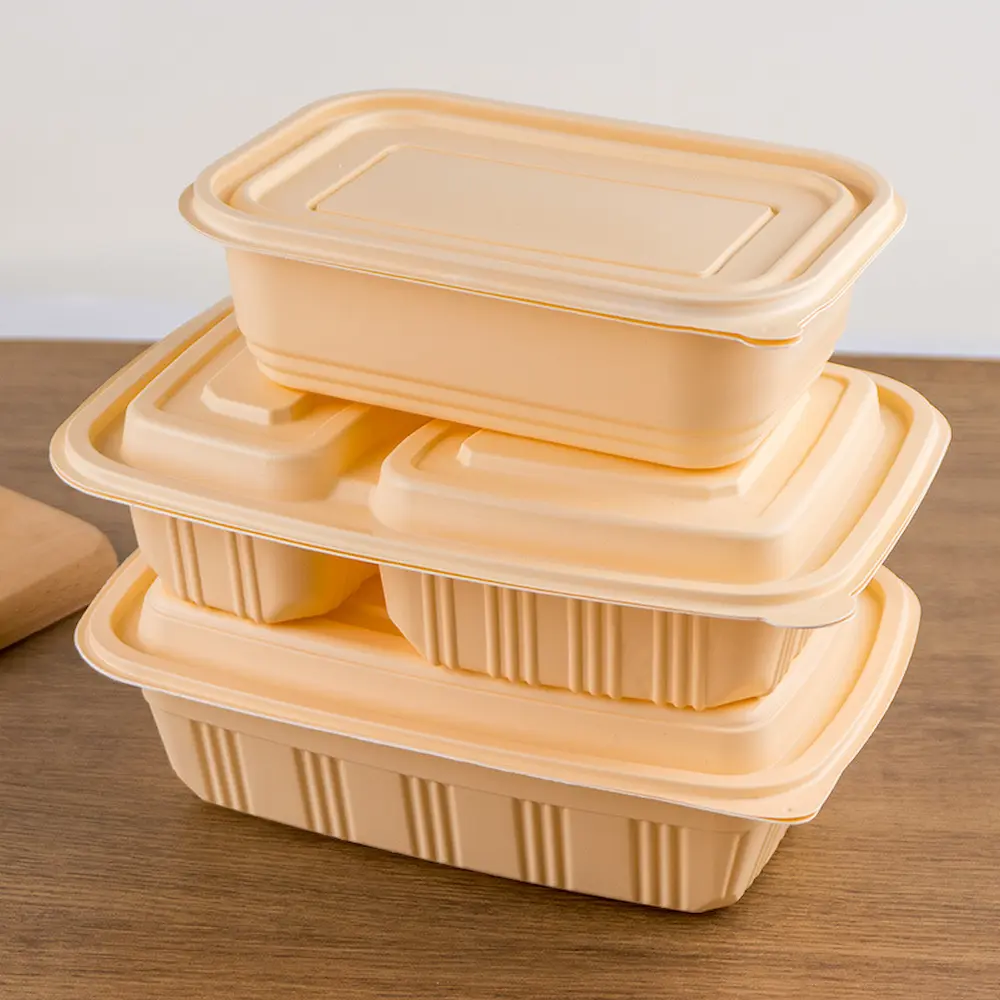
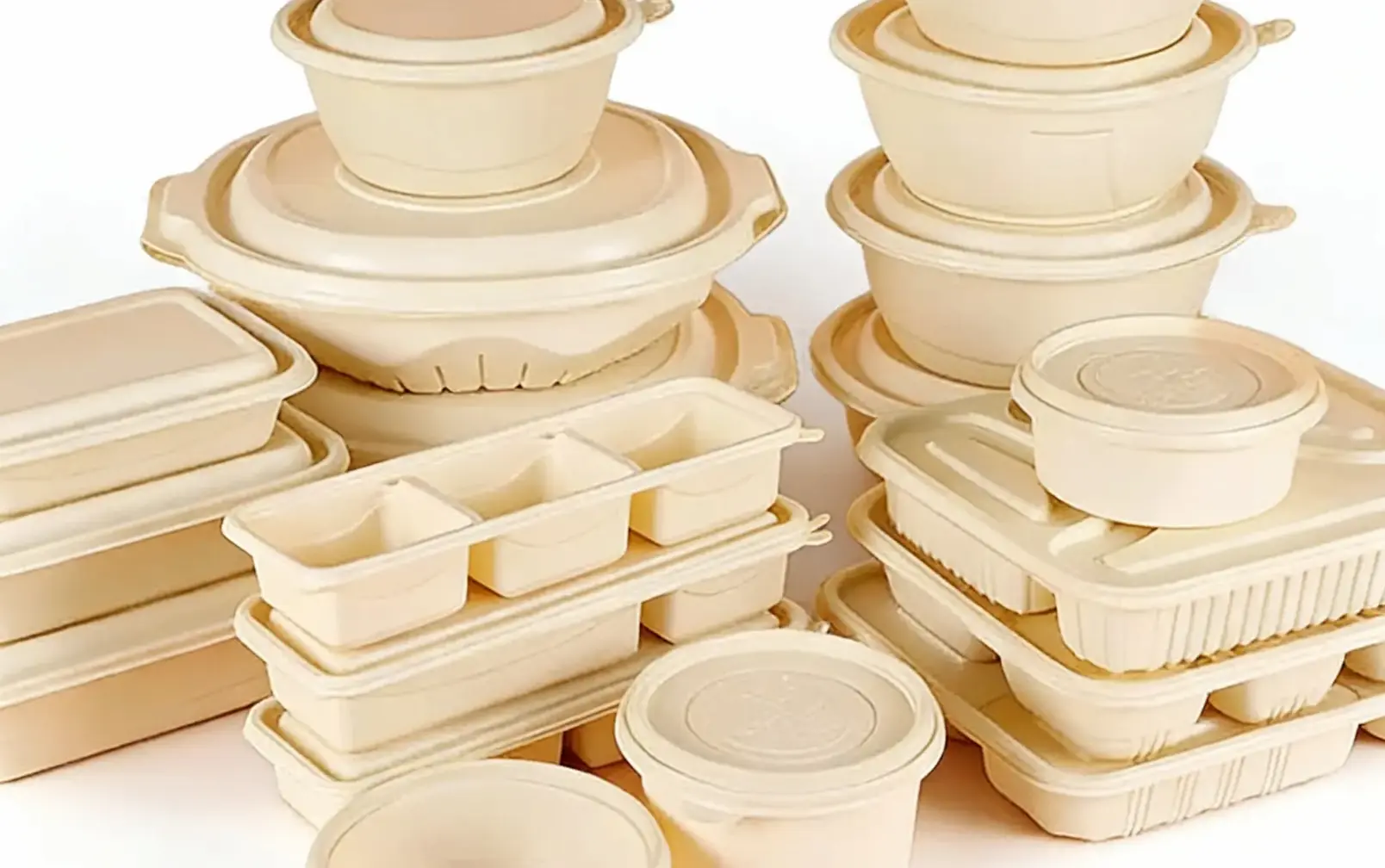
Cornstarch packaging is made from the natural starch found in corn kernels. It includes trays, bowls, plates, lids, and bags. Unlike traditional plastic, cornstarch packaging is biodegradable, renewable, and food-safe, making it ideal for restaurants, takeaways, and product packaging.
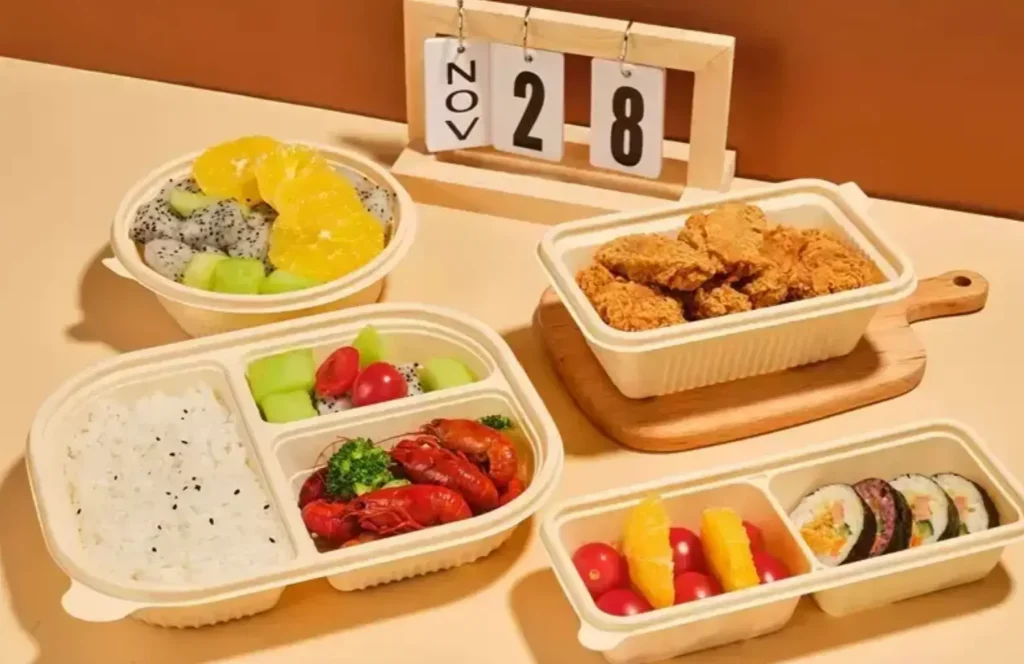
Image suggestion: Close-up of cornstarch bowls and trays filled with fresh food, placed on a neutral background.
2. How is Cornstarch Packaging Made?
Cornstarch is processed into PLA (polylactic acid), a material that mimics plastic but breaks down naturally.
- Eco-friendly production: Produces fewer greenhouse gases.
- Non-toxic: Safe for food contact.
- FDA approved: Meets international food safety standards.
Compared with traditional plastics, cornstarch packaging is better for the environment and increasingly cost-effective as demand rises.
3. Lifecycle of Cornstarch Packaging
From the cornfield to your customer’s hands, cornstarch packaging follows a green lifecycle:
- Raw material: Corn starch is harvested and processed.
- Production: PLA is molded into packaging.
- Usage: Packaging holds food or products safely.
- Disposal: Biodegrades in industrial composting or home compost within months.
This lifecycle reduces plastic pollution and lowers your company’s carbon footprint.
4. Market Trends for Cornstarch Packaging
The market for biodegradable packaging is growing rapidly. Bioplastics, including cornstarch-based packaging, are projected to reach USD 126.85 billion by 2026.
Why it matters for you: By switching now, you stay ahead of competitors, attract eco-conscious customers, and align with global sustainability trends.
5. Pros & Cons of Cornstarch Packaging
Pros:
- Renewable and biodegradable
- Compostable at home or industrially
- Food-safe and print-friendly
- Low flammability
Cons:
- Disposal effectiveness depends on local composting infrastructure
- Slightly higher cost than standard plastics in some regions
Even with minor limitations, the benefits for your brand and the planet outweigh the drawbacks.
6. Benefits for Your Business
By adopting cornstarch packaging, you can:
- Boost brand image: Show customers you care about the environment.
- Increase customer loyalty: Eco-conscious buyers prefer sustainable brands.
- Meet regulations: Many countries now restrict single-use plastics.
- Stay competitive: Be among the first to innovate in your industry.
Your customers will notice the difference and appreciate the effort.
7. Tips for Implementing Cornstarch Packaging
- Start with your most visible products for maximum impact.
- Educate your customers on proper disposal for composting.
- Choose reliable suppliers to ensure consistent quality.
Small steps can lead to big results in sustainability and brand perception.
Conclusion
Switching to cornstarch packaging is not just an environmental choice—it’s a business strategy. It enhances your brand, engages customers, and positions you for a sustainable future.
If you want customized cornstarch packaging or guidance for your business, please contact me:
- Email: bpf2000@foxmail.com
- WhatsApp: +8615099817100
Take the step today to make your packaging eco-friendly and your brand unforgettable.