
Quick answer: Great food packaging design must protect the food, keep it fresh, reduce damage, support your brand, and make the product easy to buy, open, store, and use. If your packaging looks good but fails during shipping or storage, it is not good packaging.
If you sell food, your packaging is doing more than holding a product. It is protecting taste, safety, shelf life, and your customer’s first impression. So, before you choose a box shape or print color, ask yourself this:
Will this food packaging protect my product and make people remember my brand?
As a PAKORO packaging expert at Packaza, I will walk you through the key points you should consider before creating custom food packaging.
What Is Food Packaging Design?
Food packaging design is the process of creating packaging that protects food, supports your brand, and helps customers use the product easily.
However, good food packaging design is not only about beauty. It also includes structure, material, sealing, printing, storage, shipping, and customer experience.
For example, a snack box should look attractive. Yet, it should also stay closed, stand on a shelf, protect the food, and fit your shipping carton.
Therefore, if you want better results, you should design your packaging around three questions:
Can it protect the food?
Can customers understand it quickly?
Can your business produce and ship it efficiently?
If you are planning a new project, you can start with Packaza’s Food Packaging Boxes solutions.
Why Protective Food Packaging Comes First
Protective food packaging should always come before decoration. After all, your customer does not only buy a box. They buy the food inside it.
Because food can be affected by moisture, air, pressure, heat, and contamination, your packaging must match the product’s real needs.
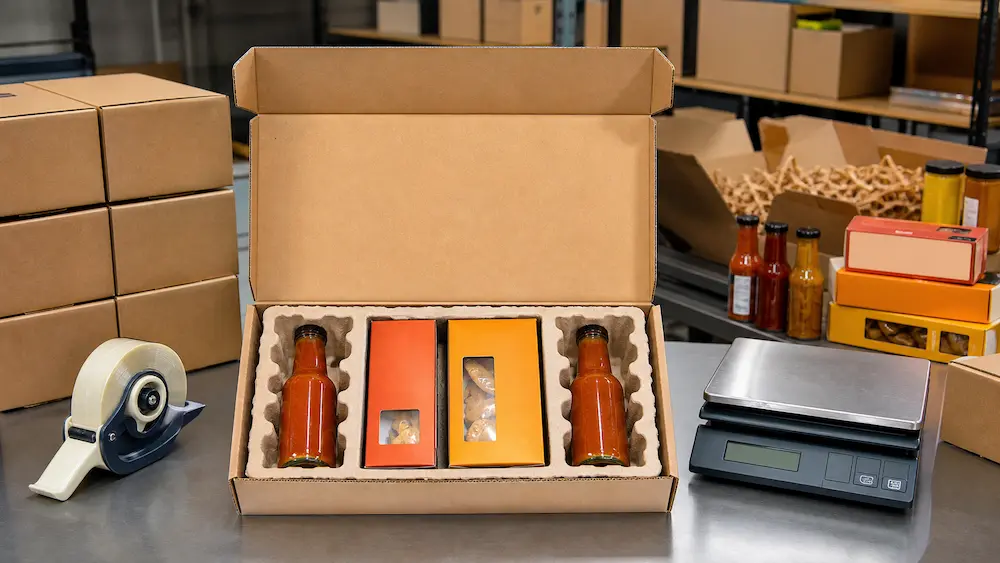
For dry snacks, you may need a moisture barrier. For glass bottles, you may need corrugated inserts. For bakery products, you may need food-safe paperboard with enough strength. For sauces or oils, you may need strong outer boxes to prevent leakage and breakage.
Also, protective packaging can reduce returns. When your product arrives safely, your customer feels confident. As a result, they are more likely to order again.
At Packaza, we often suggest testing the packaging before mass production. This helps you check fit, strength, opening style, and shipping performance.
How to Choose Food Packaging Materials
Your material choice affects protection, cost, branding, and sustainability. Therefore, you should not choose materials only because they look nice.
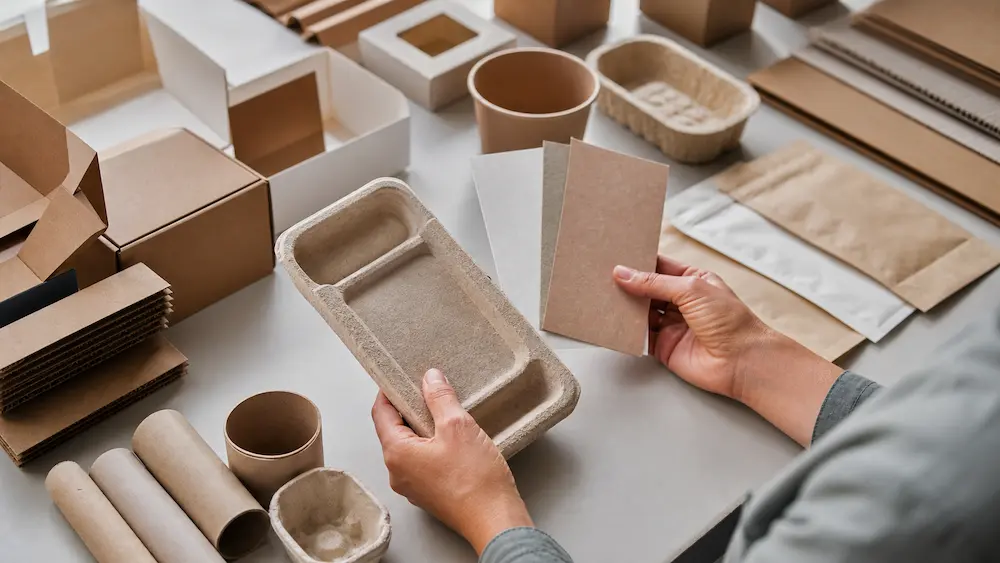
Common food packaging materials include:
Paperboard for folding cartons and retail food boxes.
Kraft paper for natural-looking and recyclable packaging.
Corrugated cardboard for shipping, protection, and e-commerce.
Molded pulp for inserts and protective trays.
Plastic or coated materials when stronger barriers are needed.
If you want a natural and simple look, Kraft Paper Box Manufacturer options may fit your brand. If your product needs stronger shipping protection, you can also review Packaza’s Cardboard Box Factory solutions.
However, remember this: sustainable packaging must still protect the food. If weak packaging causes damage or waste, it may not be the greener choice.
How to Reduce Waste With Better Packaging
Better food packaging design can reduce waste in several ways.
First, it can prevent product damage during shipping. Second, it can extend shelf life. Third, it can help customers store the food after opening. Finally, it can reduce unnecessary material and empty space.
For example, if your food box is too large, you may pay more for storage and shipping. Also, the product may move inside the box. That movement can cause damage.
So, you should design the package around the real product size. Then, you can add only the protection that is needed.
This is especially important for online food brands. In e-commerce, every inch matters. A smart box can lower shipping cost, reduce breakage, and improve unboxing.
If you need a custom size or structure, Packaza’s Customization service can help you create a packaging solution based on your product.
How to Design Food Packaging for Easy Use
Customers remember packaging that makes life easier. Therefore, usability should be part of your food packaging design from the beginning.
Ask yourself:
Can your customer open it without frustration?
Can they reseal it after opening?
Can the package stand on a desk or shelf?
Can they pour, scoop, or grab the food easily?
Can they store it at home without extra effort?
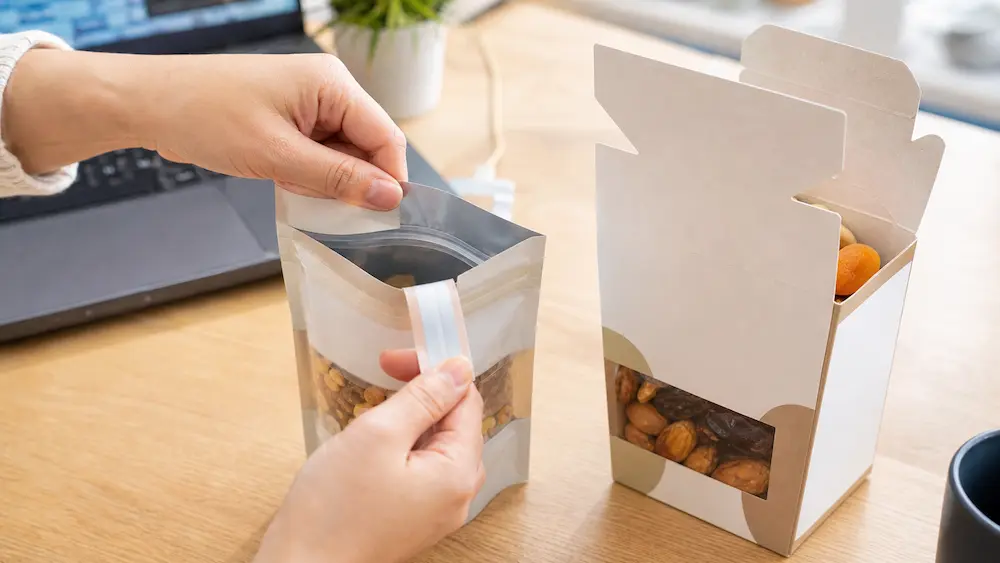
For example, a resealable snack package can help keep food fresh. A stand-up box can reduce spills. A clear window can help customers see the product. A tear strip can make opening simple.
These small details can make a big difference. In fact, easy-to-use packaging can make your brand feel more thoughtful.
And when customers feel that you understand them, they are more likely to trust you.
How to Make Food Packaging Memorable on Shelves
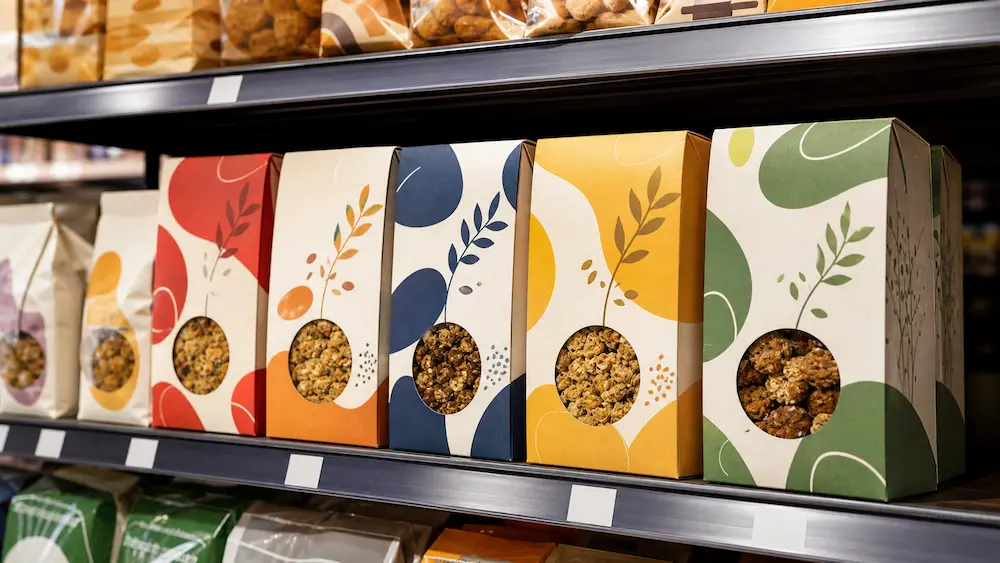
Memorable food packaging should be clear, consistent, and easy to recognize.
In retail, your product may sit beside many similar products. Therefore, your packaging must help customers find you quickly.
You can improve shelf impact with:
A clear brand color system
Simple product names
Readable fonts
Strong front-panel layout
A unique box shape or window
Consistent packaging across flavors or sizes
However, do not make the design too busy. If your customer needs too much time to understand the product, they may move on.
Instead, make the main benefit easy to see. For example, show whether the food is organic, crunchy, high-protein, handmade, or gift-ready.
Your packaging should answer the customer’s question fast: “Is this for me?”
How to Prepare Food Packaging for Retail and E-Commerce
Today, many food brands sell through both retail and online channels. Therefore, your packaging should work in both places whenever possible.
For retail, your food packaging needs shelf presence. It should be attractive, stackable, and easy to scan.
For e-commerce, your packaging needs shipping strength. It should protect the product, reduce empty space, and create a good unboxing experience.
The best solution often combines both needs. For example, you can use a beautiful retail box inside a strong corrugated shipping box. You can also design inserts that protect the product and improve presentation.
This way, your customer receives a package that feels professional from the first look to the final bite.
Work With Packaza on Custom Food Packaging
Your food packaging should protect your product, reduce waste, and help customers remember your brand. More importantly, it should fit your real business needs.
At Packaza, we produce custom packaging boxes for food, cosmetics, electronics, medicine, gifts, and more. We can help you with packaging design, material choice, printing, sampling, and production.
Need help with your next food packaging project?