Custom rigid box cost depends on the finished size, greyboard and wrap materials, box structure, printing, finishes, insert, order quantity, assembly and delivery. There is no useful universal unit price for a fully custom box. To compare suppliers, give each one the same specification and request separate sample, tooling, unit, packing and freight charges at several quantities. Then test the complete sample with your product.
Key takeaways
- A low unit quote can omit the insert, liner, protective packing or freight.
- Box dimensions and structure affect material use, labor and shipping volume.
- MOQ is a production and setup question; compare total commitment as well as unit price.
- Specify foil, lamination, magnets and inserts precisely before comparing offers.
- Approve a production-intent sample and record the agreed material stack and tolerances.
- Calculate landed cost per usable box, not only the ex-factory price.
What is included in the price of a rigid box?
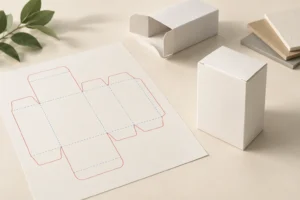
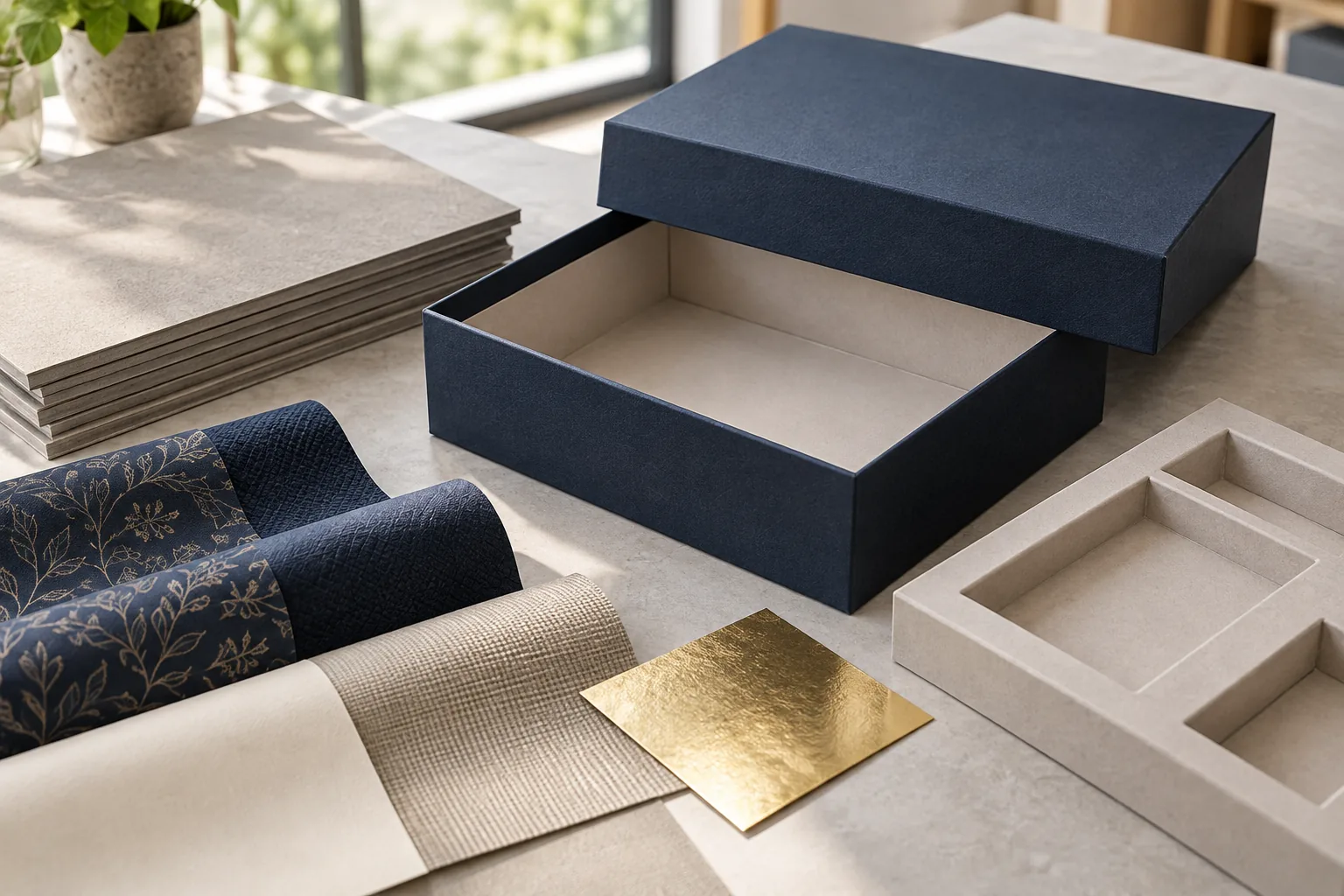
A rigid box is generally a formed greyboard core wrapped with decorative paper. Unlike a flat folding carton, most conventional rigid boxes occupy their finished volume during storage and shipment. The quote can cover the box shell alone or a complete set with liner, insert, magnet, ribbon and outer carton. Ask the supplier to list every component and specify whether assembly and product loading are included.
For a wider introduction to box types and applications, see Packaza’s rigid box guide. This cost guide focuses on the purchasing decisions that change a quotation.
The seven cost drivers buyers can control
1. Finished dimensions and board use
Provide internal length, width and depth and the actual product dimensions. A small change in wall height or lid overlap changes the board and wrapping area. Oversizing can also increase insert material and carton volume. Do not reduce the fit allowance blindly: test removal, surface contact and any accessories in a physical sample.
2. Structure and assembly steps
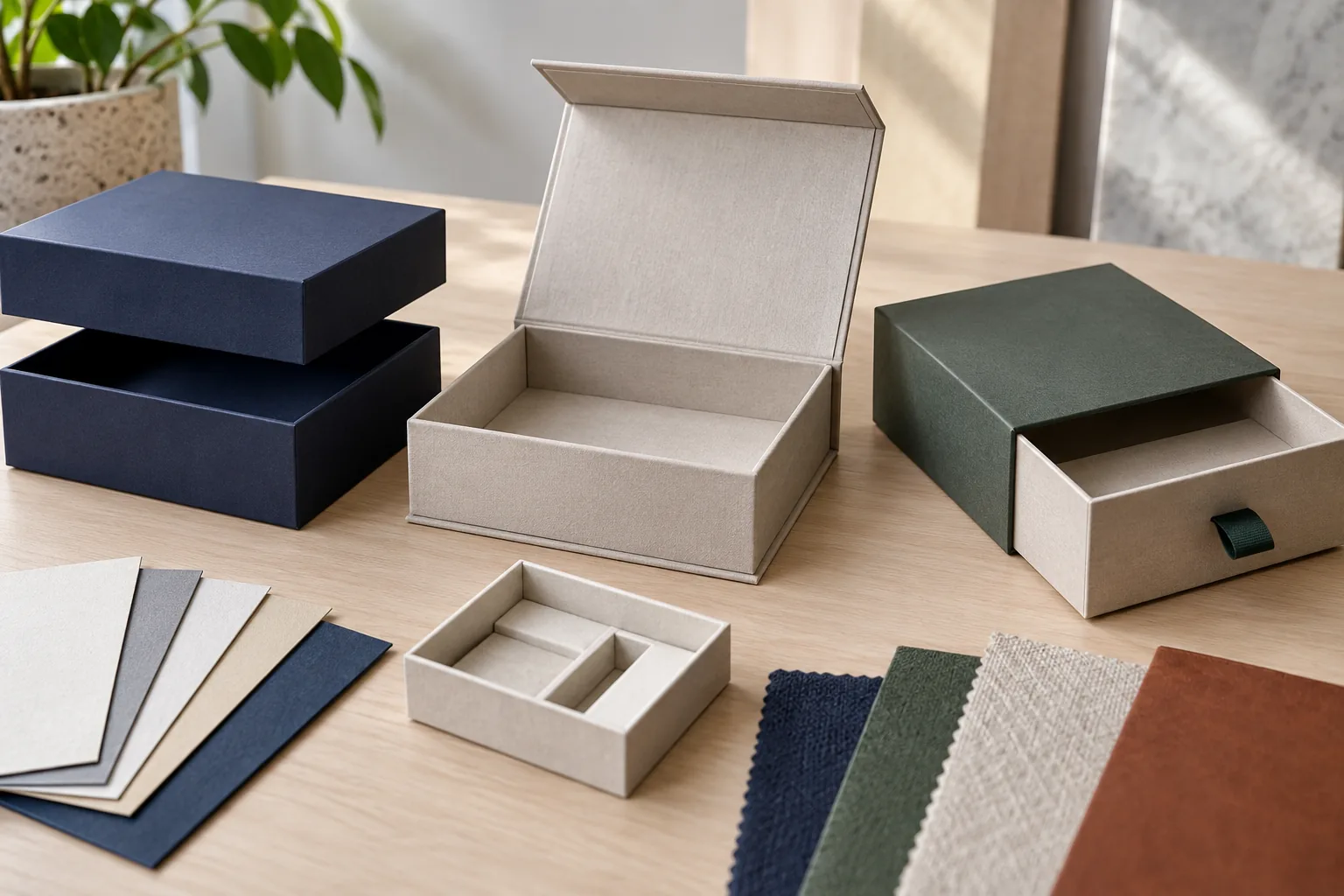
A simple lift-off lid and base, a hinged book-style box, a drawer box and a magnetic closure box have different components and assembly paths. Added hinges, magnets, pull tabs and multi-part trays can increase handwork and alignment checks. Choose the opening that serves the product and customer experience, then ask for an alternative structure if the quote exceeds budget.
3. Greyboard, wrap and liner
Board thickness alone does not determine performance. Panel size, board quality and construction matter. A printed coated wrap, specialty textured paper, dark full-coverage artwork and interior liner can have different material and converting costs. Ask for board caliper, wrap stock, liner coverage and a physical swatch on the assembled sample. Packaza’s paperboard grades guide provides background on material families.
4. Printing and finishing
Offset-printed wrap sheets can reproduce detailed color artwork. Foil stamping, embossing, spot UV, specialty coatings and lamination each add a process, and some require tools or setup. The cost depends on the covered area, number of passes, registration and waste allowance. Instead of applying several effects everywhere, prioritize a visible logo or key panel and review a finished sample under normal light.
5. Inserts and product protection
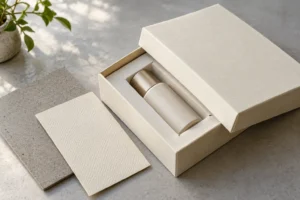
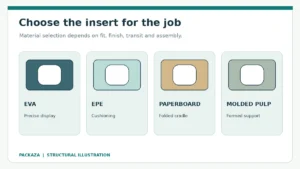
Paperboard partitions, molded pulp, foam or fabric-covered supports vary in tooling, assembly and fit. An insert that allows the product to rattle may create a larger cost than the saving on its unit price. Send the actual item or accurate prototype, including accessories, and test the loaded box in its shipping configuration. See our insert design considerations.
6. Quantity, setup and waste
Printing preparation, dies, sampling and production setup are spread over the run. A larger order often lowers the unit price, but it raises inventory and cash commitments. Ask for comparable tiers, such as a pilot quantity and two realistic repeat-order quantities. Confirm whether different artwork versions or sizes share any setup or are priced as separate SKUs. Do not combine quantities in a quote unless the supplier confirms the production conditions.
7. Packing and freight
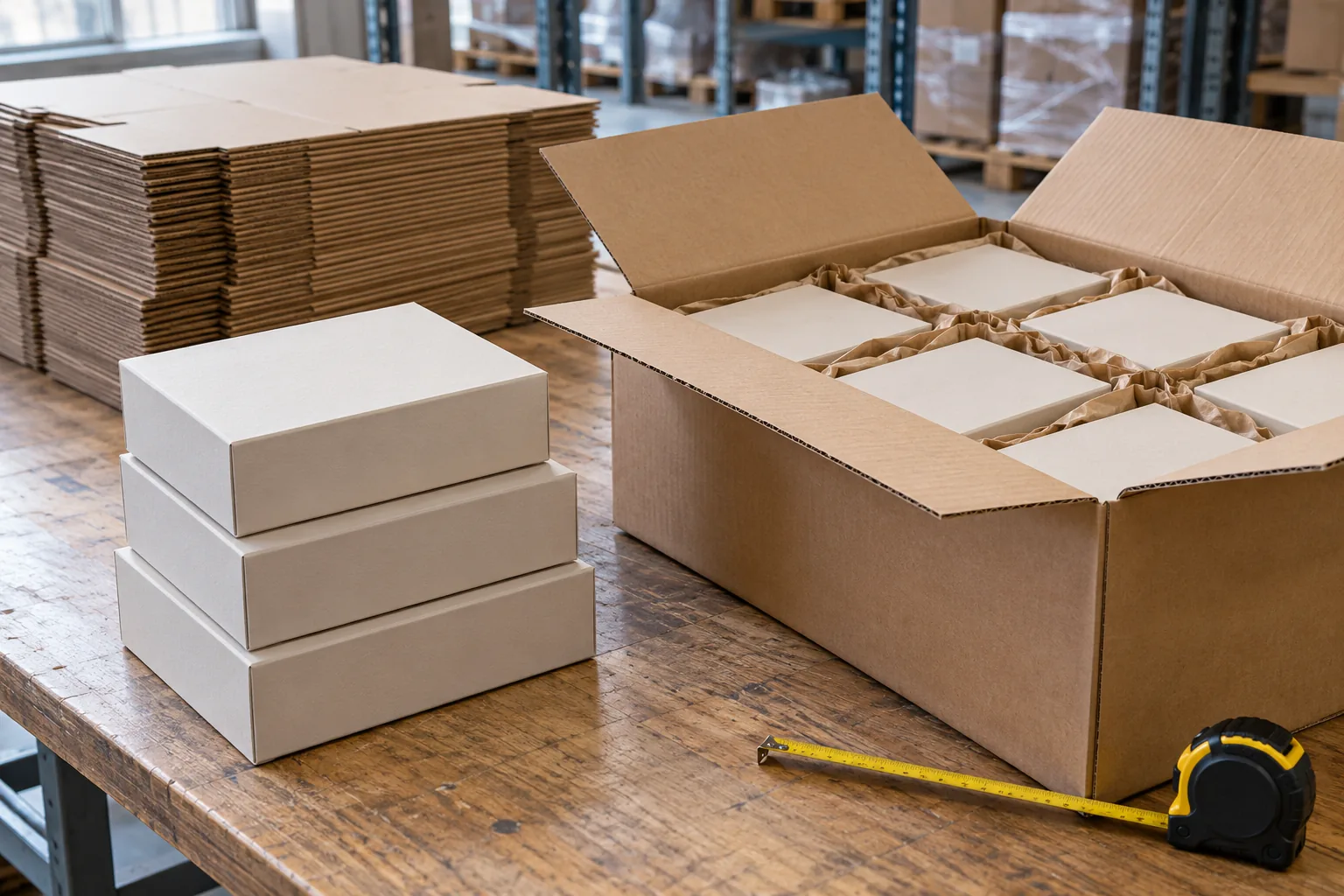
Most standard rigid boxes ship assembled. A slightly cheaper box can occupy more cartons and cost more to move or store. Ask for pieces per master carton, carton dimensions, gross weight, total cartons and total cubic meters. Compare EXW, FOB or a delivered term on the same basis; clarify duties, taxes and local delivery where relevant. For broader packaging cost drivers, see our custom packaging cost overview.
Compare quotes on the same specification
| Quotation line | What to require | Why it matters |
|---|---|---|
| Size and structure | Internal and external dimensions; lid, base and opening style | Prevents a cheaper but different construction |
| Materials | Greyboard caliper, wrap stock and interior liner | Makes appearance and stiffness comparable |
| Print and finish | Colors, process, laminate, foil and effect locations | Reveals omitted passes or tooling |
| Insert and accessories | Material, shape, magnets, ribbon and count per box | Defines complete set price |
| Sample and tooling | Charges, revisions and whether fees are credited later | Separates one-time from repeat costs |
| Quantity and delivery | Unit tiers, packing data, trade term, destination and lead time | Supports landed-cost comparison |
Buyer rule: if a supplier cannot identify the board, wrap, insert and carton packing behind a price, treat that quote as provisional. A precise specification is more valuable than an attractive unsupported unit figure.
How to calculate landed cost per usable box
Use this simple framework: landed cost per usable box = (box order value + one-time charges + freight + applicable import and local delivery costs) ÷ usable quantity received. This is a planning formula, not a quotation. Keep taxes and duties market-specific and obtain current figures from your freight and customs partners.
For example, compare two offers only after adding the same insert, sample/tooling treatment and delivery scope. If Offer A has a lower EXW unit price but uses more shipping volume, while Offer B costs more at the factory yet packs more efficiently, the order total at your warehouse can reverse the ranking. Request carton measurements before choosing.
Sampling and quality checks before mass production
Approve a physical sample with the actual product. Check the lid fit, corner squareness, wrap seams, adhesive marks, color under normal lighting, foil alignment, insert fit, odor where relevant, and the force needed to remove the product. Handle and open the sample repeatedly. A digital print mockup may show layout but cannot prove the production material or finished surface.
Record the approved dimensions, materials, finishing positions, acceptable cosmetic variation and packing method in the purchase specification. During production, ask for checks at board cutting, wrapping, assembly and final packing. The common mistake is approving artwork and assuming the finished box will automatically fit the product and its accessories.
Ordering steps and a quote-ready brief
- Send product dimensions, weight, photos or a physical item, and the destination market.
- Choose a preferred box structure and state whether alternatives are acceptable.
- List target internal dimensions, board and wrap preferences, artwork, finishes and insert.
- Request prices at realistic quantity tiers, with sample and tooling shown separately.
- Approve a complete sample, revise the specification, then confirm the production order.
- Confirm master-carton packing, inspection criteria, delivery term and shipment plan.
Packaza can discuss custom box construction and finishing options against your brief. Include the intended sales channel and whether the rigid presentation box will travel inside a separate shipper.
Frequently asked questions
How much does a custom rigid box cost per unit?
There is no reliable universal figure. Size, structure, material, finish, insert, quantity and delivery change the answer. Obtain a project-specific quote with the same specification at several quantities.
Why do rigid boxes usually cost more than folding cartons?
A conventional rigid box uses a formed board core, a separate wrap and more assembly, while many folding cartons are cut and creased to ship flat. The exact difference depends on the designs being compared.
What is the MOQ for custom rigid boxes?
MOQ varies by supplier, box design, print and material availability. Ask for the minimum for your exact specification and price tiers above it; do not assume one advertised MOQ covers every finish or SKU.
Can I order several sizes together to reach MOQ?
Sometimes the supplier can combine material purchasing or production planning, but separate sizes usually need distinct cutting and setup. Ask for a written combined-SKU quotation rather than assuming quantities can be pooled.
Does the sample price include the finished production process?
Confirm this explicitly. A digital mockup can validate artwork and general size; a production-intent sample should specify the actual board, wrap, print, finishes and insert. Tooling and revisions may be charged separately.
Which finish gives the best value?
That depends on the design and the handling environment. A focused foil logo or carefully selected wrap may communicate the intended look without several decorative passes. Review a physical sample and prioritize protection and legibility.
Can a collapsible rigid box reduce freight?
It can reduce packed volume in some designs, but it adds components and assembly at the destination. Compare complete costs, fit and the required customer experience rather than freight alone.
Should I compare EXW or DDP quotes?
Compare offers on one defined basis. EXW isolates the factory sale; delivered terms can bundle transport and other charges. Ask each supplier to state exactly what is included and who handles customs, duties and final delivery.
What information prevents a quote from changing later?
Send final size, product fit, material stack, print files, finishing locations, insert, order quantity, sample requirements, packing and destination. Changes after sampling may still affect price and lead time, so obtain a revised written quote.
Request a comparable rigid box quote
Send your product dimensions, desired structure, artwork, quantity tiers and delivery destination to Packaza. Ask for a component-level specification and a physical sample before approving mass production. That gives you a clearer comparison of presentation, product fit and landed cost.