Glassine paper is a smooth, glossy, translucent paper made from wood pulp. It is often used for eco-friendly packaging because it is grease-resistant, moisture-resistant, pH neutral, acid-free, recyclable, and biodegradable.
If you want packaging that feels clean, lightweight, and more sustainable than plastic, glassine paper may be a smart choice. It works especially well for food, cosmetics, apparel, stationery, pharmaceuticals, and small retail products.
At Packaza, we help you choose the right packaging material for your product, budget, and brand goals. So, if you are considering glassine paper bags, sleeves, wraps, or liners, this guide will help you decide.
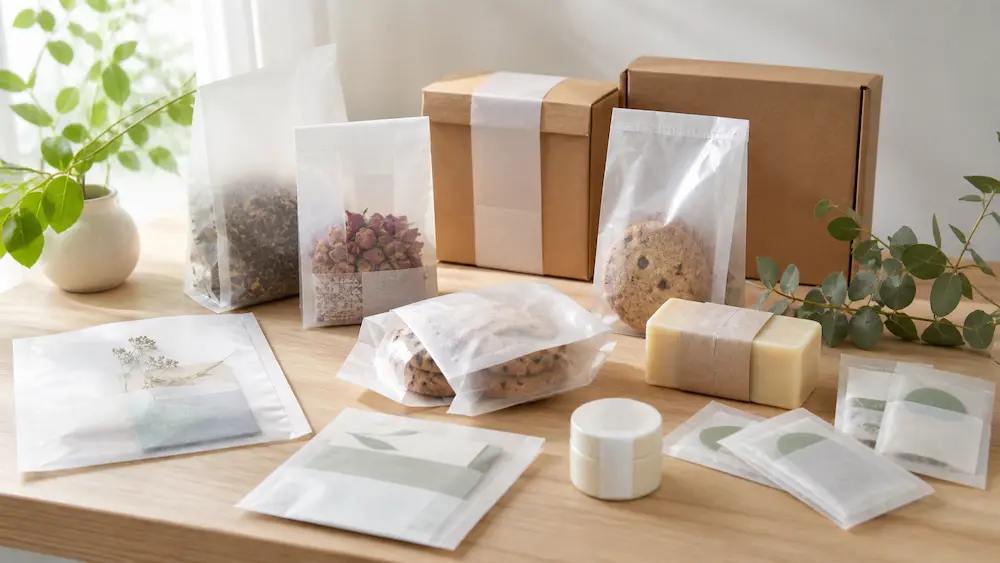
[Featured Image Prompt: A realistic clean studio scene showing translucent glassine paper bags, wrapped bakery items, cosmetics samples, apparel packaging, and eco-friendly paper packaging materials on a natural wood table.]
What Is Glassine Paper?
Glassine paper is not glass. Instead, it is a special paper material with a glass-like appearance. Because it is smooth, glossy, and translucent, you can partly see the product or design behind it.
Unlike regular paper, glassine paper has a dense surface. As a result, it can resist grease, air, and moisture better than many thin paper materials.
You may see glassine paper used as:
- Glassine paper bags
- Glassine envelopes
- Glassine sleeves
- Food wrappers
- Product liners
- Protective paper sheets
- Eco-friendly retail packaging
Therefore, if you want packaging that looks simple but still feels premium, glassine can be a strong option.
For custom paper packaging options, visit Packaza here: /custom-paper-packaging/.
How Is Glassine Paper Made?
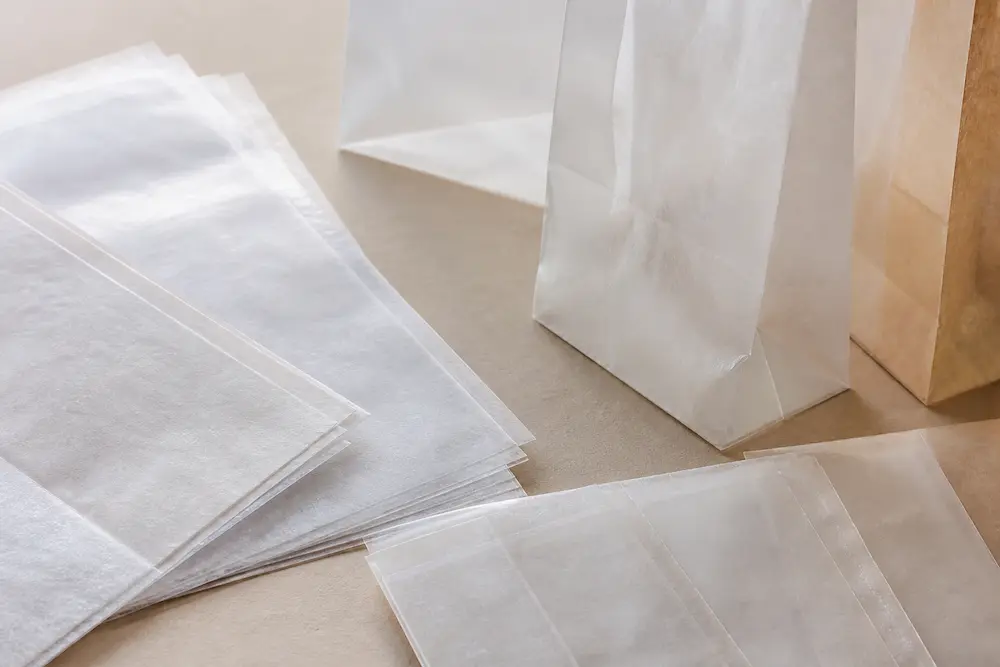
Glassine paper starts with wood pulp. Usually, hardwood trees such as aspen, oak, and birch are processed into pulp.
Then, the fibers are separated and refined. During this step, unwanted substances are removed. This helps make the final paper smoother, cleaner, and more stable.
After that, the paper may be bleached, dyed, or treated depending on the desired grade and color. Some glassine paper can also be made more opaque with mineral additives.
However, the most important step is still the finishing process. This is what gives glassine paper its signature smoothness and shine.
Why Supercalendering Matters
Glassine paper becomes glossy and translucent through a process called supercalendering.
During supercalendering, the paper passes through polished rollers under high pressure. These rollers compress the paper fibers. As a result, the surface becomes denser, smoother, and less porous.
This process also improves the paper’s resistance to:
- Grease
- Moisture
- Air
- Dust
- Light handling damage
Because of this, glassine paper can protect products without needing wax coating or plastic lamination in many cases.
That is one reason many brands see glassine as a more sustainable packaging material.
Benefits of Glassine Paper Packaging
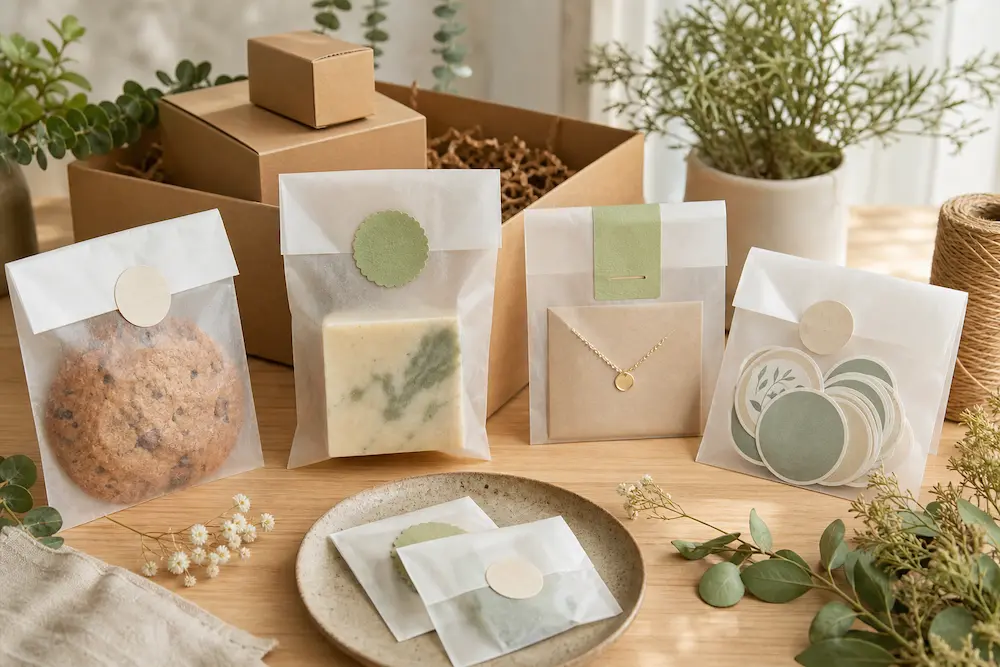
Glassine paper offers several benefits for brands that want simple and sustainable packaging.
First, it is recyclable and biodegradable when it is untreated and free from plastic coatings. This makes it attractive for brands that want to reduce plastic use.
Second, it is grease-resistant. Therefore, it is useful for bakery products, candies, snacks, soaps, and cosmetic samples.
Third, it is translucent. So, your customer can get a soft preview of the product inside without opening the package.
Fourth, it is lightweight. This helps reduce shipping weight and storage space.
Fifth, it feels clean and minimal. Because of that, it works well for natural, handmade, organic, and eco-conscious brands.
In short:
Glassine paper is best when you need lightweight, grease-resistant, translucent, and eco-friendly packaging for small or delicate products.
Drawbacks of Glassine Paper
Glassine paper is useful, but it is not perfect.
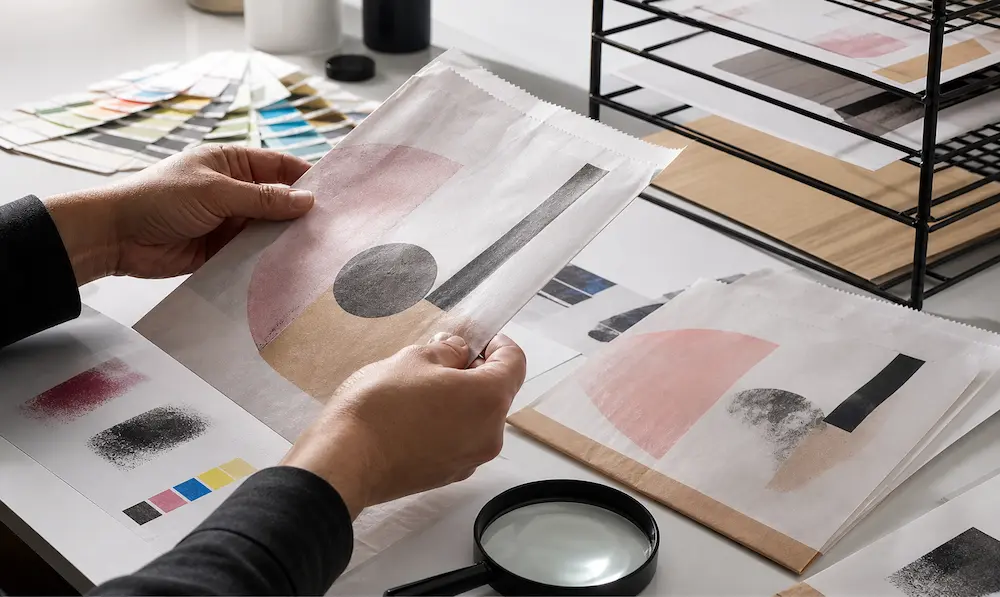
The main drawback is printing. Because glassine has a dense, smooth surface, ink does not absorb as easily as it does on normal paper. Therefore, drying can take longer, and ink smudging may happen if production is not handled correctly.
Also, glassine paper is not as rigid as folding carton paperboard or corrugated cardboard. So, it is not the best choice for heavy products or items that need strong crush protection.
You should also avoid using glassine alone for products that require a full moisture barrier. It resists moisture, but it is not the same as sealed plastic packaging.
Therefore, glassine paper works best as a bag, wrap, sleeve, liner, or inner layer rather than a heavy-duty shipping box.
If you need stronger outer packaging, Packaza can help you combine glassine with corrugated mailers or custom cartons: /custom-packaging-boxes/.
Glassine Paper vs Wax Paper, Parchment Paper, and Cellophane
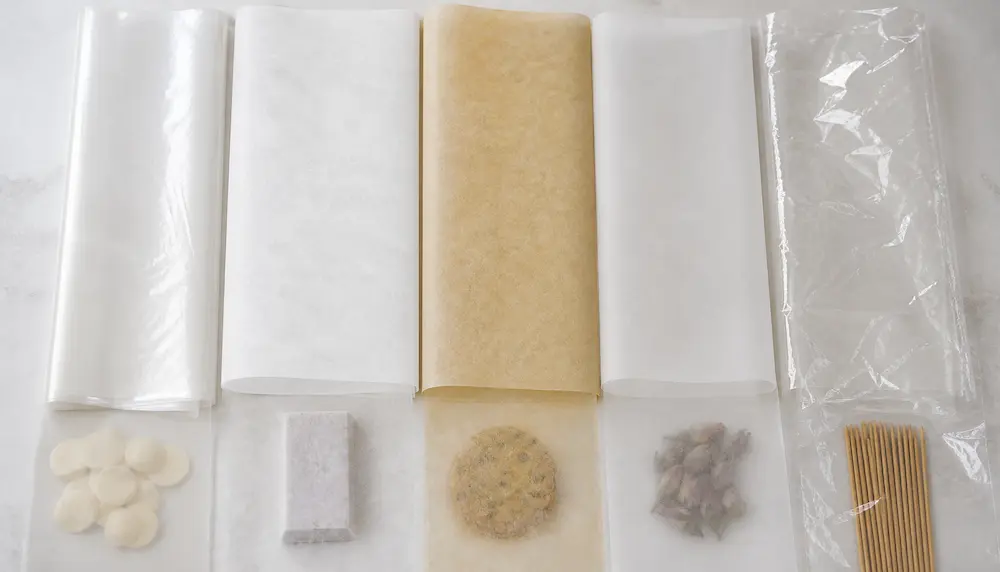
You may wonder how glassine paper compares with similar materials.
Glassine paper vs wax paper:
Wax paper has a wax coating. It can resist moisture and grease, but the coating may make recycling harder. Glassine paper does not always need wax coating, which can make it a better eco-friendly choice.
Glassine paper vs parchment paper:
Parchment paper is heat-resistant and non-stick. However, it is usually designed for baking, not branded retail packaging.
Glassine paper vs vellum:
Vellum is also translucent, but it is often more delicate. Glassine is usually denser and more durable for packaging.
Glassine paper vs cellophane:
Cellophane is clear and flexible, but it often feels more like plastic. Glassine gives you a more natural paper-based look.
So, if you want a soft translucent paper feel, glassine is often the better packaging option.
Common Uses for Glassine Paper Packaging
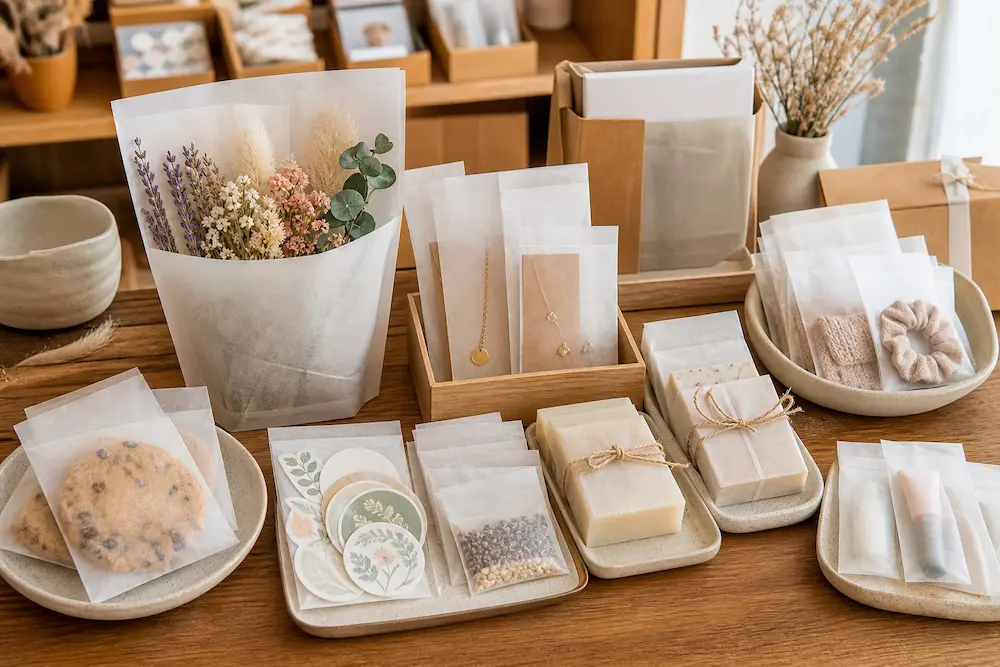
Glassine paper packaging is popular across many industries.
You can use it for:
- Bakery bags
- Candy and snack packaging
- Soap wraps
- Candle dust covers
- Jewelry envelopes
- Sticker and stationery sleeves
- Apparel inner packaging
- Seed packets
- Cosmetic sample bags
- Pharmaceutical paper packaging
- Product liners inside boxes
Because it is lightweight and clean-looking, it can improve your customer’s unboxing experience without adding too much bulk.
For example, you can place a printed glassine sleeve inside a mailer box. Then, your customer opens the outer box and sees a neat, branded inner package. That small detail can make your product feel more thoughtful.
Is Glassine Paper Right for Your Brand?

Glassine paper is a good choice if you want packaging that is:
- Lightweight
- Translucent
- Grease-resistant
- Plastic-free in appearance
- Minimal and clean
- Suitable for small products
- Better aligned with eco-conscious branding
However, it may not be right if your product is heavy, sharp, wet, or needs strong shipping protection.
Before you choose glassine paper, ask yourself:
- Do you need product visibility?
- Do you need grease resistance?
- Do you want a paper-based packaging feel?
- Will the package need custom printing?
- Does the product need outer box protection?
If you answered yes to most of these questions, glassine paper may work well for your packaging project.
Final Thoughts
Glassine paper is a practical and attractive choice for sustainable packaging. It is smooth, translucent, grease-resistant, moisture-resistant, recyclable, and biodegradable.
However, it should be used in the right way. For best results, pair glassine with the right structure, print method, and product protection plan.
At Packaza, we can help you create custom glassine paper packaging that looks good, protects your product, and supports your brand values.
Contact Packaza for custom packaging support: /contact-us/.