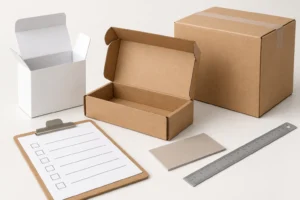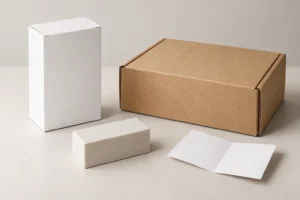
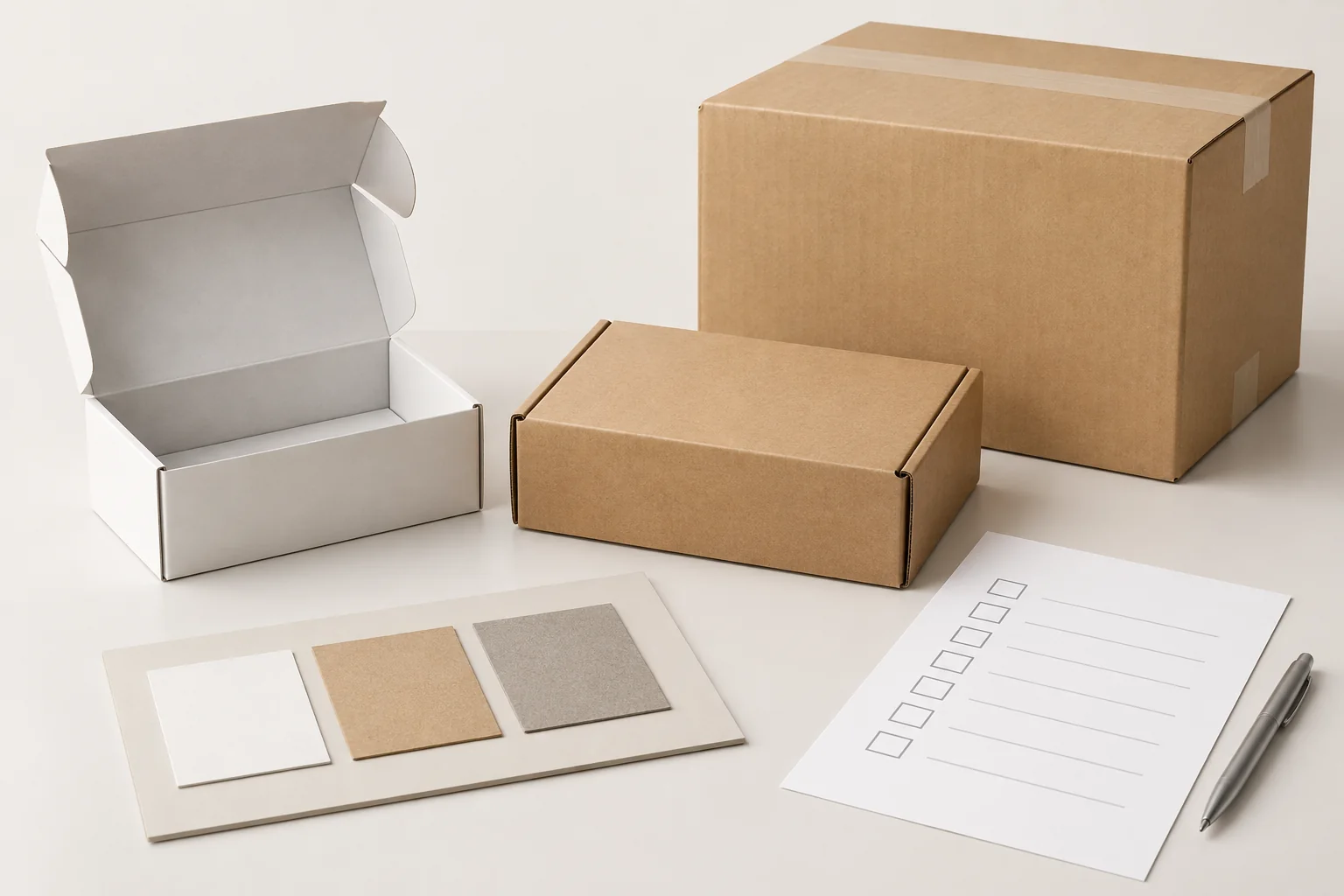
Supplier qualification for custom packaging begins with a defined product and packaging brief. Before comparing claims, determine what needs to be quoted, sampled and approved. Then ask each prospective supplier for evidence that relates to that exact configuration. A supplier profile or generic capability statement is useful context, but it is not proof that a particular structure, material, artwork or shipment configuration has been reviewed.
A supplier qualification checklist at a glance
| Area | What to ask | Evidence to keep |
|---|---|---|
| Product and pack brief | What product, dimensions, orientation and quantity are in scope? | Controlled brief and component list |
| Proposed configuration | Which structure, materials and components are being quoted? | Quote assumptions and drawing reference |
| Artwork and labels | Which files, panels, barcodes or marks apply? | Revision-controlled artwork and approval record |
| Sample scope | What does the sample represent and not represent? | Sample reference and review notes |
| Pack-out and route | What inner pack, master carton and handling information applies? | Pack hierarchy and receiving instructions |
| Change control | How will a revised requirement be identified? | Change ID and approval record |
Start with a controlled packaging brief
A qualification conversation becomes unreliable when each supplier receives different dimensions, artwork or quantity assumptions. Use the custom packaging RFQ template to provide one controlled input set. Include the product, intended packaging role, quantities, dimension basis, artwork status and route information that is already known.
Do not ask a supplier to “recommend everything” without recording the assumptions used. A recommendation can be valuable, but it should be traceable to the brief and separated from requirements that still need buyer approval.
Check the proposed configuration, not only the supplier profile
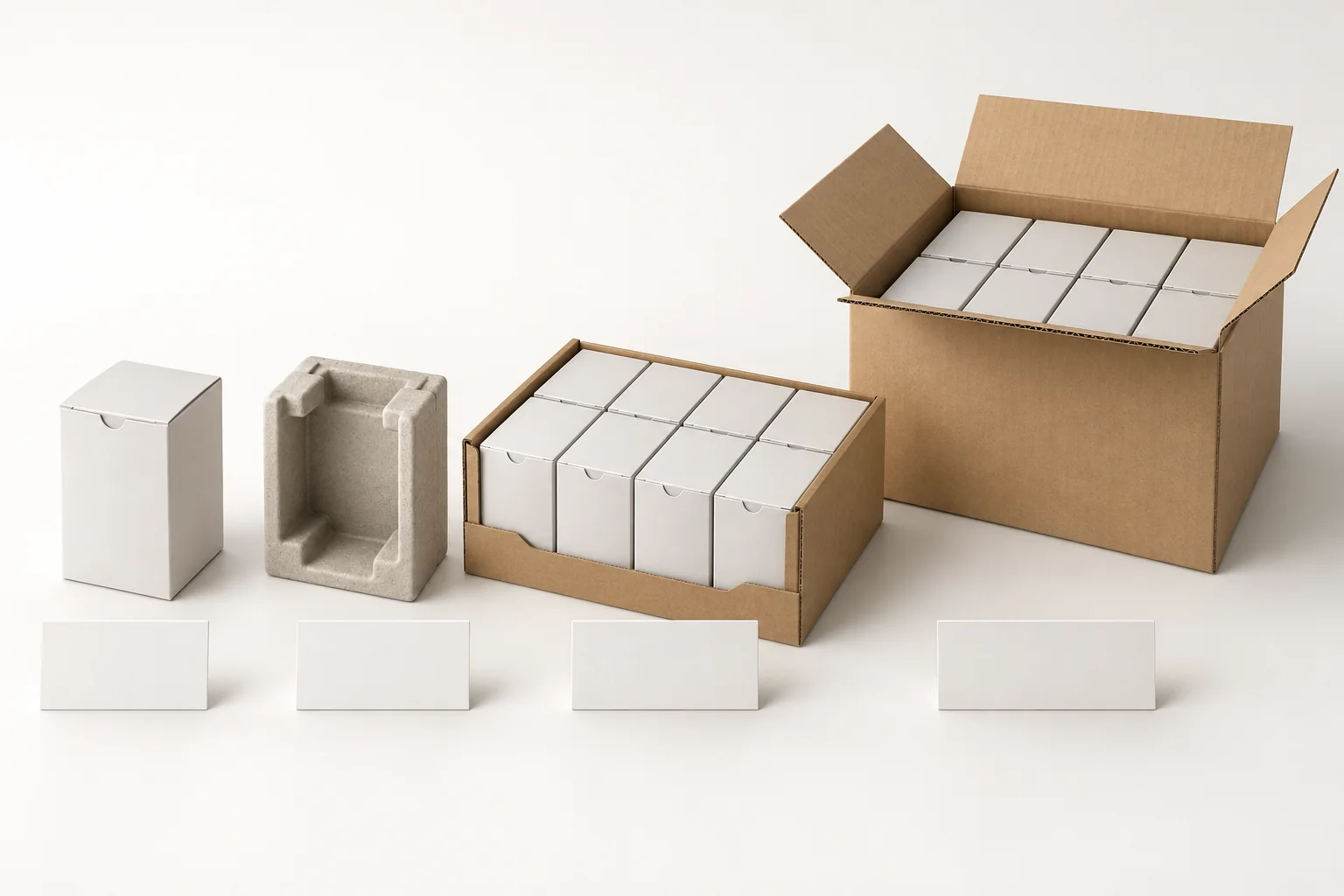
For each quotation, identify the exact packaging components and their role. A product-facing carton, insert, retail tray and master carton may all require separate information. The packaging bill of materials guide can keep components and quantities connected.
Ask what is included in the quoted configuration: dimensions, structure, material description, printing/finish assumptions, closure, internal components, pack quantity and any labels or marks. Do not turn an unverified general capability claim into an approval for the actual project.

Match evidence to the decision
A digital proof, a structural sample and a production-method sample can answer different questions. Record the evidence required for product fit, structure, artwork placement, colour, closure or packing hierarchy. The custom packaging samples guide explains why these should not be treated as interchangeable.
For outer-carton information, use the shipping marks guide to keep handling and identification information tied to the correct carton role.
Ask how revisions are controlled
A prospective supplier should be able to work from identifiable references. Record the artwork version, drawing or dieline, sample reference and quotation assumptions used for the decision. If the brief changes, record the change and determine whether a new quotation, drawing or sample review is required. The packaging change-control checklist provides a practical structure for this record.
Questions to use before an RFQ or supplier decision
- Which product and packaging components are in scope?
- Which dimensions are internal, external or flat?
- What quantity and pack hierarchy is being priced?
- Which artwork, labels and handling marks are current?
- What does each requested sample prove?
- What conditions are outside the sample or quote scope?
- Which document version and approval record control the next step?
Common mistakes
- Comparing supplier claims when the underlying briefs differ.
- Assuming a generic capability statement approves a particular project.
- Using a visual proof as evidence of product fit or packed-route performance.
- Omitting inserts, labels or master-carton requirements from the comparison.
- Treating a previous sample as approval after the structure, product or artwork changed.
Frequently asked questions
What is the first document to send a packaging supplier?
Send a controlled brief that identifies the product, intended packaging role, quantities, dimensions, artwork status and the evidence you need before approval.
Is a supplier profile enough to qualify a packaging project?
No. It is background information. The project still needs a defined configuration, comparable quotation assumptions and evidence appropriate to the decisions being made.
Should every supplier provide the same sample?
Request evidence that supports the same decision scope. The form of sample may differ, but the review criteria and limits should be documented.
Prepare a comparable supplier review
For a custom packaging inquiry, share one controlled brief, the component list, current artwork or drawings, pack hierarchy and required evidence. This enables a comparable supplier discussion without assuming unverified capability, timing or performance.