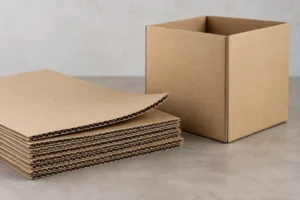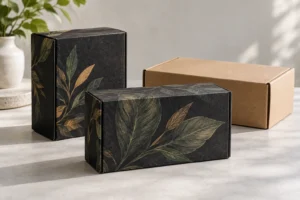
Custom packaging samples help you check specific risks before a bulk order. A digital proof helps you review artwork and layout. A white sample helps you check structure and product fit. A printed or pre-production sample can help you assess appearance and construction, but only to the extent that it uses the agreed production materials and processes. Before approving a bulk order, ask what the sample represents, what it does not represent, and which checks still need to be completed.
“Sample” is not a single standard product. Names and methods vary between suppliers. A digital print on a hand-assembled prototype may be valuable, but it should not automatically be treated as an exact prediction of an offset-printed, machine-assembled production run.
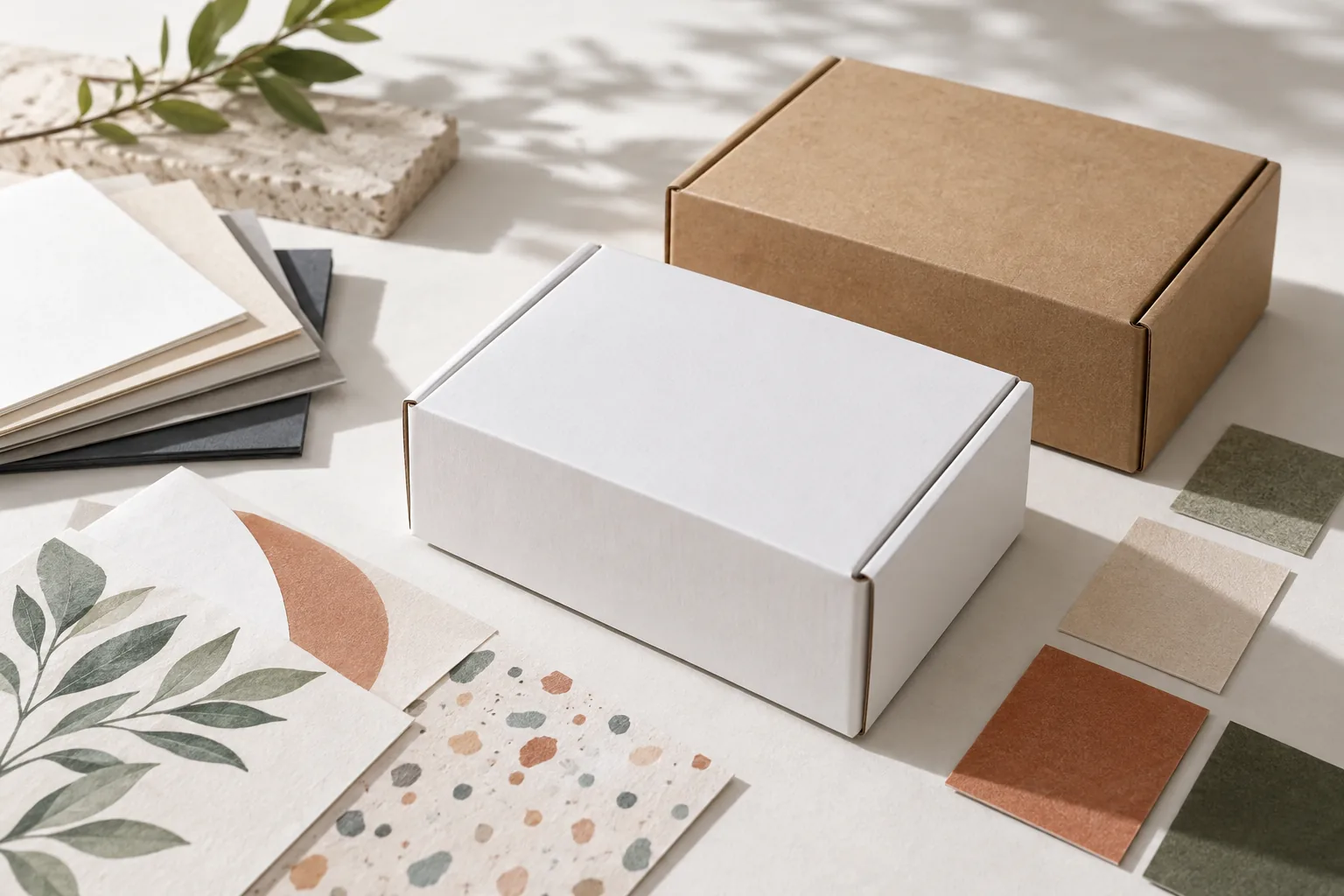
Conceptual AI-generated illustration.
Which custom packaging samples should you request?
| Sample or proof | Useful for | What it does not establish by itself |
|---|---|---|
| Digital artwork proof | Content, panel placement, dieline alignment and file version | Physical fit, material feel or an exact printed colour match |
| White or blank structural sample | Folding, closure, dimensions and product fit, if made to the relevant specification | Final print, finishing or transport performance |
| Printed prototype | General appearance, artwork position and selected finishing effects, depending on how it is made | An exact match to a different print process, substrate or assembly method |
| Pre-production or production-method sample | Reviewing the agreed combination of materials, print, finishing and construction when those are actually represented | Long-run consistency, shipping performance or approval of later specification changes |
Suppliers use these labels differently. Ask for the material, print process, finishing method and assembly method in writing rather than relying on the sample name. These distinctions are consistent with the limitations described in HS Packfactory’s sample comparison and Eastcolor’s overview.
1. Review the digital proof for content and layout
A digital proof is a file or screen-based representation of the proposed print and structural layout. Check the wording, product names, required regulatory text, contact details, barcode number, artwork version and orientation of every panel. Review the proof alongside the supplier’s current dieline, not an earlier template.
Make sure you understand which lines indicate cutting, folding, bleed and non-printing areas. Exact file and bleed requirements depend on the supplier’s process. The packaging dieline guide explains the role of the template; confirm the specific production file requirements with the supplier.
A monitor preview is not the same as a physical colour approval. For colour-critical elements, agree on the reference, viewing conditions and physical proof method with the supplier. If a barcode is important, agree how it will be checked on the actual material and finish; a visually correct digital image is not a scan test.
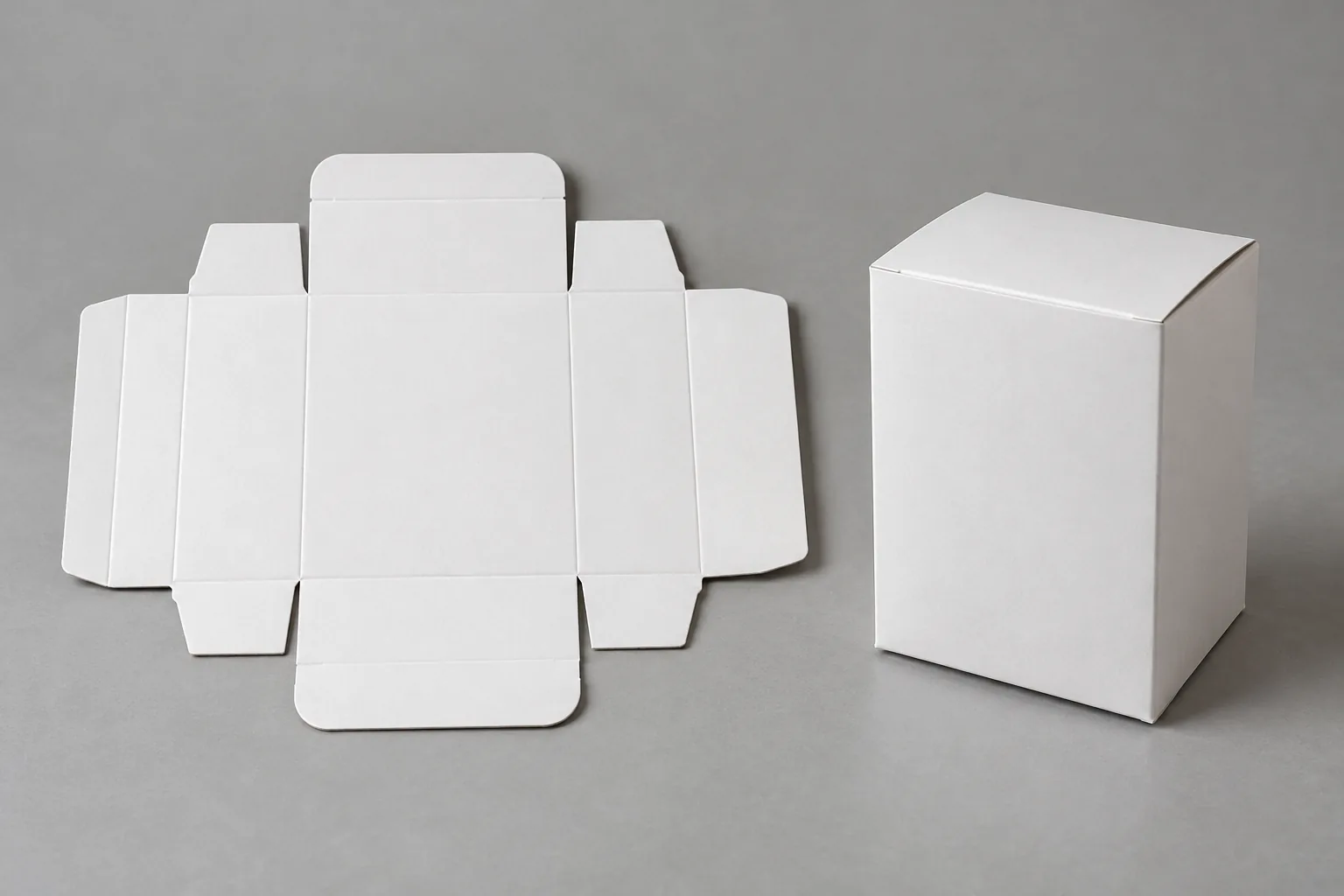
Conceptual AI-generated illustration.
2. Use a white sample to check structure and fit
A white sample, sometimes called a blank or structural sample, is usually an unprinted physical mockup. Ask whether it uses the intended board, thickness, insert and construction. A substitute material may still show the general shape, but its folds, stiffness and fit can differ from the final pack.
Place a representative product and any inserts inside. Check the dimensions specified as internal or external, product clearance, movement, opening and closing, assembly sequence, access to the product and space for labels. If the box needs to fit an outer shipper, shelf or automated line, check the relevant outside dimensions too.
Write down any requested changes. If the board or dimensions change after the sample, agree whether another structural sample is needed. The custom mailer specification checklist can help organize the information sent with the request.
3. Ask how a printed prototype is made
A printed prototype makes panel orientation, graphics and general presentation easier to review on a physical object. Ask whether it uses the intended substrate, production printing method, inks, finish, die cutting and assembly. A sample made by a different method may be appropriate for layout or an early presentation, but differences should be recorded before it is used for colour or finish approval.
For important finishes, agree what needs to be reviewed: gloss, matte appearance, foil position, embossing, scuff resistance or how the surface behaves during handling. A sample’s appearance does not establish performance under every condition. If rub resistance matters, specify a relevant test and acceptance criteria separately; see the packaging rub test guide.
4. Define the pre-production sample and its limits
A pre-production sample can be useful when a buyer needs a closer reference for the agreed order. Ask the supplier to identify the exact material, print process, coatings, structural tooling and assembly method used. Note every difference from the proposed production run. The term alone does not guarantee that every part of the sample came from the final production process.
A signed reference can help the buyer and supplier discuss visible acceptance criteria, but it cannot guarantee that every unit in a large run will be identical. Agree separately on tolerances, inspection, handling and how discrepancies will be resolved. A sample also does not prove the packaging will survive its distribution route: if transit performance matters, agree on a suitable test for the complete packed product and request the results.
Conceptual AI-generated illustration.
What should be included in a sample approval record?
Use a short record that both buyer and supplier can understand:
- Project and version: product name, package style, supplier reference, sample date and artwork/dieline revision.
- Sample scope: materials, dimensions, print process, finishes, insert, closure and assembly method actually used.
- Known differences: list every substitution or feature not represented, such as a different board, digital print or hand assembly.
- Checks performed: product fit, dimensions, content, panel orientation, barcode review, surface appearance and any agreed test results.
- Decision and conditions: approved, approved with specified changes, or not approved; name the responsible approver and date.
- Change triggers: state which later changes require a fresh proof, another sample or a new written approval.
Keep the proof and sample reference linked to the order specification. If a supplier sends a revised proof, compare it against the previous approved version rather than assuming that only the requested item changed.
How do samples affect cost and timing?
Ask for a breakdown of sample charges, tooling or setup charges, shipping, the number of revisions included, and whether any amount is credited against an order. These terms vary by supplier and project; do not assume a sample is free, that a tool can be reused, or that a quoted lead time includes every revision.
Compare the decision value of each sample with the cost and time involved. A simple repeat order with unchanged specifications may need a different approval plan from a new, colour-critical gift box with an insert. Before comparing quotes, ensure suppliers are offering equivalent sample scopes and identify what is excluded. For other cost drivers, see how much custom packaging costs.
Questions to ask before requesting a packaging sample
- Which parts of the final specification will this sample use, and what will be substituted?
- Is it intended to approve fit, artwork, colour, finish, assembly, or some combination?
- What are the fees, revision limits, shipping terms and expected timing?
- How will the supplier identify the approved artwork, dieline and material versions?
- What happens if the design, board, insert, finish or printing process changes?
- Which physical tests or inspections are separate from sample approval?
If you are preparing a packaging inquiry, send the product dimensions and weight, intended box style, order quantity, artwork status, destination and the decisions you need the sample to answer. Ask the supplier to confirm which samples and testing options are available for your specific project.
Frequently asked questions
Is a digital proof enough to approve a packaging order?
It can help check a file, but it cannot confirm physical fit or how the finished substrate and coating look and feel. Decide whether additional physical checks are needed for the project’s risks.
Is a white sample always made from the final board?
No. A white sample may use the proposed material or a substitute. Ask the supplier to identify the board and any deviations before relying on it for fit or stiffness.
Does a pre-production sample guarantee the bulk order will match?
No. It can be an agreed reference when its scope is clear, but production variation, later changes and inspection criteria must be managed separately.
Does a packaging sample replace a shipping test?
No. A physical sample can support fit and assembly checks; it does not automatically validate a packed product against transport hazards. Choose an appropriate test and acceptance criteria for the intended route.