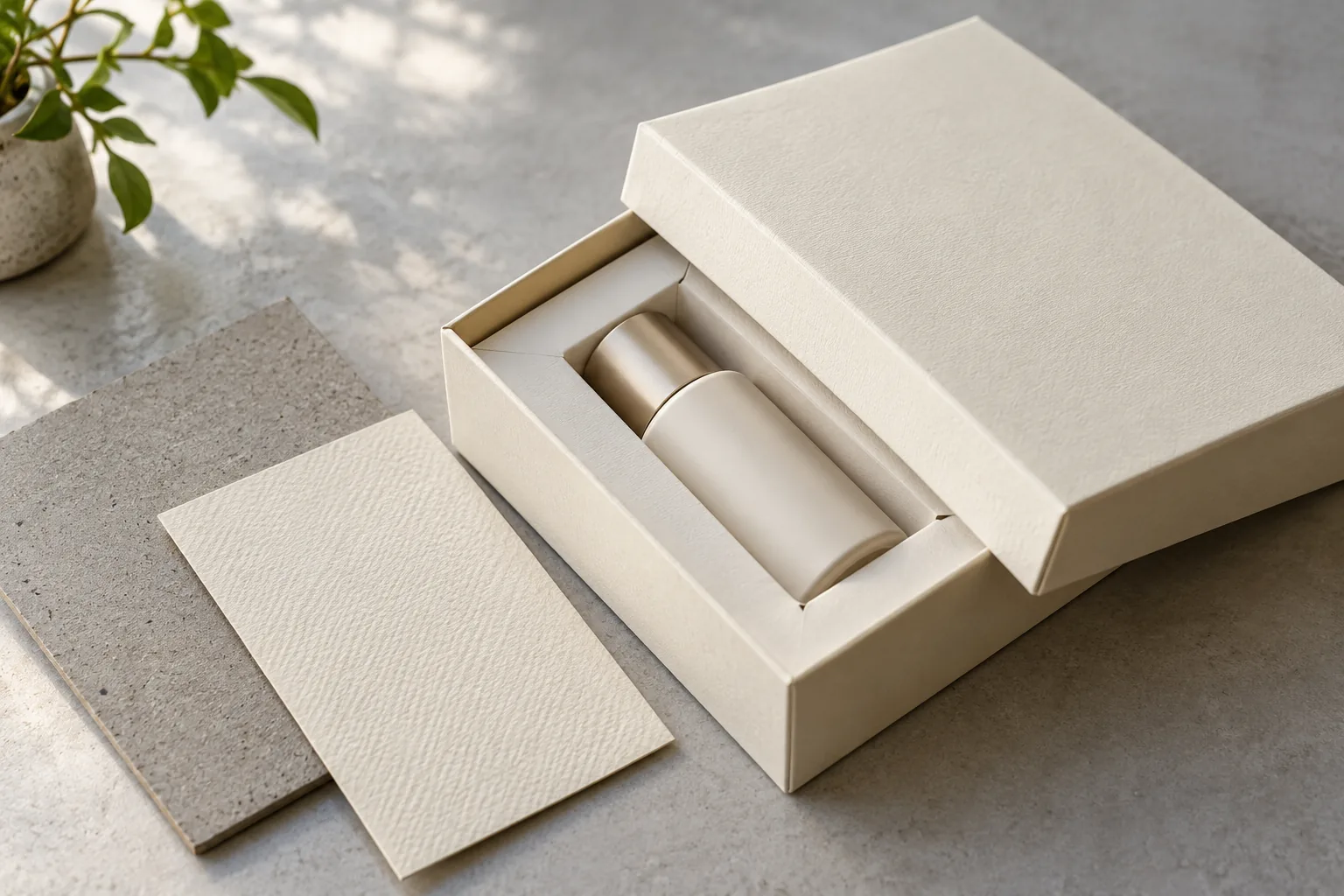
Rigid box materials work as a system: greyboard forms the structure, printed or specialty paper creates the visible surface, liners finish the inside, and an insert secures the product. Choose them together around the product’s weight, dimensions, presentation and shipping conditions. A beautiful wrap cannot compensate for a weak fit, and an expensive insert is wasted if the product shifts in transit.
Key takeaways
- Specify board thickness, box dimensions and construction together; thickness alone does not define strength.
- Evaluate wrap paper by its appearance, fold behavior, print result and resistance to scuffs.
- Choose liners and inserts according to product contact, handling and unboxing requirements.
- Approve a physical sample with the actual product before confirming production.
- Ask for the complete material stack in a quotation so competing offers are comparable.
What materials make up a rigid box?
A typical wrapped rigid box starts with a dense paperboard core, often called greyboard or chipboard. The board is cut and formed into a base and lid or another structure. An outer sheet is then glued and wrapped over the board. The interior may show a separate liner, a printed sheet, a tray or a fitted insert. Adhesive, magnets, ribbons and other components depend on the opening style.
“Rigid” describes the finished construction, not a single grade of paper. Two boxes of similar outside size can feel very different because of board thickness, board quality, wall height, lid fit and the contents they carry. For an overview of box styles, see our complete guide to rigid boxes.
Greyboard: the structural core
Greyboard supports the walls and gives a wrapped box its firm hand feel. Suppliers commonly discuss its thickness in millimeters, while paper grades may also be described by grammage. These measurements are not interchangeable: grammage expresses mass per unit area, whereas thickness describes the caliper of the sheet. Ask for the actual board specification and a sample, especially when comparing quotes.
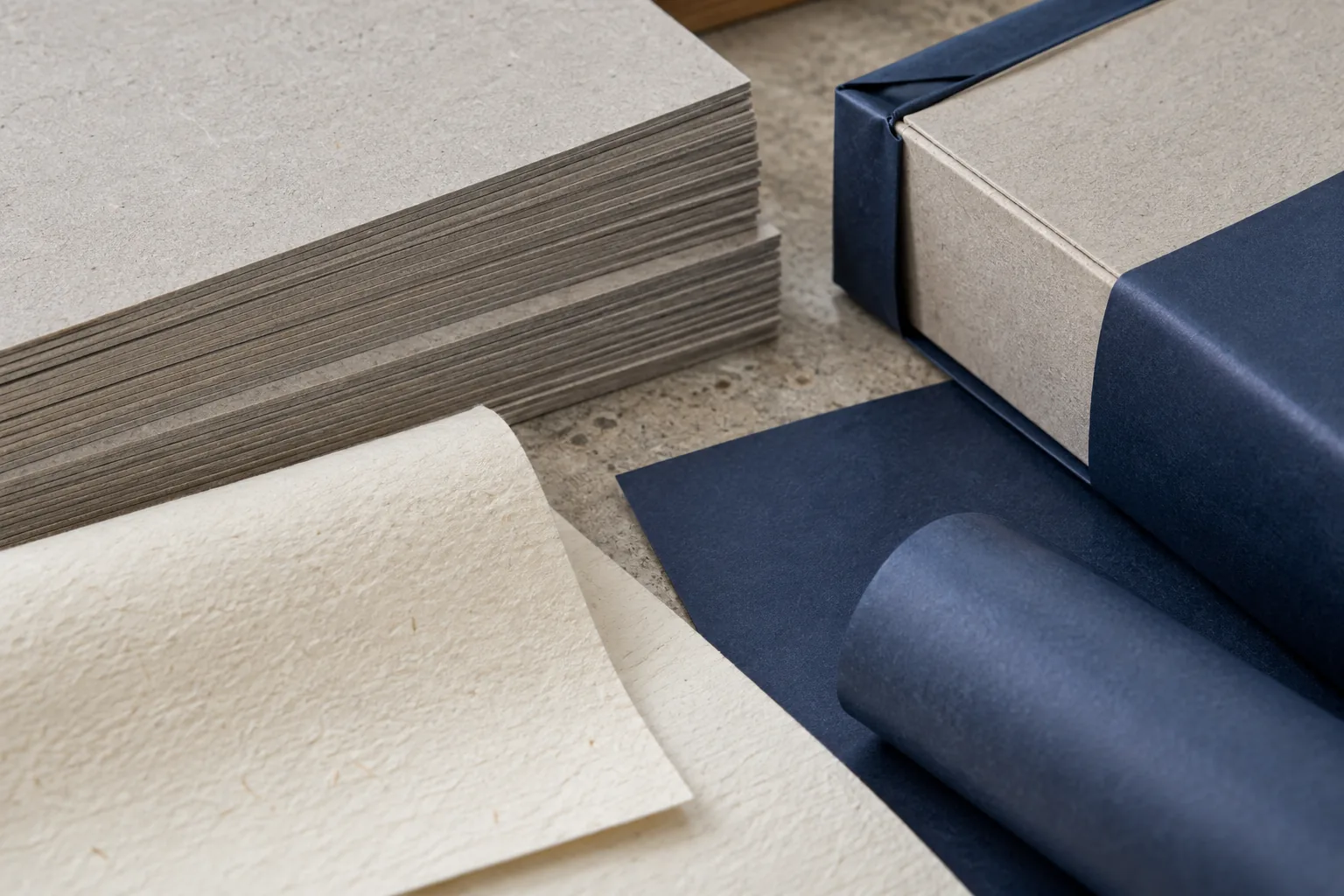
Thicker board can improve stiffness, but it also adds weight, changes the internal space and affects the edge profile. A shallow jewelry box and a large gift set should not automatically use the same board. The size of unsupported panels, the lid design, the number of pieces packed inside and the way cartons are stacked all matter.
Inspect a sample for straight edges, square corners, flat panels and a lid that closes consistently. A strong core with poor cutting, wrapping or glue control still produces an unsatisfactory box. For a broader comparison of paperboard families, read our paperboard grades guide.
Outer wrap paper: what customers see and touch
The wrap is a separate sheet bonded around the greyboard. Options include printed coated paper, uncoated textured paper and other specialty sheets. A printed wrap gives more control over artwork and color; a textured stock can create a tactile effect with less ink. The right choice depends on the design, handling conditions and the desired retail presentation.
Look beyond a flat paper swatch. Print color can change after lamination, while folds can reveal cracking or white edges on some combinations of stock, ink and finish. Dark solid colors may show abrasion more readily. Request a wrapped sample with the actual corners, seams, print and finish before approving the surface.
Printing and surface finishes
Offset printing is common for detailed graphics on wrap sheets. Foil stamping, embossing or debossing can emphasize a logo; lamination or a coating may change sheen and handling resistance. Each additional process affects registration, sample time, tooling or cost. Keep critical artwork away from fold lines and ask the supplier to confirm the safe area on the dieline.
Inner liners and exposed surfaces
The inside of a rigid box can be wrapped with paper, covered with a separate liner or partially concealed by an insert. A liner makes the lid and base feel finished and can carry instructions or branding. The paper should lie flat and adhere cleanly without visible bubbles, loose edges or glue marks.
If the product touches the liner directly, check whether ink, coating, adhesive odor or surface texture is suitable for that contact. For food, cosmetics or delicate finishes, state the intended contact and applicable market requirements to the supplier rather than assuming a decorative paper is suitable.
Choosing an insert for the product
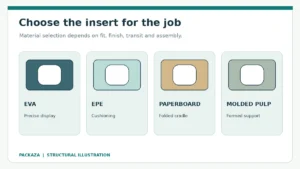
An insert controls movement and presentation. Paperboard partitions and folded paper supports can suit many lightweight products; molded pulp may support an all-fiber concept; foam, fabric covered forms or other engineered inserts can hold fragile or irregular shapes. These are design options, not interchangeable substitutes. Confirm fit with the real product and any accessories.
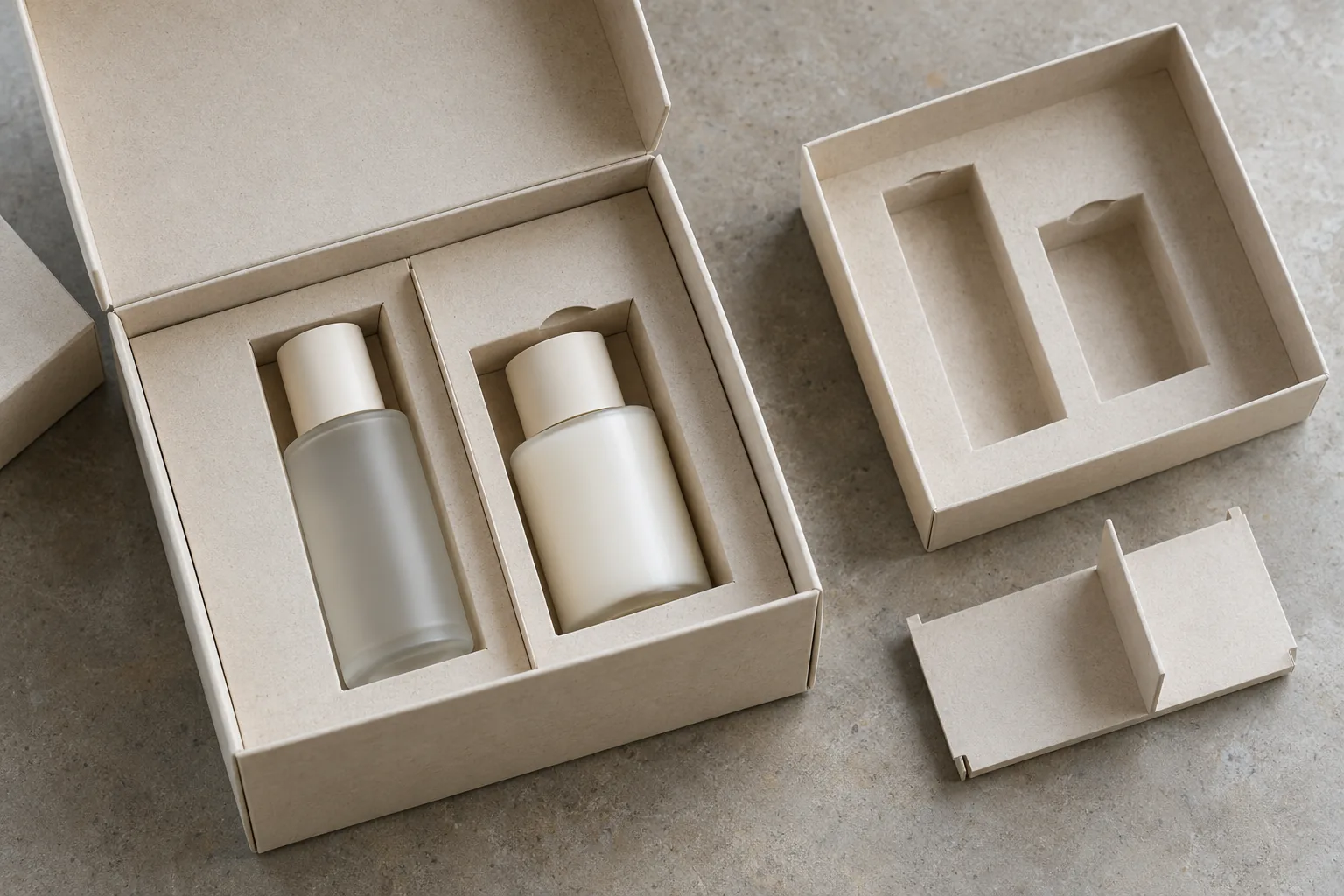
For a more detailed insert comparison, ask your supplier to show the product in two or three candidate constructions.
| Component | Primary job | What to check on a sample |
|---|---|---|
| Greyboard core | Holds the box shape | Wall stiffness, square corners, panel flatness |
| Outer wrap | Brand appearance and touch | Color, seams, fold edges, rub marks |
| Inner liner | Finishes visible interior surfaces | Bonding, wrinkles, odor and product contact |
| Insert | Positions and protects contents | Fit, removal force and movement when handled |
| Closure or accessory | Controls opening and presentation | Alignment, durability and ease of use |
How to select a material stack for your project
- Define the product. Supply the actual item, weight, measurements and any accessories. Note surfaces vulnerable to rubbing.
- Define the journey. Explain whether the box will sit on a shelf, ship in a protective mailer or be carried as a gift. The rigid box may still need an outer shipping carton.
- Choose the structure. Decide on lid and base, book style, drawer or another opening before finalizing board and wrap.
- Set visual priorities. Provide artwork, target color and finish references. Ask for a physical proof when color or foil placement is critical.
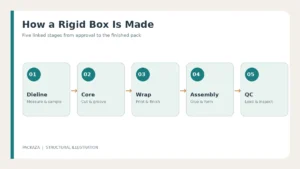
- Prototype the complete pack. Test the board, wrapped edges, liner, insert and actual product together.
A supplier can propose a suitable combination when the brief includes the product and end use. See Packaza’s custom packaging options for ways to develop the box structure and finish.
Cost, production and quality control
Material cost is only part of the price. Larger panels use more board and wrap; specialty paper, print effects, insert tooling, assembly steps and order quantity also influence a quote. A cheap comparison may omit a liner, specify a different board or leave the product loose. Ask each supplier to quote the same dimensions, construction, board thickness, wrap, printing, finish, insert and packing method. Our custom packaging cost guide explains broader pricing drivers.
At sample approval, examine the box under ordinary use: open and close it repeatedly, lift the product out, inspect corners and seams, and place the packed box into its shipping configuration. Record the approved material specification and sample so the production team has a clear reference.
Questions to ask a rigid box supplier
- What are the board thickness and grade, and will the same material be used in production?
- What is the exact wrap stock, printing method and finish?
- Which interior surfaces receive a separate liner?
- What material and construction will hold each product component?
- Can we approve a complete sample with the actual product?
- What are the tolerances, packing method, sampling charge and lead time?
Frequently asked questions
Is greyboard the same as corrugated cardboard?
No. Greyboard is a dense solid paperboard often used as a wrapped box core. Corrugated board has a fluted middle layer and is commonly used for shipping cartons. A rigid presentation box may travel inside a corrugated shipper.
Does thicker greyboard always make a better rigid box?
No. The board must suit the box size, construction and product. More thickness can add weight and reduce usable inside space; precise assembly and a suitable insert matter too.
Can a rigid box be made entirely from paper materials?
Some designs can use paperboard, paper wrap and paper based inserts. Magnets, film lamination, foam or fabric change that material mix. Ask for a component level breakdown if fiber content or end of life handling is a priority.
Which wrap paper is best for a luxury finish?
There is no universal best stock. Printed coated paper offers detailed artwork; specialty textured papers emphasize touch. Test the chosen paper after printing, finishing and wrapping because the final box differs from a loose swatch.
Do I need an inner liner?
A liner can hide the core and complete the interior appearance. An insert may cover part of the inside, but exposed lid and wall surfaces still need a design decision. Specify the visible areas in the sample.
How do I prevent an item from moving in the box?
Start with accurate product dimensions and a fitted insert or partition. Test the packed box by handling it in its normal orientation and in its shipping carton. Leave room to remove the product without tearing the insert.
Can the rigid box itself serve as a shipping box?
For many retail presentation designs, an outer protective carton is advisable. The answer depends on the box structure, product fragility and delivery conditions; validate the complete shipping pack rather than the display box alone.
What should I send for a reliable quotation?
Send product dimensions and weight, target inside box size, quantity, box style, artwork, board and wrap preferences, finish, insert requirements, destination and requested sample. A physical product or prototype improves fit decisions.
Get a material proposal for your box
Share your product, artwork and intended use with Packaza. Ask for a complete material specification and a fitted physical sample, so you can approve the appearance, product fit and handling before production.