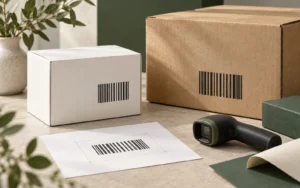
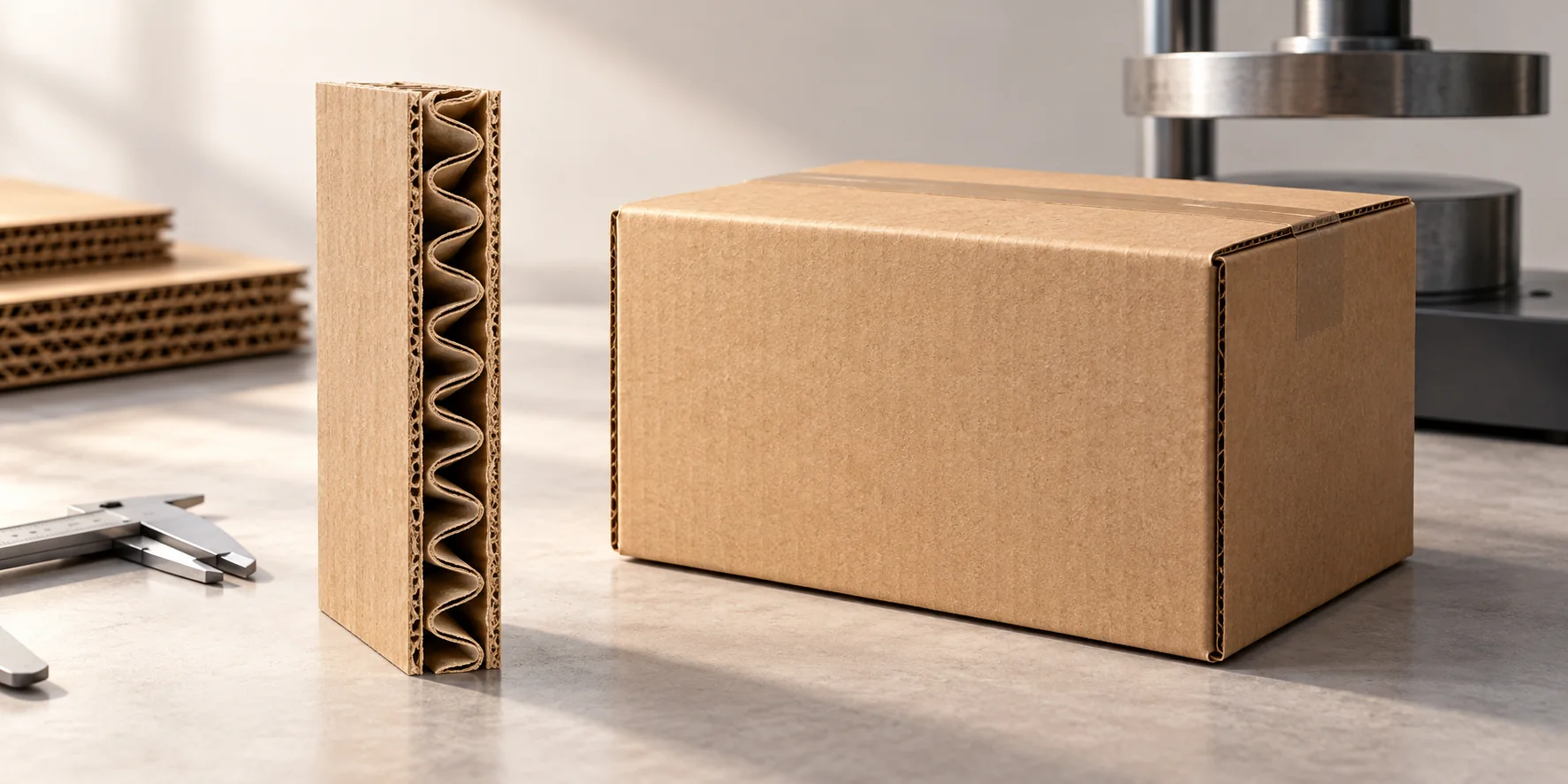
An edge crush test (ECT) measures how a sample of corrugated board resists force applied along its edge. A box compression test (BCT) measures the top-to-bottom compression performance of a finished box under stated test conditions. For a shipping-box purchase, use ECT to define and compare board options, then use BCT or a packaged-product test to validate the box and distribution setup that actually matter to your load.
Key takeaways
- ECT is a board property; BCT is a finished-box result. Ask for the test method and units with either number.
- The same board can perform differently after box dimensions, openings, creases, closure and assembly change.
- A lab compression result describes the tested sample and conditions. It is not a universal safe pallet load.
- Pallet pattern, support, storage time and climate belong in the packaging brief.
- Approve the final box and, when needed, the product inside it before locking a production specification.
- Compare supplier quotes on the same box design and acceptance criteria, not on an isolated “stronger board” claim.
ECT and BCT measure different things
ECT measures the edgewise compressive strength of a corrugated board specimen. The result is normally expressed as force per unit length, so the number is meaningful only with its units and test method. TAPPI T 811 and ISO 13821 describe edgewise tests, but their specimen preparation and procedures matter; a buyer should not compare reports with different methods as though they were interchangeable. ISO explains the scope of its waxed-edge method.
BCT refers to the compression performance of the assembled box. TAPPI T 804 describes a compression test for fiberboard shipping containers and allows the container to be tested with contents and inner packing when the performance of the entire pack is the question. Report whether the box was empty or filled, its closure, conditioning, loading direction, test setup and result. TAPPI’s T 804 description.
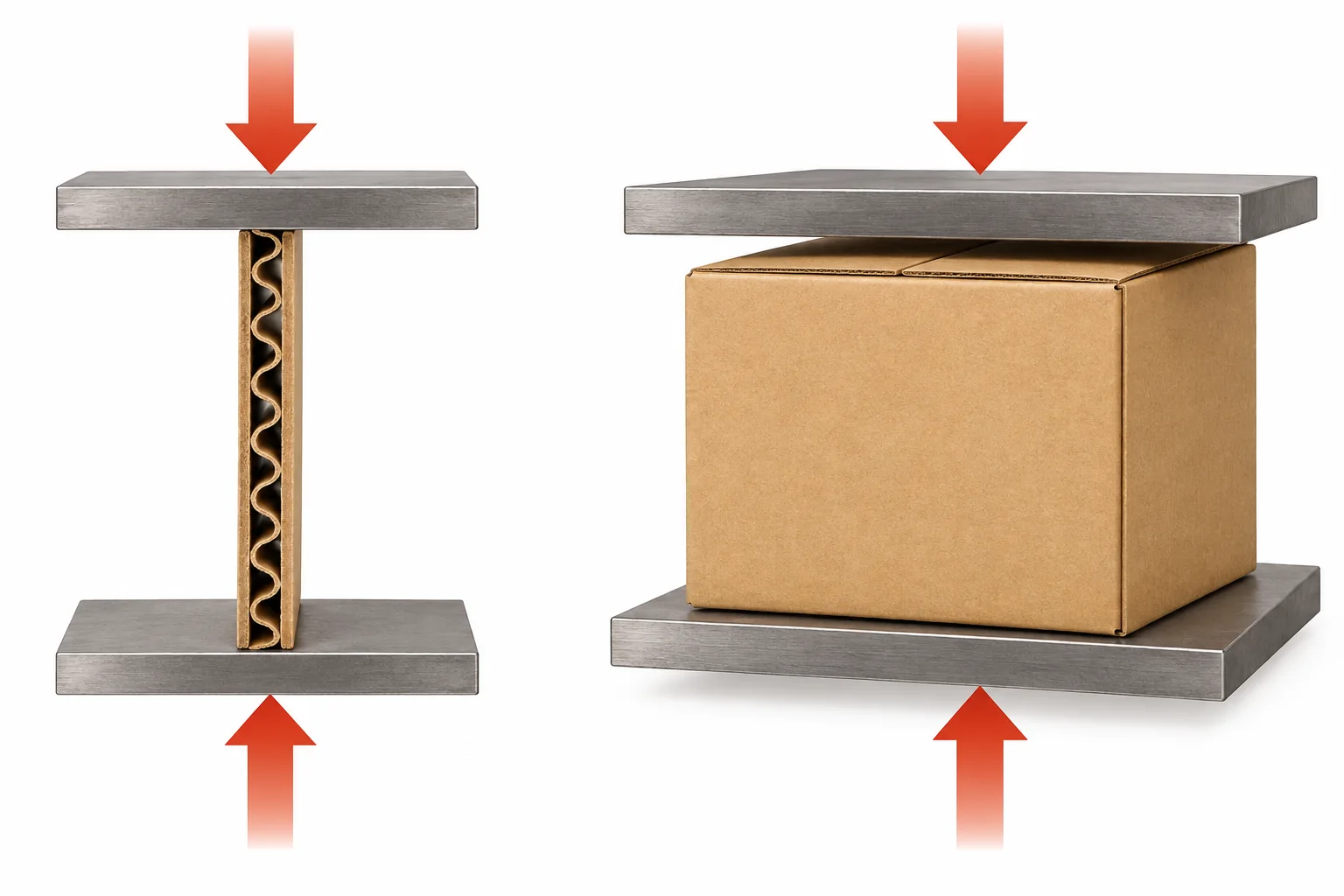
Concept illustration: board specimen testing at left and assembled-box compression at right. It is not a Packaza test record.
Think of ECT as an input to structural design, and BCT as one check on the output. A supplier may use board properties and box geometry to estimate compression performance during design, but the estimate should not be presented as an actual BCT result. FEFCO’s standards comparison is useful when suppliers quote different regional methods.
Which test should your purchase order request?
| Buying question | Useful evidence | What it cannot prove alone |
|---|---|---|
| Are two proposed corrugated boards comparable? | ECT report with method, units, board construction and conditioning | Performance of a different finished box |
| Can the final box resist a specified top load in a lab? | BCT on the approved box style with stated closure and conditioning | Survival through the whole shipping route |
| Will the product survive parcel or pallet distribution? | Relevant packaged-product test plan using the actual product, inserts and closure | Every untested route, season or handling event |
| Will a warehouse pallet remain stable? | Compression result plus a validated pallet pattern, support and storage brief | Safe load based on ECT alone |
If the shipment is parcel based, ask whether the selected distribution test also covers shock and vibration. ISTA describes these alongside compression and climate hazards for direct-to-consumer shipments. ISTA 3L overview. If the shipment is palletized, record the pallet footprint, stacking pattern, number of layers, box orientation and any overhang or unsupported edges. Fibre Box Association research shows that a change in stacking pattern can materially change compression behavior, even with otherwise identical cases. FBA Technical Committee summary.
The specification to send suppliers
Send every quoting supplier the same brief. This makes the offers comparable and gives the sample approval a clear target.
- Product and load: product dimensions, mass per box, number of units, fragility, whether the product or insert supports the top panel.
- Box design: style, internal dimensions in L × W × H order, flute direction, openings, handles, vents, closure and print area. See Packaza’s box measurement guide and dieline guide.
- Board requirement: wall construction, agreed ECT method and units, plus any separate print or appearance requirements. Do not substitute ply count for a performance specification.
- Distribution: parcel or pallet; destination; expected storage and transport conditions; pallet dimensions; layers; stack pattern; storage duration.
- Acceptance: sample quantity, conditioning, closure, test method, pass/fail criterion, reporting format and who pays for independent testing.
The acceptance value must come from the product and distribution design. This article does not prescribe a universal ECT grade, BCT target or safety factor. Those choices need a packaging engineer or test laboratory to account for the actual load and handling route.
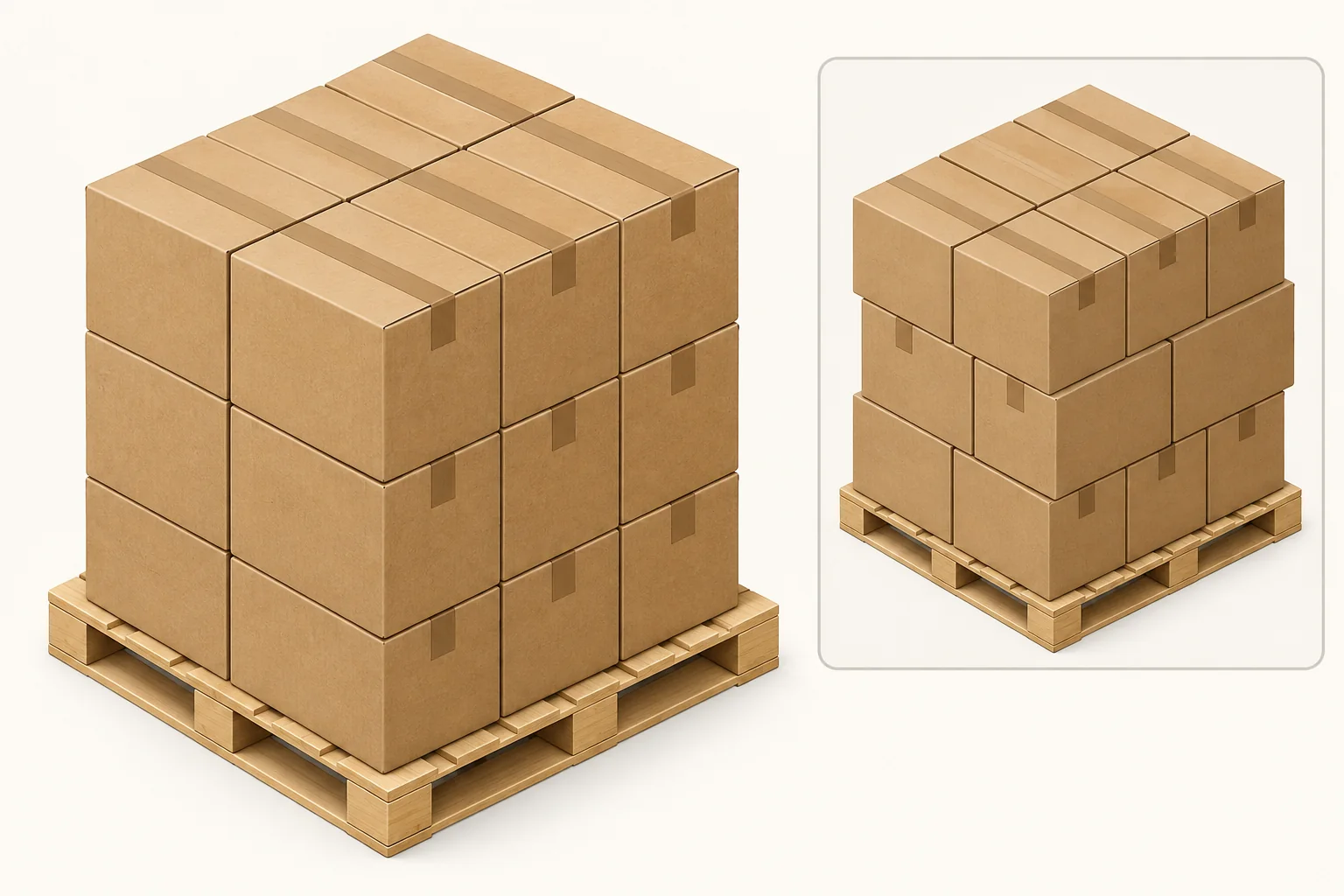
Concept illustration: compare the load path of aligned and staggered stacks; actual pallet performance requires testing in the intended configuration.
A practical approval workflow
1. Define the failure to avoid. Is the concern crushed bottom boxes in storage, collapsed parcels in transit, damaged product, or unstable pallets? Each calls for a different test plan.
2. Freeze the geometry before comparing material prices. A different box perimeter, height, score layout or opening can change compression performance. Confirm the finished dimensions and mailer box specification when relevant.
3. Request a board proposal and sample. Ask for the board construction, ECT test method, units and sample identification. Then check print, folding, fit and closure on the physical box.
4. Test the approved construction. State whether the box is empty or packed and record conditioning, closure, machine setup and acceptance threshold. For a packaged-product program, agree on the relevant ISTA or other test procedure with your test partner.
5. Check the unit load. If boxes are palletized, replicate the actual stack and pallet support. Avoid treating a single-box result as the sole validation of a pallet load; FBA’s pallet pattern study illustrates why configuration matters.
6. Lock the production specification. Keep the approved dieline, board grade, test report, artwork, closure instructions and sample version together. A later change to material, dimensions or insert should trigger a review of whether testing must be repeated. Packaza’s corrugated box factory page lists available packaging options; the project requirements should be confirmed in a quote.
Common quote and approval mistakes
- “The box is 5-ply, so it is strong enough.” Wall count describes construction; it is not the tested result for your finished pack.
- “ECT 32 means BCT 32.” ECT and BCT measure different specimens and use different units. Preserve the units and method in the quote.
- “The lab box passed, so the pallet is approved.” Pallet arrangement and support may change load paths. Validate the intended unit load separately when stacking is critical.
- “All samples are equivalent.” Ask whether the sample uses the production board, adhesive, printing, die cut and closure.
- “A predicted BCT is a test report.” Label calculations as estimates and request actual test results when the specification requires them.
Frequently asked questions
Is a higher ECT always the best choice?
No. It can increase edgewise board strength, but the best board also depends on box geometry, protection needs, print quality, cost and verified performance of the finished pack.
Can I calculate BCT from ECT?
Designers can estimate compression from board properties and geometry, but an estimate is not a measured box result. Use physical testing when BCT is an acceptance requirement.
Should a BCT test use an empty or filled box?
State the question first. An empty-box test isolates the box construction; a filled-box test can assess the complete pack. TAPPI T 804 allows the box with contents and inner packing when overall pack performance is being studied.
What units should appear on an ECT report?
The report should state the force-per-length units used by the test laboratory, the method and conditioning. Do not compare bare numbers without those details.
Does a BCT result guarantee safe stacking in a humid warehouse?
No. It is a result for a stated test setup and condition. Tell the test partner about the expected climate, storage duration, pallet arrangement and load so the validation reflects the real use.
Do I need both ECT and BCT?
For a critical stacking application, both can be valuable: ECT controls the supplied board, while BCT verifies the approved box. A packaged-product or pallet test may still be needed for the actual distribution system.
Is a box manufacturer’s certificate enough for approval?
It can identify board or construction information, but it does not replace a project-specific test report when your purchase order requires measured compression performance.
When should I retest a shipping box?
Review testing when the board, dimensions, die cut, inserts, product, closure or distribution route changes. ISTA’s program guidance lists packaging components, materials and closure methods among factors relevant to retesting. ISTA testing guidance.
Request a corrugated-box quote
Send Packaza your box style, internal L × W × H dimensions, product and packed weight, quantity, board preference, artwork, closure, shipping destination, pallet pattern and target test requirement. If you are unsure which ECT or BCT level to request, describe the distribution problem and ask for a proposed sampling and validation plan. Contact Packaza or review the customization process.