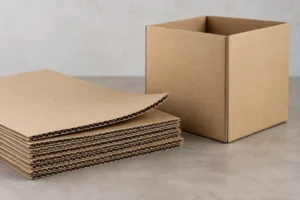
A folding carton and a corrugated box solve different packaging problems. A folding carton is commonly evaluated for product presentation and efficient retail packaging; corrugated packaging is commonly evaluated where board depth, cushioning and transit handling matter. Many products use both: a folding carton around the product and a corrugated mailer or shipper around that carton. Choose the system from the product, channel, handling and proof requirements rather than the empty box alone.
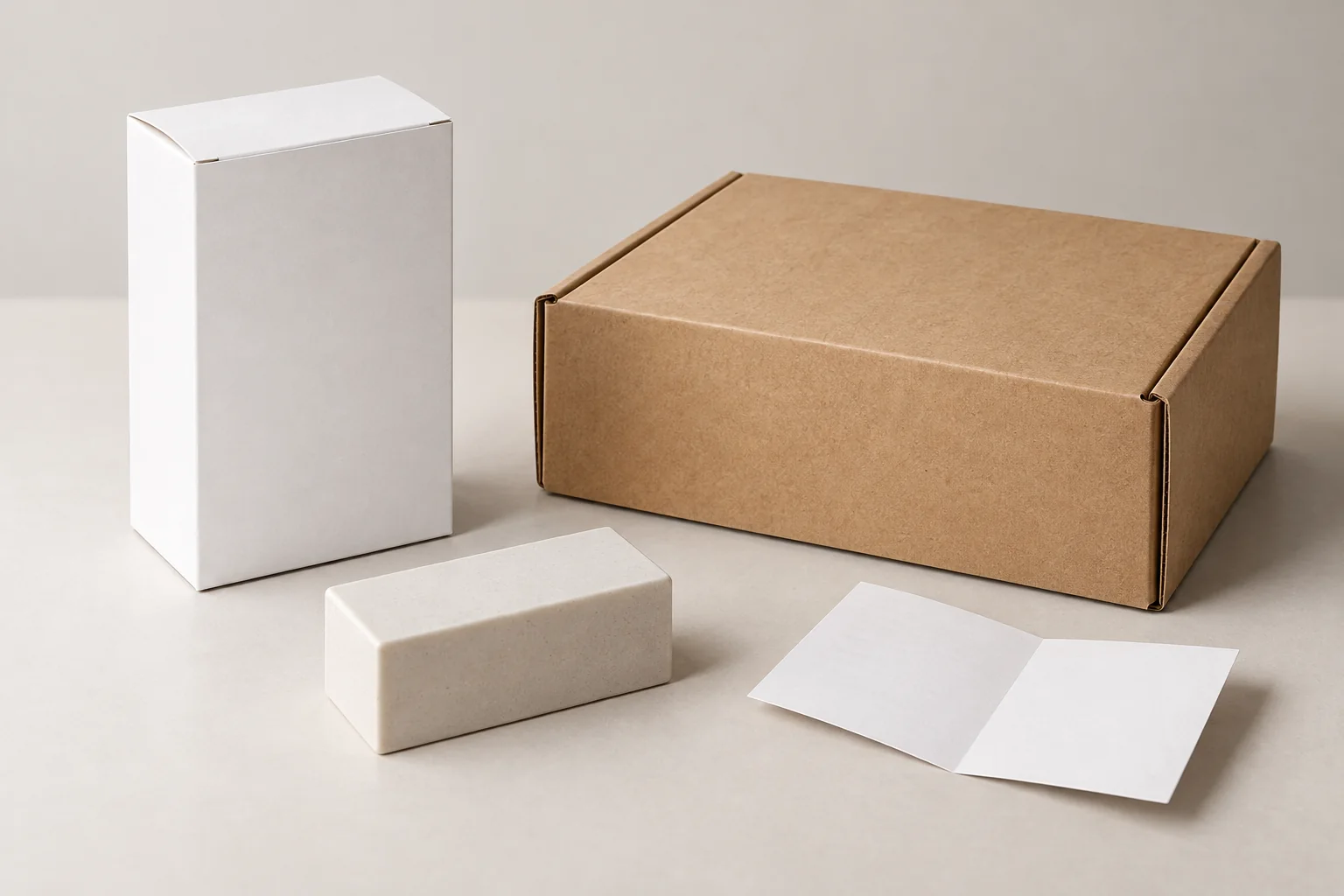
Folding carton vs corrugated box at a glance
| Decision factor | Folding carton | Corrugated box | What to confirm |
|---|---|---|---|
| Primary role | Product presentation or retail pack | Shipping, mailer, outer case or protective pack | Is the box seen on shelf, sent through parcels, or both? |
| Construction | Paperboard blank cut, creased and folded | Fluted medium between linerboards | Exact board/structure and final dimensions |
| Product fit | May need an insert, tray or secondary shipper | May use fitments, inserts or void fill | Product movement, fragile areas and orientation |
| Print / finish | Artwork and finish are reviewed against a dieline | Print route depends on the proposed board and process | Critical graphics, folds, codes and finish scope |
| Distribution | Often packed inside another protective pack for transit | Often evaluated as part of a shipping system | Route, stacking, handling and acceptance evidence |
Start by identifying the packaging role
Ask whether the box is the product’s primary retail presentation, the parcel-facing shipper, an inner pack, or a combination. A presentation box can still require a protective outer shipper. A corrugated mailer can also be customer-facing, but its structure, print and closure should be reviewed against the route it will travel.
The custom mailer box specification checklist helps define a mailer’s fit, opening and approval questions. For a premium presentation format, compare the separate rigid box vs folding carton guide.
When a folding carton is a useful starting point
A folding carton is worth evaluating when the product needs an efficient printed retail pack, compact storage before filling, or a controlled panel layout for copy and artwork. The structure still needs to suit the product, closure, insert and expected handling.
Do not assume a folding carton alone is a parcel shipper. If the product will move through an e-commerce network, define the outer packing system, product restraint and the evidence needed to validate the route.
When a corrugated box is a useful starting point
A corrugated structure is worth evaluating where board depth, cushioning, shipment handling or a mailer-style opening are material parts of the brief. The flute letter alone is not a complete performance specification; review board construction, dimensions, inserts, closure and proposed validation together.
Review flute profile alongside the complete board; ECT vs BCT distinguishes board and finished-box compression terminology.

Use a two-layer packaging brief when needed
For many retail or direct-to-consumer products, the useful decision is not folding carton or corrugated box. It is whether the product pack and the transit pack should perform separate roles.
| Layer | Questions to put in the brief |
|---|---|
| Product-facing pack | Product dimensions, opening experience, retail display, artwork panels, copy, barcode and insert needs |
| Transit-facing pack | Parcel or freight route, packed weight, product restraint, stacking/handling concerns and acceptance evidence |
| Interface between them | Clearance, surface protection, movement, packing sequence and what sample proves the chosen fit |
Record dimensions as internal, external or flat and use one stated unit. The box dimensions guide provides the measurement vocabulary to use in a supplier brief.
Compare quotes as complete systems
Do not compare a folding-carton price against a corrugated-mailer price unless both proposals cover the same product, quantity, insert, print/finish scope, packing method and delivery assumptions. Ask each supplier to show the structural role of every component and state exclusions separately.
Use the same fields in a sourcing document: structure, product, insert, print/finish, packing route and exclusions.
What samples and tests can prove
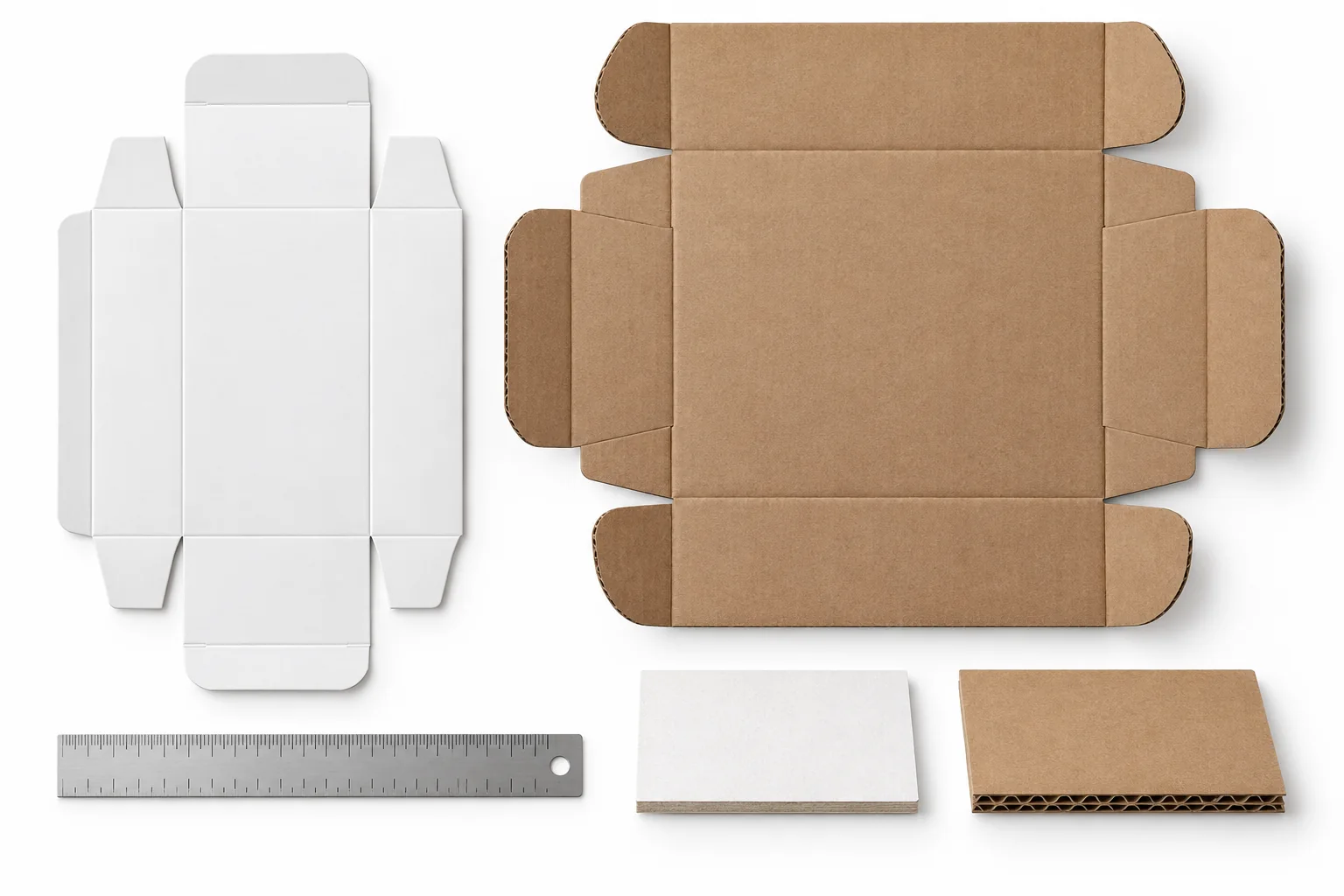
A structural sample can help check fit, opening and assembly. A print-representative sample can help check panel layout and finish. Neither automatically proves every transit or compression outcome. Specify the decision you need to make and request evidence for that decision.
For parcel-distribution discussions, ISTA 3A for shipping boxes explains the scope of a test protocol. For general packaging-system context, ASTM lists D6198 as a guide for transport packaging design; applicability and acceptance criteria must be agreed for the actual product-pack system.
Common selection mistakes
- Treating a customer-facing carton as proof that the product is protected in transit.
- Selecting corrugated board only by flute letter.
- Comparing prices that include different inserts, print routes or outer packing.
- Leaving product orientation, fragile points or clearance out of the brief.
- Approving a visual proof as evidence of shipping performance.
Frequently asked questions
Can a folding carton be shipped directly to customers?
It can be evaluated for a particular product and route, but the complete transit system needs review. State the packed product, handling route, restraint and acceptance evidence rather than assuming a product carton is sufficient by itself.
Is corrugated packaging always better for protection?
Not automatically. Protection depends on the full board, structure, fit, closure, product and distribution conditions. A loose product in a larger box can still be a poor system.
Should I use both a folding carton and a corrugated mailer?
Use both when presentation and transit protection have separate requirements. Compare the combined system against other viable systems on product fit, route, packing operation and the proof required for the decision.