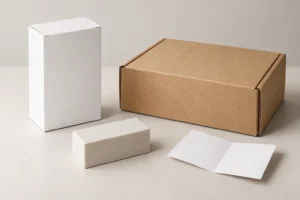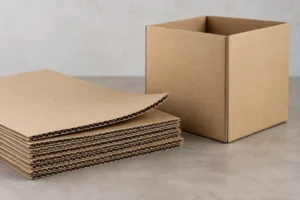
A custom packaging inspection checklist compares the delivered configuration with the approved references for that order. It should identify which version of the artwork, drawing, sample, quantities, packing hierarchy and labels apply. An inspection does not prove every possible performance outcome; it documents what was checked against the stated acceptance scope.
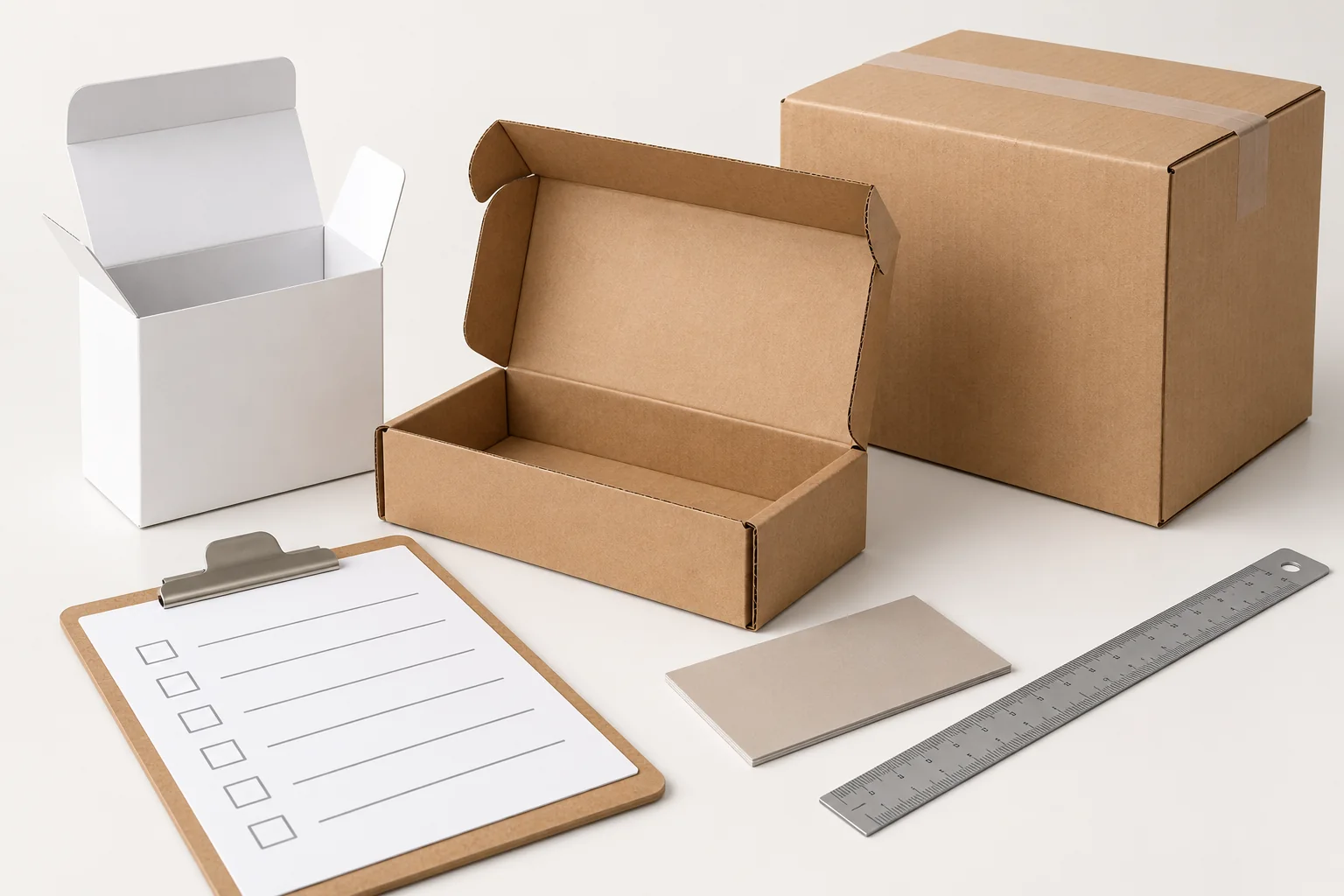
Inspection references to assemble first
| Reference | What it controls |
|---|---|
| Purchase order and approved quote | Scope, quantity and commercial configuration |
| Approved artwork or drawing | Correct revision, panels and identification |
| Sample reference | The physical/visual configuration represented |
| Packaging BOM | Components and quantities at each level |
| Pack-out and carton instructions | Inner pack, master carton, marks and labels |
Confirm the approved configuration
Before inspecting, collect the exact references that control the order. A file called “final” is not enough without a revision identifier. The packaging change-control checklist helps keep artwork, samples and repeat-order information aligned after a revision.
Use the packaging bill of materials guide to identify every component: product pack, insert, tray, label and master carton.
Inspect the component and pack hierarchy
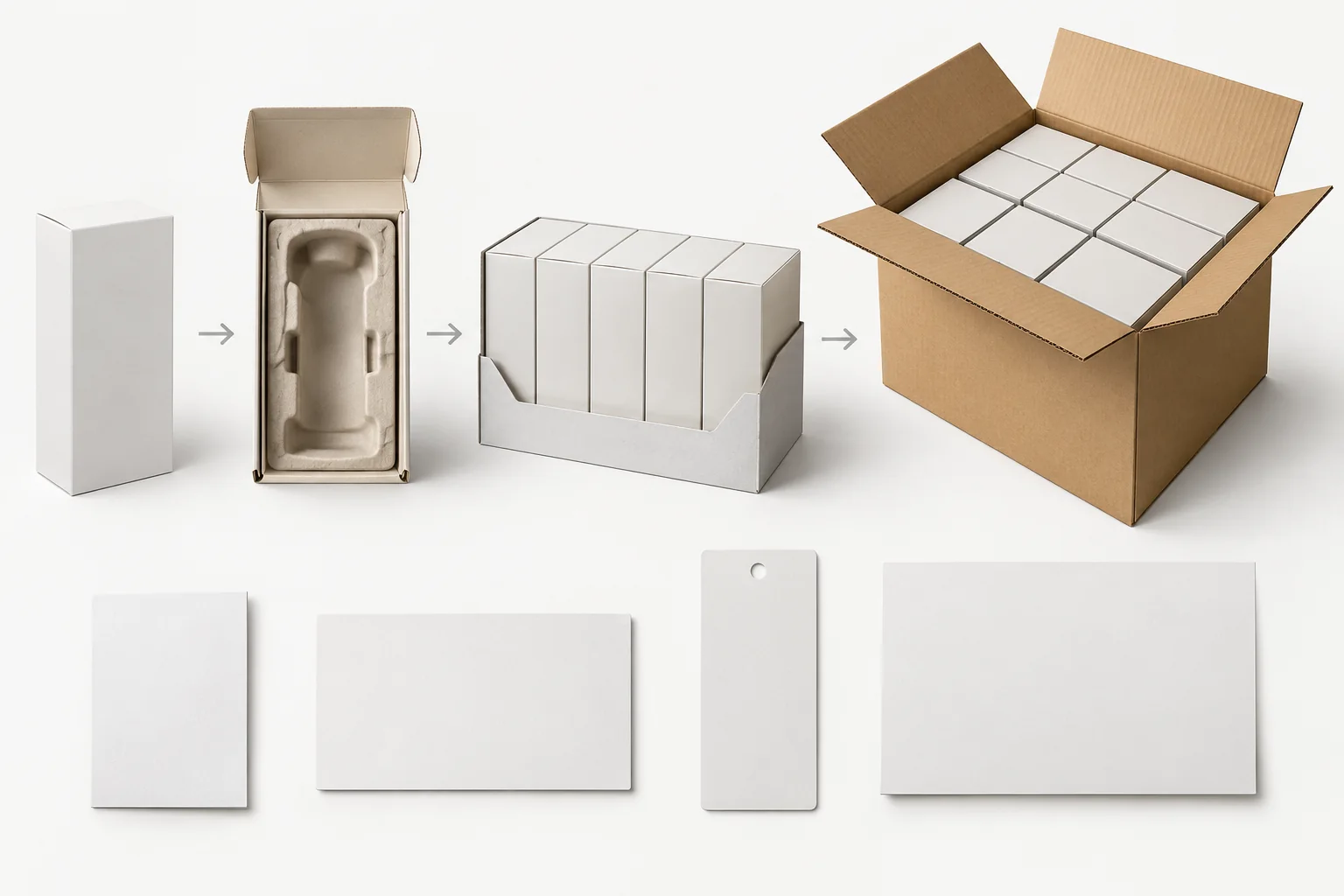
Inspect each packaging component in its intended role. A product-facing carton, retail tray and master carton may have different dimensions, marks and acceptance points. Record the count and product orientation at each level. The case pack, inner pack and master carton guide can make these relationships explicit.

Separate artwork, structure and pack-out checks
A visual artwork comparison does not establish product fit. A structural sample does not necessarily represent every printed or finished condition. Define the check and its limits.
- Compare the delivered artwork and visible information with the approved revision.
- Check the assembled structure and dimensions against the relevant drawing or sample.
- Confirm inserts, dividers, labels and closures belong to the agreed configuration.
- Compare carton marks and pack hierarchy against the current instruction.
- Record observed exceptions with photos and the applicable reference.
For artwork-specific checks, use the packaging artwork preflight checklist. For outer-carton identification, use the shipping marks guide.
Keep the inspection scope explicit
State what units, components, documents and conditions were examined. Do not interpret a spot check as a universal guarantee or a packaging inspection as a transit-test result. If a distribution decision needs testing, define the product-pack system and evidence separately; ISTA 3A for shipping boxes provides planning context.
A practical inspection checklist
- Identify the order, revision and approved references.
- List each packaging component and quantity per parent.
- Compare artwork, labels and marks with the approved version.
- Check structure, dimensions, closure and included components.
- Confirm the pack-out and master-carton configuration.
- Record the sample basis, units checked and any exceptions.
- Decide the next action against the agreed acceptance scope.
Frequently asked questions
What is the most important inspection reference?
The controlled approved configuration: current artwork/drawing, sample reference, component list and order scope together.
Does an approved sample replace an inspection?
No. The sample identifies an approved reference within its scope. The delivered order still needs comparison against the current controlled configuration.
Can an inspection prove shipping performance?
No. A visual or dimensional inspection does not establish route performance unless a defined test for the product-pack system was performed.
Prepare an inspection-ready order
For a custom packaging order, retain the approved version references, component list, pack hierarchy, sample scope and acceptance criteria. This gives every party a clear basis for comparing the delivered configuration without assuming unverified capability or performance.