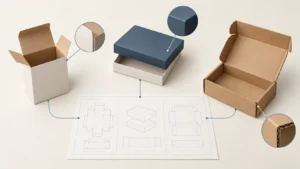
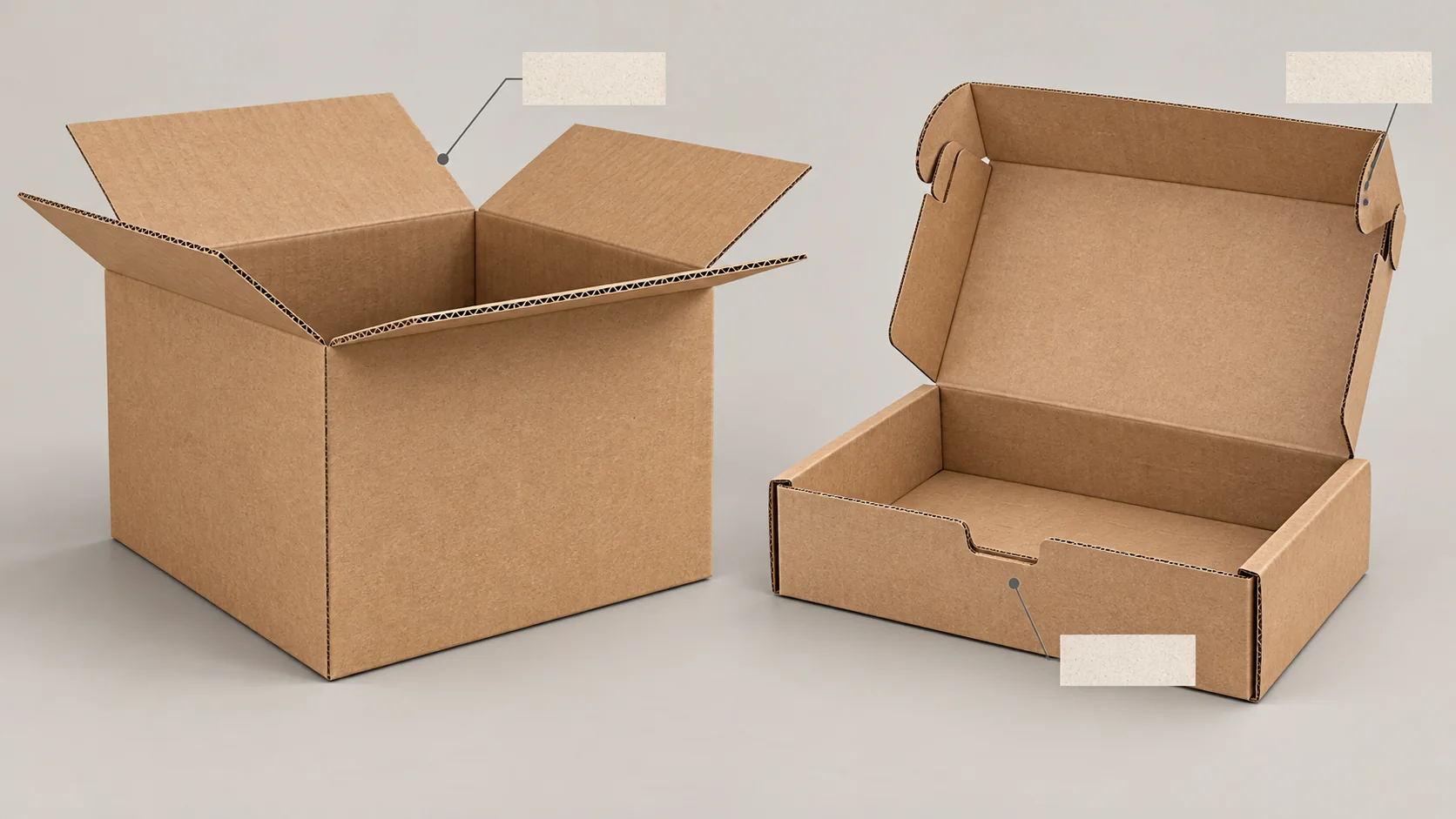
An RSC vs die-cut corrugated box comparison starts with two different structural questions. A regular slotted container (RSC) is a common corrugated shipping-box style with top and bottom flaps that meet at the center. “Die-cut” describes a blank cut and scored to a particular outline, which can create mailers, trays, folders and other structures. Neither label alone proves suitability. Start with the product, pack-out, closure and distribution route.
RSC vs die-cut corrugated box at a glance
| Decision point | RSC | Die-cut corrugated box | What to confirm before quoting |
|---|---|---|---|
| Basic form | A regular slotted container with flaps that meet at the center | A blank cut and scored to a selected shape or structure | The actual style, dimensions and dieline |
| Common role | Outer shipper or general-purpose case | Mailer, tray, folder or a box with defined opening and locking features | Whether the pack needs a shipper, product-facing mailer, tray or a combination |
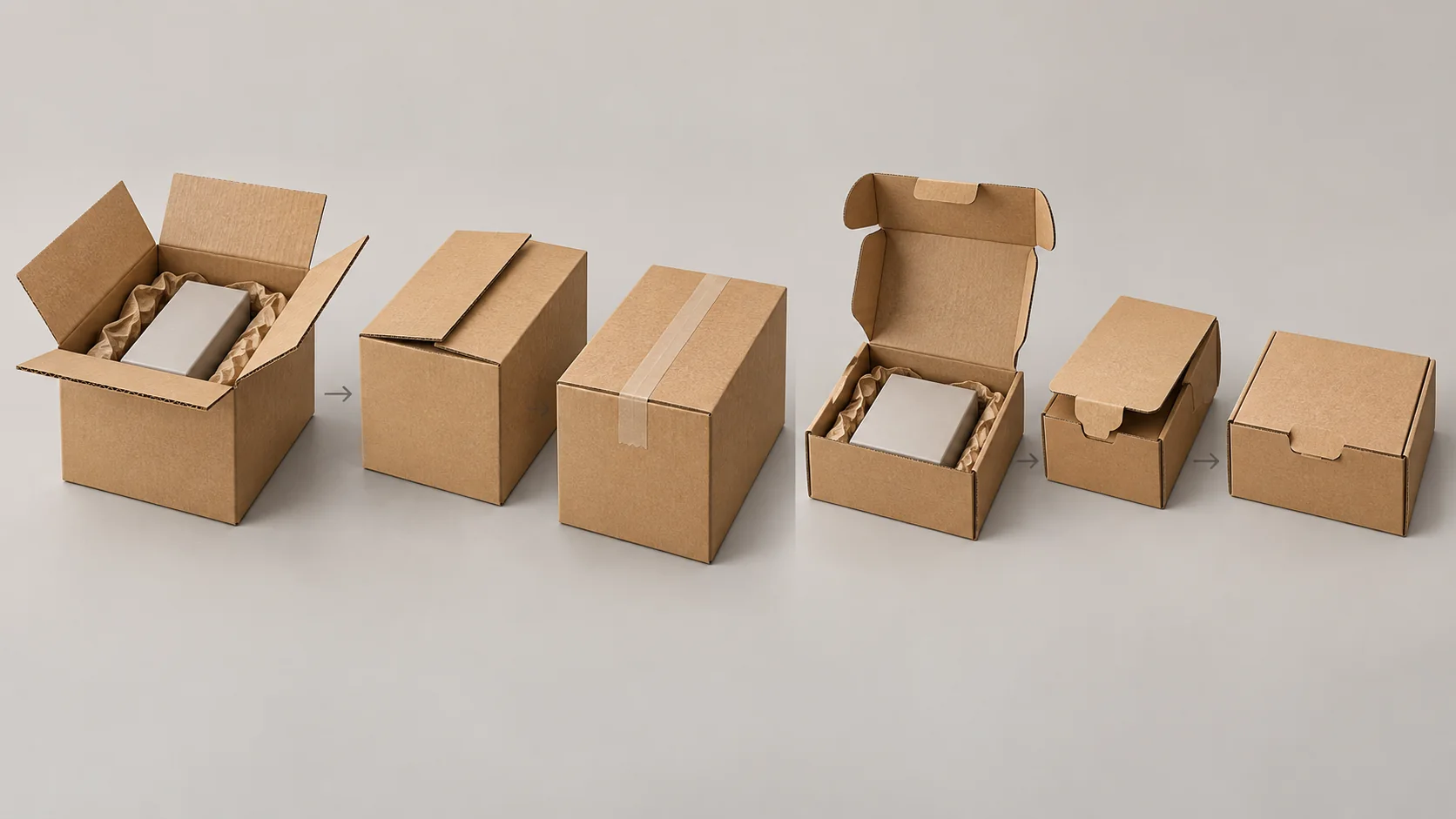
| Closure discussion | How top and bottom flaps will be closed | How tabs, tuck features or another closure will work in the approved structure | The closure method and who performs it |
| Product fit | Internal space and any separate restraint or cushioning | Product position can be designed into the structure, where appropriate | Product dimensions, orientation and protective components |
| Approval evidence | Sample of the assembled, closed and packed case | Sample of the cut/scored structure, assembled and packed | Evidence for the complete product-pack configuration and route |
Start with the job the box must do
The useful question is not which name sounds more premium. It is what the corrugated component does in the pack system. An outer case may need room for multiple units, inserts or a protective material. A product-facing mailer may need a defined opening experience and a repeatable way to hold the product. A tray or folder may solve a different handling problem again.
Map the item from receiving through packing, storage, shipping and opening. Record the product dimensions, orientation, quantity per case, void-management needs, closure, labels and the route the packed unit will take. Use the box dimensions guide so that internal, external and flat dimensions are not mixed in the brief.
When an RSC is a useful starting point
An RSC is often a practical starting point when the requirement is a straightforward corrugated case with flaps at both ends. It gives the buyer a familiar structure for discussing a shipper, case pack or master carton. That does not eliminate the need to specify the finished pack: the product, internal protection, closure and handling route remain part of the decision.
For a multi-unit shipment, define the case pack, inner pack and master carton separately. A statement such as “one box per SKU” is not enough to establish whether the RSC is the product-facing pack, an inner pack or an outer master carton.
When a die-cut structure is worth reviewing
A die-cut corrugated blank can be developed into many structures. A mailer with an attached lid, a folder around a flat item, a tray or a design with locking features are all structural conversations that go beyond a standard slotted case. The buyer should ask to see the structure assembled around the actual product, including any insert or cushioning that belongs with it.
Choose a die-cut review when the product presentation, opening sequence, fit, or a particular fold-and-lock arrangement matters to the brief. Do not assume that a die-cut label by itself establishes protection, packing speed or route performance. Those depend on the approved design and pack-out.
Specify closure and pack-out before comparing quotes
Box style is only one line in a useful specification. Two quotes can both say “corrugated box” while describing different dimensions, closure assumptions, product orientation or internal components. Make these details comparable:
- State whether the dimensions are internal, external or flat.
- Identify the packing role: unit mailer, inner pack, master carton, tray or another component.
- Describe the closure that will be used for the actual packed box.
- Show the product orientation and each separate insert, divider, wrap or cushioning component.
- State the gross packed weight and any receiving, carrier or marketplace instruction that applies.
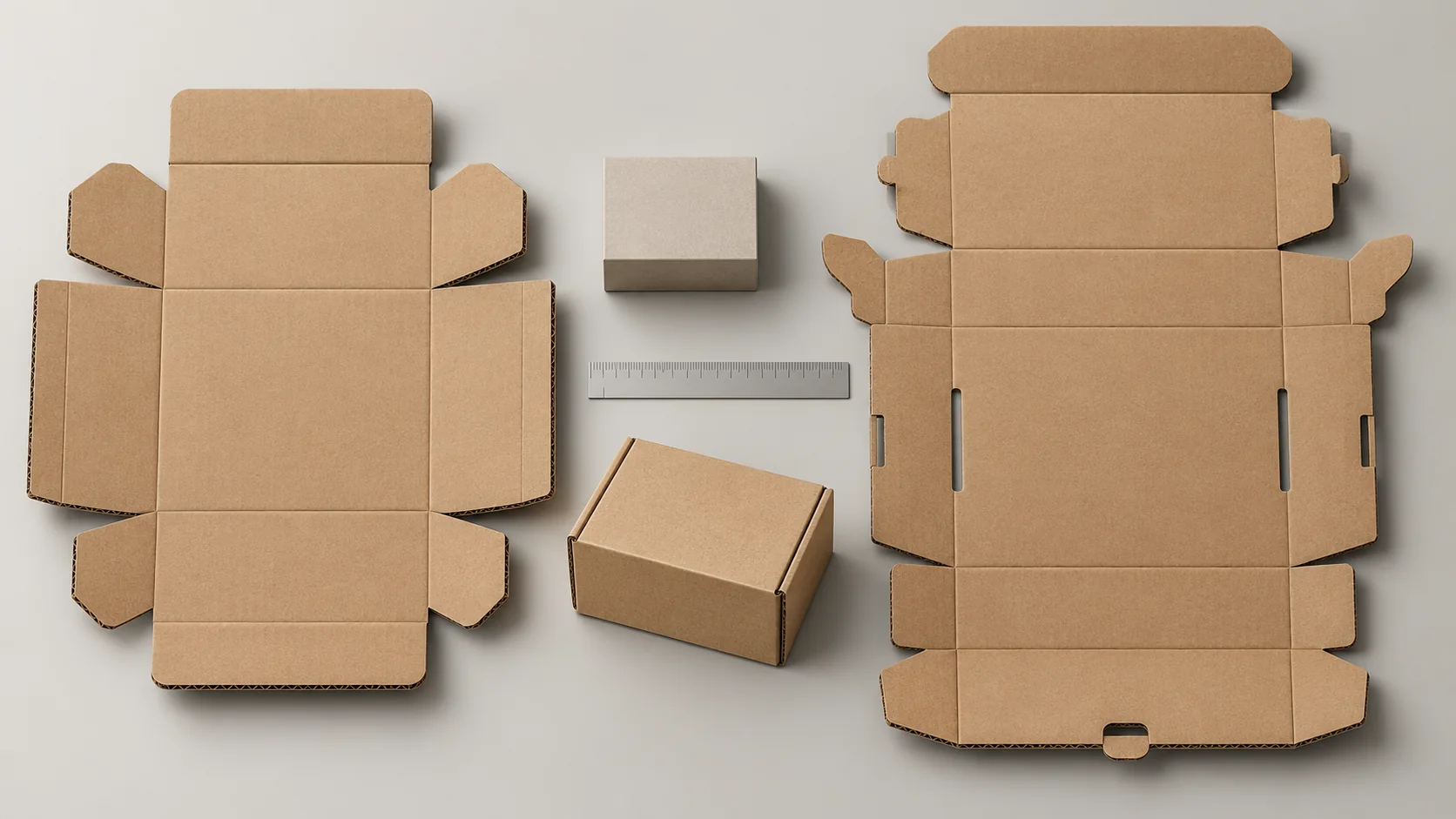
- Request a structural drawing or dieline where the format needs it, then approve a physical or functional sample appropriate to the decision.
If labels or handling marks are involved, align them with the final pack hierarchy. The shipping marks on master cartons guide explains why carton-level information needs a defined carton role. Confirm the current receiving party’s requirements rather than copying a mark from a previous project.
Keep board properties separate from structure selection
RSC versus die-cut is a structure decision. A board-property measure is a different input. Do not treat a comparison of styles as a complete answer to compression, puncture, handling or distribution questions.
For a standardized style vocabulary, the FEFCO code catalogue is a useful reference for communicating a proposed construction. For terminology, see ECT vs BCT for corrugated boxes. When the route needs a defined shipping-test plan, use ISTA 3A for shipping boxes to frame the product-pack system that should be evaluated. These references are planning aids, not evidence that any untested configuration will pass.
A sample-based decision process
Use a staged review that matches the risk of the pack:
1. Write the packing brief, including product dimensions, quantity, orientation, closure and route. 2. Select one or more candidate structures without assuming the format proves final performance. 3. Review the drawing or dieline for the exact structure being considered. 4. Assemble the sample with the actual product and all intended components. 5. Record what was checked and what conditions were not represented by the sample or test. 6. Update the specification only after the decision evidence is accepted by the relevant buyer and operating team.
This process gives procurement, operations and design teams a shared record. It also makes a later comparison meaningful if the product size, pack quantity, closure or distribution route changes.
Common mistakes when choosing between RSC and die-cut boxes
- Treating “die-cut” as a performance claim instead of a description of how the blank is cut and scored.
- Selecting a box style before defining the product orientation and protective components.
- Comparing quotes with different dimension bases or pack-out assumptions.
- Assuming a board rating answers whether the finished product-pack system is acceptable.
- Approving a drawing without reviewing the assembled configuration.
- Reusing an old carton specification after the contents, closure, labels or route changes.
Frequently asked questions
Is an RSC a die-cut box?
An RSC is a specific slotted corrugated-box style. “Die-cut” is a broader description of a blank made with a die to create a selected outline and score pattern. The practical next step is to review the exact structure being quoted.
Is a die-cut box always better for e-commerce?
No. The appropriate structure depends on the product, desired packing and opening sequence, closure, internal protection and route. Review a sample with the actual product before treating either format as the final choice.
Can an RSC be used as a master carton?
It can be considered for that role, but the role alone does not approve it. Define the quantity, product protection, gross packed weight, closure, marks and receiving requirements for the exact master-carton configuration.
What should I send with an RSC or die-cut box RFQ?
Provide the product dimensions and orientation, item count, packing role, dimension basis, closure, printed information, internal components, gross packed weight, target route and the sample or acceptance evidence you need. This gives suppliers a comparable brief without assuming unverified capability, timing or performance.
Prepare a clearer packaging brief
For a custom-corrugated inquiry, provide the product dimensions, pack hierarchy, intended structure, closure, product orientation, internal components and shipment route. If you have a drawing, reference it as a design input and request that the final structure be reviewed against the actual packed configuration.