
Quick answer: Custom packaging tolerances are project-specific limits around an approved target—not a universal “plus or minus” number for every box. Define the nominal requirement, measurement point, condition, tool, sample plan, visual reference, and functional fit check together. Then approve the evidence for the specific structure, material, product, and packing method before release.
A box can match a drawing at one point yet fail where the buyer needs it to work: an insert may bind, a sleeve may slide too freely, or a closure may not engage as intended. This guide helps brand, retail, and e-commerce teams write an acceptance record that a supplier, inspector, and purchasing team can use consistently.
What is a custom packaging tolerance?
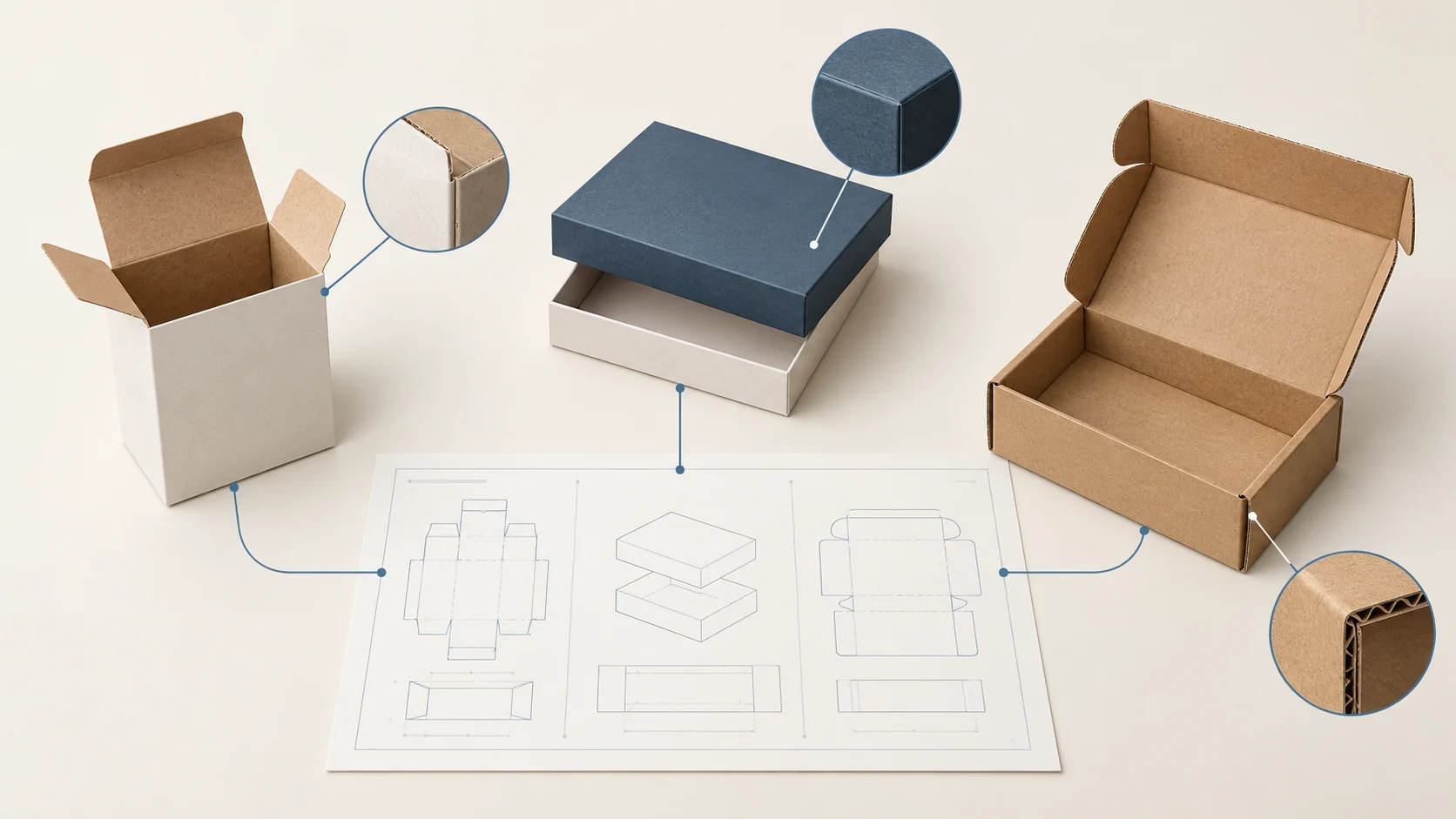
A custom packaging tolerance is an agreed range or acceptance rule around one named requirement, measured in a stated way. It might apply to a finished internal dimension, print position, lid-and-base fit, insert clearance, glue appearance, or another project-critical feature. It is meaningful only when the target, condition, method, and decision reference are recorded together.
Start with the requirement you need to protect—not the number you hope to receive. A folding carton, a corrugated shipping case, and a wrapped rigid box do not have the same construction, measurement points, or functional risks. The selected material, converting method, product variation, and assembly state all affect what needs to be checked.
For corrugated structures, a recognized style reference can remove ambiguity from the structure description. The FEFCO Code provides a common system for corrugated design types; it does not by itself set the tolerance for a particular order.
Keep nominal size, clearance, and tolerance separate
Nominal size is the intended value on the approved specification. Clearance is space deliberately designed between parts so the product can load, move, or be removed as intended. Tolerance is the agreed permitted variation around a requirement. Treating these three terms as interchangeable can conceal whether a fit problem comes from the design, the product, the material, or the finished pack.
| Nominal dimension | What size or position is intended? | Value, unit, component, drawing revision, internal or external basis. | ||||
| Clearance | What space is intentionally needed for fit or movement? | Packed-product orientation, insert/wrap state, contact points, functional reason. | ||||
| Tolerance | What variation is acceptable for this requirement? | Approved range or acceptance rule, measurement method, sample condition, authority. | ||||
For a corrugated case, be explicit about whether dimensions are internal, what the length-width-height orientation means, and whether the blank or erected box is being measured. The FEFCO Code notes a standard internal L × W × H convention for its case descriptions, while also making clear that the construction defines the context. Keep that convention connected to the approved drawing rather than applying it blindly to another structure.
Write the measurement method before agreeing a limit
A number without a method is hard to compare. Before accepting a tolerance, define the exact feature, where it is measured, the state of the package, the tool, the sample selection approach, and the condition under which the observation is made. That record lets two parties investigate the same result instead of debating different measurements.

| Prevents a panel dimension being mistaken for available space. | ||||
| Two measurements can differ if the reference points differ. | ||||
| Assembly and contents can change the relevant result. | ||||
| Improves repeatability and makes uncertainty visible. | ||||
| Sampling and timing | How samples are selected, how long after unpacking, and environment if relevant. | Avoids drawing conclusions from one convenient sample. | ||
| Separates a measurement from the evidence that authorizes release. |
Print appearance also needs a defined reference. ISO 12647-1 describes process-control parameters and measurement methods for graphic-technology printing conditions, while ISO 3664:2025 specifies viewing conditions for critical evaluation of printed material. These standards do not determine a Packaza approval limit; they show why a named method and viewing condition matter when colour or appearance is critical.
Choose checks that match the package structure
Different structures put the risk in different places. A useful specification asks whether the measurement proves the feature the buyer cares about: not merely whether a flat component looks close to a nominal size. Pair a dimensional check with an assembled, loaded, or visual review when that is what the project needs.
| Structure | Common requirement to define | Evidence to agree before release | ||
|---|---|---|---|---|
| Drawing revision, erected sample, product-fit and artwork review. | ||||
| Named case style, sample condition, erected-pack and route-relevant checks. | ||||
| Assembled sample with the selected components and product. | ||||
| Loaded pack-out sample rather than an insert measured in isolation. |
A material change can alter both the measurement and the behavior that matters. Thickness and weight are not interchangeable material descriptions; see GSM vs PT for packaging for the distinction. For corrugated packs, a board property and an assembled-box result answer different questions; use the ECT vs BCT guide to keep strength specification separate from a dimensional or fit decision.
Use a project tolerance record, not a generic chart
A single worksheet makes a tolerance usable across quotation, sampling, incoming inspection, and repeat orders. Do not populate a universal value just to complete the table. If the buyer and supplier have not agreed a range or test, mark the decision open and identify the evidence needed to close it.
When should a packaging tolerance be reviewed again?
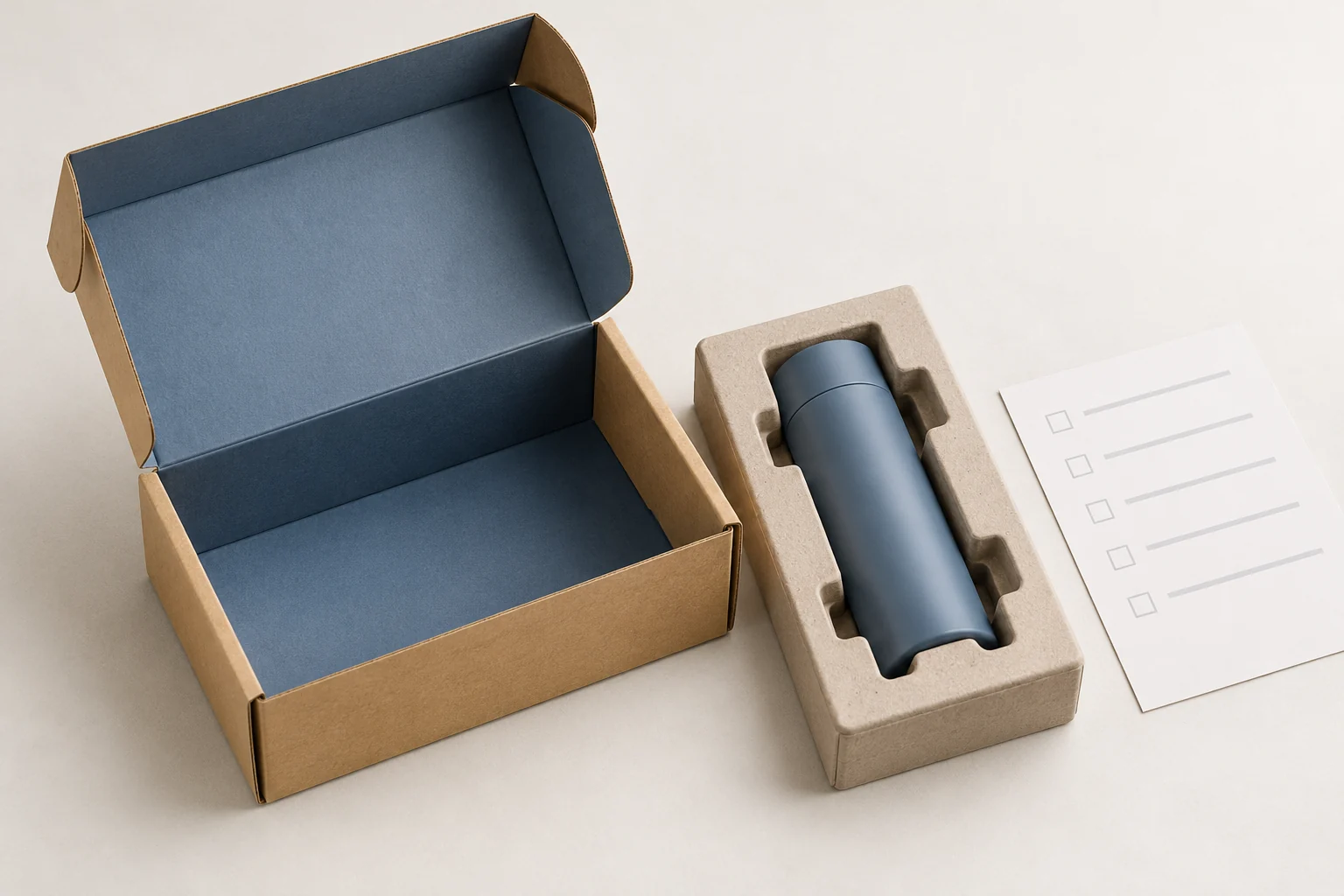
Review the record whenever a change could alter the feature being controlled or the way it is checked. A visual artwork edit on an unchanged carton may need a different review from a board substitution, a product-size change, or a new insert. The right response is to compare the proposed change with the approved evidence, not to assume a previous number still applies.
- Product or insert changes: reassess usable space, loading, retention, and closure with the relevant product configuration.
- Board, caliper, or construction changes: ask whether the drawing, fit review, and functional sample need to be revised.
- Artwork, colour, or finish changes: identify the affected panels and use the agreed proof or viewing reference.
- Supplier, tooling, or packing-method changes: compare the evidence scope and do not treat matching names as proof of equivalence.
For a broader approval workflow, use the packaging dieline guide to connect structure with artwork, the packaging samples guide to choose what a sample can prove, and the inspection checklist to plan what to compare before accepting a shipment.
Prepare a better packaging quote request
Provide the product, pack configuration, drawing status, desired structure, quantity, destination, and the specific risks the sample or inspection must resolve. If a dimension, fit, print position, or visual requirement is critical, include the project tolerance record rather than describing the box as simply “standard.” That gives a supplier a basis for clarifying what is measurable and what needs a sample.
Request a custom packaging quote from Packaza with your drawing, product dimensions, packed orientation, and any required approval checks. The contact page contains the site’s quote form; do not submit sensitive commercial information until your team is ready to open an inquiry.
Frequently asked questions
What tolerance should I specify for a custom box?
Specify a project-approved rule for the feature that matters, plus its measurement condition and reference. There is no credible universal value for every folding carton, corrugated box, rigid box, or insert.
Is clearance the same as tolerance?
No. Clearance is intentional space in the design; tolerance is the permitted variation around a requirement. A fit review should consider both, along with product variation and the assembled package.
Should I measure internal or external box dimensions?
Measure the dimension that answers the decision. Internal usable dimensions matter for fit; external dimensions may matter for shipping, shelves, or a master carton. State the basis and measurement points in the record.
Can a supplier use a previous sample as the tolerance standard?
Only if the sample is identified, still relevant to the current revision, and paired with an agreed condition and decision rule. A sample alone may not explain how a later result should be measured or judged.
Does a digital proof approve finished print colour?
No. A digital proof can support content and layout review, but critical colour or finish approval needs the reference and viewing or measurement method agreed for that project.
Does a stronger board solve a fit problem?
Not necessarily. A board change can alter usable space, folds, closure behavior, and other relationships. Review the complete structure and loaded pack rather than assuming a stronger material fixes fit.
When does an insert need its own tolerance check?
When it controls product retention, visible alignment, loading effort, or closure. Evaluate it inside the outer pack with the representative product, not only as a loose component.
Conclusion
Custom packaging tolerances work when a buyer converts an expectation into a checkable project record: target, condition, method, evidence, and owner. Use the record to guide sampling and acceptance, then reopen it when product, material, structure, or process changes. That approach makes a quote and approval conversation more precise without inventing a one-size-fits-all number.
Sources
- FEFCO Code — corrugated-packaging design identification.
- ISO 12647-1:2013 — graphic-technology process-control parameters and measurement methods.
- ISO 3664:2025 — viewing conditions for critical print evaluation.