Quick answer: Dimensional weight packaging evaluates the space a finished parcel occupies, not only its scale weight. To right-size a custom box responsibly, start with the packed product and protection needs, determine the final outside dimensions, then check the current rule for the chosen carrier and service. Approve protection before treating a smaller parcel as a win.
For many e-commerce and retail brands, a large light parcel can be billed differently from a compact parcel of the same actual weight. That makes packaging dimensions a commercial decision as well as a fit-and-protection decision. It does not mean every box should be made as small as possible.
The useful question is not “How do I shrink the box?” It is “What is the smallest outer parcel that still protects the actual product through the intended route?” This guide turns that question into a specification and sample-approval workflow. It does not quote carrier rates, promise savings or assume a fixed DIM divisor.
What is dimensional weight packaging?
Dimensional weight packaging concerns a parcel’s volume-based billing weight, often called DIM weight or volumetric weight. A carrier may compare that calculated value with the actual packed weight and charge according to the rule for the selected service. The relevant input is generally the completed parcel’s outside dimensions—not the product dimensions alone.
Carrier rules differ by service, contract, destination and time. For example, FedEx publishes its own measurement and calculation guidance for stated services, while USPS tells users of their own packaging to check dimensions in its current price calculator.1, 2 Treat those sources as current-service references, not universal design specifications.
Actual weight, DIM weight and chargeable weight
| Term | What it describes | What a packaging buyer should record |
|---|---|---|
| Actual weight | The weight of the packed item, packaging and protection | A measured finished-parcel weight from a representative sample |
| DIM weight | A carrier-calculated billing weight based on parcel volume and its current rule | The final outside L × W × H, service, destination and rule date |
| Chargeable weight | The weight value used by the relevant carrier/service for billing | The carrier or fulfillment partner’s documented result—not an assumed formula |
| Product dimensions | The product’s maximum packed physical size | Controlled L × W × H, including caps, seals, accessories and variation |
Do not use an inside box dimension in place of the final parcel measurement. A structural drawing, board thickness, closure, protective material and any outer shipper can all change the dimensions that a carrier evaluates.
Why DIM weight is a packaging-specification problem
DIM weight becomes a packaging problem when the product, protection and final outside dimensions are decided separately. A carton may fit the product but use excess void, or it may be compact yet leave no room for the protective method required by the actual distribution route.
The decision affects more than parcel spend. It can change product movement, unboxing, fulfillment speed, master-carton count, pallet efficiency and the likelihood that a sample represents production. The right response is to make volume an explicit field in the packaging brief—not to cut clearance without evidence.
| Decision | Potential benefit | Risk to check before approval |
|---|---|---|
| Reduce unnecessary headspace | Less parcel volume and less void-fill demand | Product may contact the wall or be harder to pack consistently |
| Change product orientation | A more compact outer footprint | Closure, branding panels or product access may become unsuitable |
| Use an insert or divider | Controls product movement in a defined space | Insert material and assembly can add dimensions, labor or pack-out complexity |
| Consolidate multiple units | More products per parcel | Higher packed mass, difficult handling or insufficient internal separation |
| Change the outer shipper | Better fit for a ready-packed retail unit | The retail pack still needs a validated transport configuration |
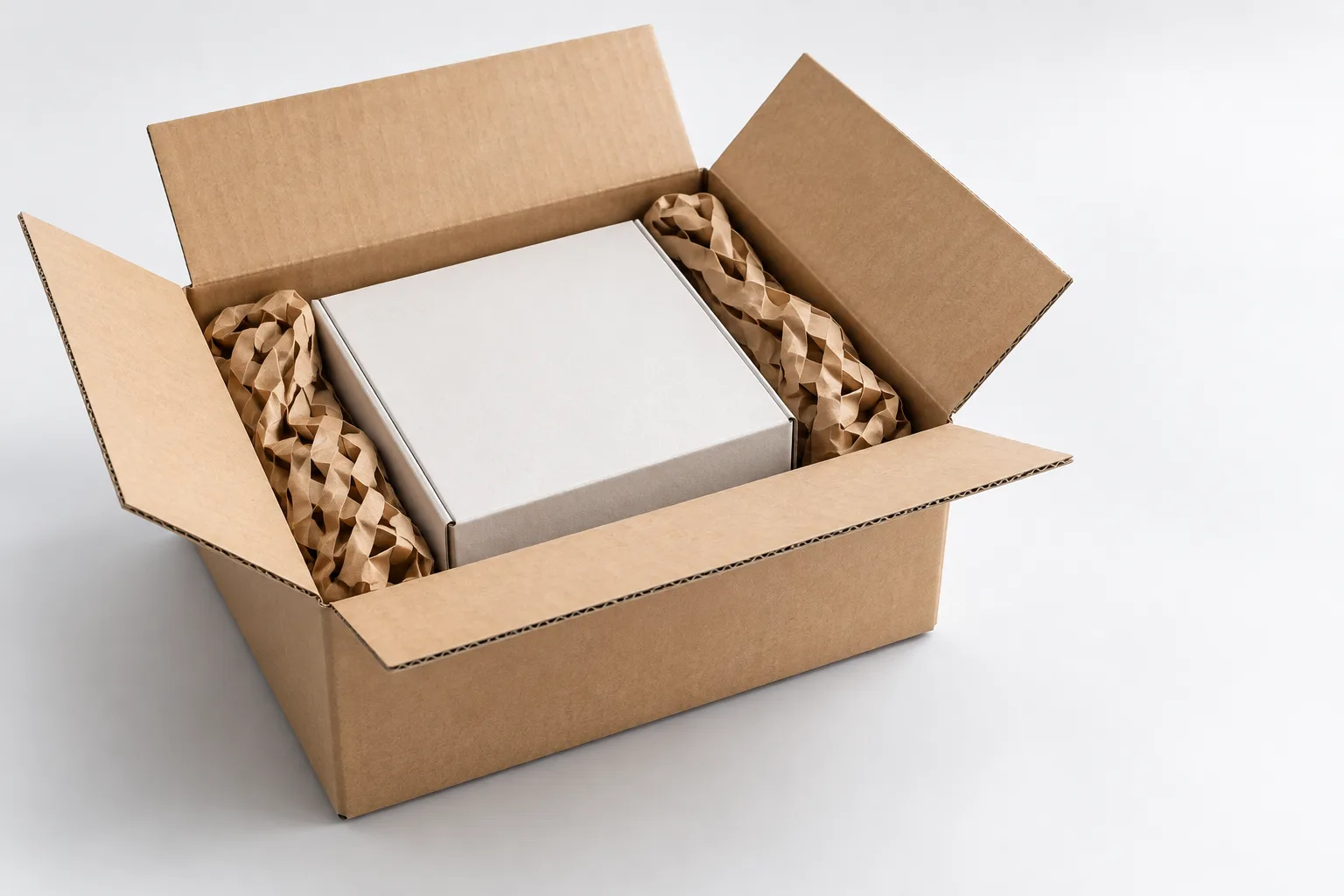
Use the published Packaza guide to void fill packaging to frame protection choices, then use the final packed configuration—not an empty box—as the basis for dimensional-weight evaluation.
Start with the protected product, not the carrier formula
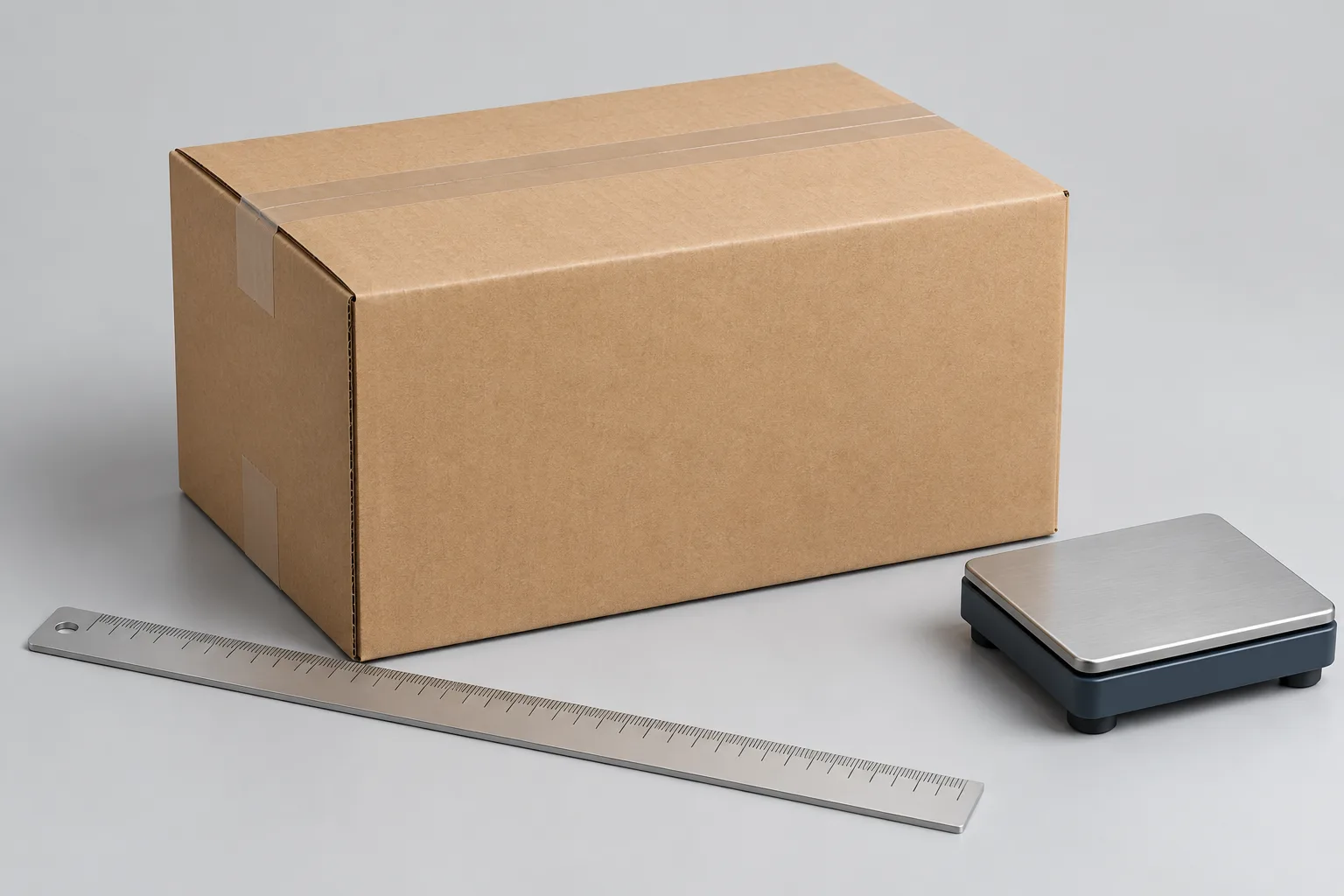
Start dimensional weight packaging with the real product and its vulnerable features. Record the largest packed dimensions, unit weight, breakage points, orientation limits, accessories and expected distribution route before choosing a custom box size or a carrier calculator.
The product’s retail dimensions may not be its shipping dimensions. A bottle cap, hanging feature, corner, folded accessory or product variation can create the true maximum. If the item needs cushioning, an insert, divider or a secondary carton, define the protective job before estimating the final outside size.
The five measurements to keep separate
| Measurement | Use it for | Common mistake |
|---|---|---|
| Product maximum L × W × H | Fit and clearance planning | Measuring only a nominal product size |
| Product weight | Handling and actual-weight comparison | Excluding accessories or protective packaging |
| Internal package dimensions | Product and protection fit | Treating them as carrier dimensions |
| Finished outside dimensions | Carrier/service evaluation | Measuring a flat blank or an empty sample only |
| Master-carton and pallet dimensions | Case packing and logistics planning | Assuming a parcel decision automatically improves pallet use |
For a practical way to document box dimensions, review what a packaging dieline is and keep the measurement basis clear in the specification. A custom mailer project also needs the structural and approval details in Packaza’s mailer box specification checklist.
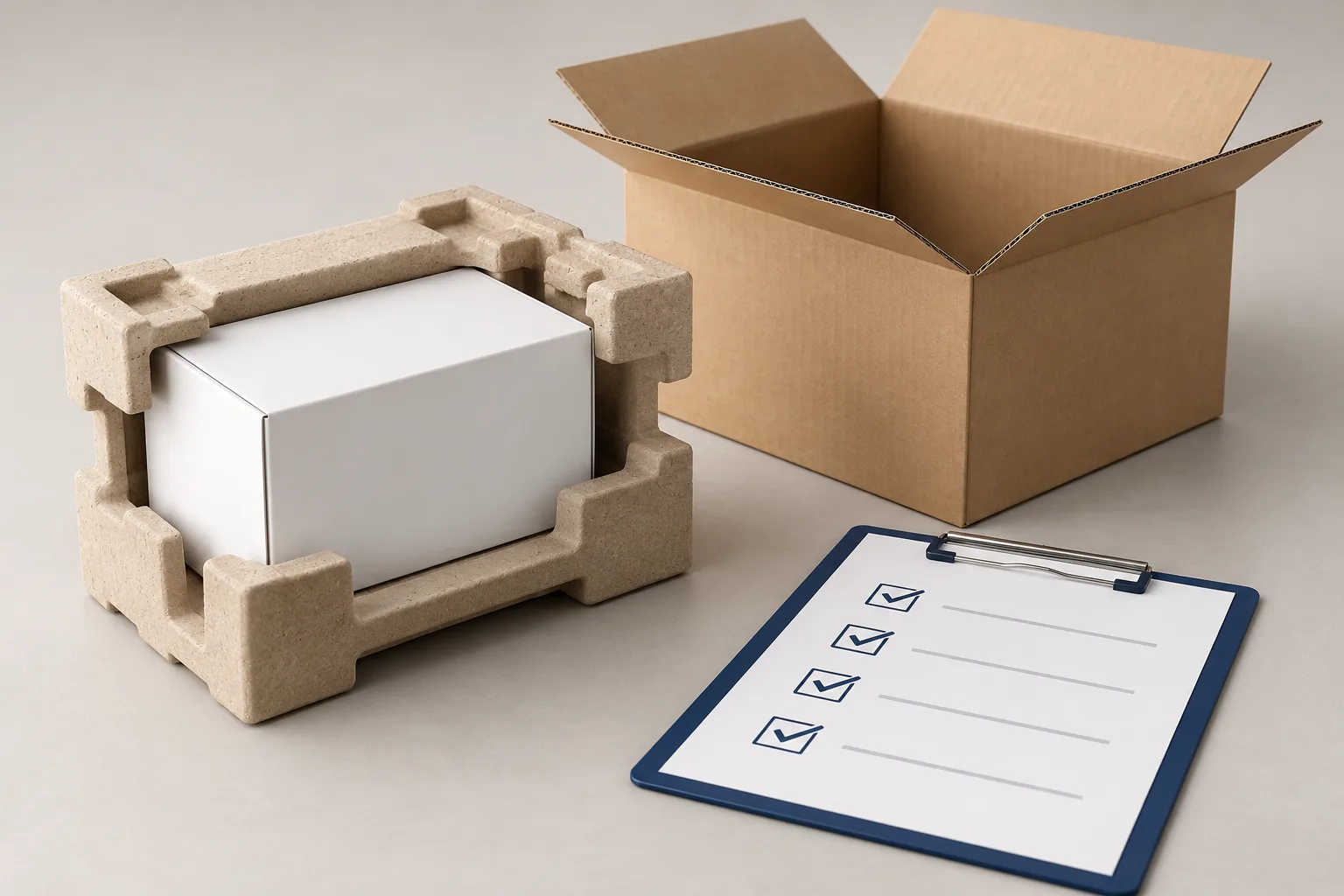
A right-sizing workflow that preserves protection
Right-sizing is a sequence of decisions, not a generic instruction to use less material. First define what the product must survive, then identify the lowest-volume configuration that still meets the agreed protection and handling requirements. Only after that should a buyer compare carrier results.
- Define the product and route. Record product variation, packed weight, fragile points, orientation, channel, destination and expected handling.
- Choose the protection method. Identify whether the product needs an insert, divider, wrap, suspension, void fill, a secondary carton or another controlled method.
- Develop the internal fit. Include deliberate clearance and record how the product is loaded and removed.
- Measure the finished outside parcel. Measure the assembled, packed configuration at its relevant maximum points—not a flat dieline.
- Check current carrier/service rules. Use the current calculator, tariff or fulfillment-partner data for the actual service and route. Do not copy a divisor from an unrelated guide.
- Compare chargeable-weight exposure with sample evidence. Compare proposed configurations only when each has comparable protection and pack-out evidence.
- Lock the approved version. Tie the approved dimensions, product count, artwork revision and pack-out to the same controlled sample.
This workflow creates a record a packaging supplier and fulfillment team can understand. It also avoids the false economy of reducing a box dimension on paper while creating a pack-out issue, a product-damage risk or a different outer-carton problem in practice.
How to evaluate a right-sized sample
A dimensional-weight decision should be validated on a representative packed sample. A digital mock-up or empty folded box cannot show product movement, packed outer dimensions, actual weight or the effect of the chosen protection method.
| Sample check | What to observe | Evidence to keep |
|---|---|---|
| Product fit | Product, accessories and protective elements load without force or unintended looseness | Photos, measured clearances and sample revision |
| Finished outside dimensions | Completed parcel dimensions at the relevant maximum points | Measurement record and method |
| Actual packed weight | Product plus all packaging components | Scale reading with sample identification |
| Product protection | Movement, contact points and retention under agreed handling | Agreed trial observations and limitations |
| Pack-out | Number of parcels per case, case dimensions and any outer protection | Pack-out drawing and representative outer-carton sample |
| Carrier/service check | Current calculation or fulfillment result for the proposed route | Dated carrier or fulfillment evidence; note service and destination |
For delivery routes where formal transit testing is relevant, agree the test procedure, sample, conditions and acceptance criteria for the specific project. The Packaza overview of ISTA 3A for shipping boxes is a starting point for buyer questions; it is not evidence that a particular pack has been tested.
Avoid reducing DIM weight at the expense of pack-out
Reducing a parcel’s size can move costs or risk elsewhere. A small change can affect how many units fit per master carton, how the case stacks, whether the product can be loaded reliably and how the shipment behaves on a pallet. Compare the entire pack hierarchy, not a single parcel in isolation.
For example, a smaller individual mailer may not improve a multi-unit case if it creates unused case space or requires a new divider pattern. Conversely, a protective insert can increase the individual parcel dimensions yet reduce product movement and rework risk. The right comparison is project-specific and should be made on the same product count, route and protection requirement.
Use corrugated box palletisation to document stack pattern and overhang questions, and shipping marks on master cartons to keep finished pack-out identity and handling information controlled.
What to send with a dimensional-weight packaging inquiry
A useful inquiry gives a packaging team the information needed to evaluate fit and protection before discussing the final outside parcel. It should not ask for a “lowest DIM” box without describing the product, route and sample standard.
Include these fields in the brief:
- Product photos or a representative sample, with maximum packed L × W × H and unit weight.
- Fragile points, required orientation and any product-contact restrictions.
- Unit count per shipment and whether the pack is direct-to-consumer, retail replenishment or another channel.
- Current inner packaging and protective method, plus what is not working today.
- Proposed carrier/service or fulfillment channel, destination market and any current dimensional-weight evidence.
- Preferred product presentation, opening method and artwork status.
- Requested order quantity, target in-store or shipping date and requested sample stage.
- Acceptance criteria for fit, finished outside dimensions, packed weight, protection and pack-out.
When your brief is ready, contact Packaza with these inputs so the discussion can begin from the actual product and route rather than a generic box size. To compare commercial assumptions across suppliers, pair it with the custom packaging supplier qualification checklist.
FAQs about dimensional weight packaging
Does dimensional weight use the box’s inside or outside dimensions?
For carrier evaluation, use the completed parcel’s outside dimensions according to the applicable carrier and service rule. Internal dimensions are still essential for fit planning, but they do not replace the final outside measurement.
Is DIM weight the same as actual weight?
No. Actual weight is what the completed parcel weighs; DIM weight is a volume-based calculation under a carrier’s rule. The applicable service determines how the chargeable weight is assessed.
Can a smaller box always reduce shipping cost?
No. A smaller box can reduce parcel volume, but it may also remove needed protection, affect packing consistency or change case packing. Compare configurations only after validating the same product, route and protection requirement.
Which dimensions should a buyer give a packaging supplier?
Give the product’s maximum packed dimensions and weight first, then identify the protective method, unit count and channel. The supplier can use that information to develop internal and final outside dimensions for sampling; do not assume those values are identical.
Should I use a carrier’s DIM divisor in a packaging specification?
Record the carrier/service result and its date, but do not treat a divisor as permanent or universal. Carrier rules, contracts, routes and markets can differ; validate against the current service you will use.
How do inserts affect dimensional weight packaging?
Inserts can control movement and make a compact layout workable, but they also use space and may affect packing steps. Evaluate them in a representative packed sample, including the final outside dimensions and actual weight.
Does reducing void fill automatically improve DIM weight?
Not automatically. Less void fill may reduce volume in some designs, but the product still needs the right protective method for its route. A decision should be based on a validated sample, not on empty-space percentage alone.
Right-size the complete parcel, then validate it
Dimensional weight packaging works best when it starts with the product and ends with a validated finished parcel. Document the product, protection, internal fit, final outside dimensions, actual weight, current carrier/service result and pack-out together. That produces a more reliable custom-box brief than chasing a universal formula or reducing material without evidence.
Sources
- FedEx — What is dimensional weight? — carrier-specific DIM measurement and calculation guidance.
- USPS — How to Prepare & Send a Package — current-service guidance to check package dimensions in the USPS price calculator.