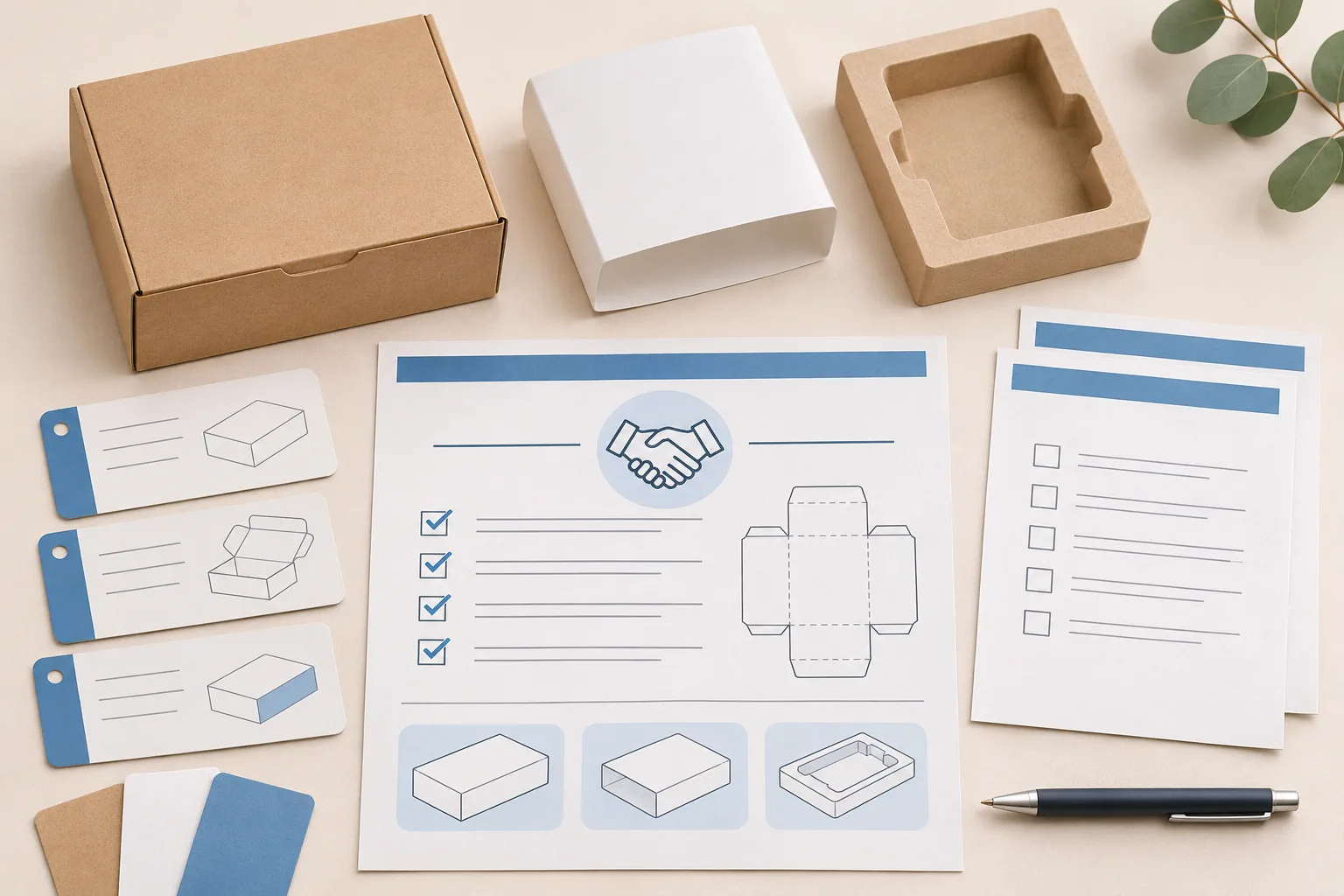
Quick answer: A packaging quality agreement template is a project document that connects the buyer, supplier, approved references and release decisions before production or shipment. It should name what controls the order, who approves changes, what evidence is reviewed and how an open issue is handled. It is not a substitute for legal, regulatory or product-specific advice.
What is a packaging quality agreement?
A packaging quality agreement is a written project framework for aligning the buyer and supplier on controlled requirements, responsibilities and decisions. For a custom box, carton, sleeve, insert or shipping case, it identifies the applicable specification, artwork, sample, inspection plan and change path. It does not prove that a particular order conforms or replace a signed commercial contract.
The useful question is not “does the supplier have quality?” It is “which requirements control this order, who owns each decision and what happens if something changes?” The document should make those answers explicit before a production release, rather than trying to reconstruct them from emails after a sample or shipment is disputed.
| Document | Primary job |
|---|---|
| Packaging quality agreement | Connects responsibilities, controlled references, evidence and change/disposition paths |
| Packaging specification sheet | Defines the approved configuration for a component or SKU |
| Purchase order or RFQ | Defines commercial scope, assumptions or pricing request |
| Sample approval record | States what a particular sample review covered |
| Inspection record | Records observations for a lot or review |
Start with a defined scope, not a generic supplier promise
A packaging quality agreement template should begin with the exact project boundary: product/SKU, packaging component, market or language variant, and whether it covers a new launch, change or repeat order. It should say which questions are still open. Broad phrases such as “premium quality” or “match sample” cannot replace an identifiable product, revision or decision scope.
For one project, a consumer carton, insert, sleeve and master carton may have different owners, artwork versions and acceptance questions. List each component separately. If a requirement is not yet selected—such as an insert structure or finish—write the required outcome and assign the next decision owner rather than inserting an unverified technical value.
| Scope field | Record |
|---|---|
| Project identity | Project name, order or RFQ reference, SKU/variant and intended market |
| Component identity | Retail pack, insert, sleeve, label, inner pack or master carton |
| Order stage | New development, change, repeat order or corrective review |
| Controlled references | Specification, dieline, artwork, approved sample and packing instruction revisions |
| Open items | Assumptions, missing content, feasibility questions and named owner |
Use a responsibility matrix for buyer, supplier and joint decisions
The agreement should identify an accountable party for each decision, not assume that every task belongs to the supplier. A buyer may own product copy, regulatory review, barcode data and final commercial release. A supplier may need to acknowledge the received revision, ask clarification questions or document a deviation. Some decisions, such as a proposed substitution or a sample review scope, require a named joint decision.
Use the table as a project starter, then replace the generic wording with the actual parties and records. “Supplier input requested” is not permission to change a requirement. “Buyer approval required” is not evidence that approval was granted.
| Topic | Buyer-owned input | Supplier-owned input |
|---|---|---|
| Product and component identity | SKU list, market and intended use | Confirm the received request identifies the component |
| Artwork and copy | Approved content owner and artwork revision | Confirm receipt of the named revision; flag ambiguity |
| Structure and specification | Current requirements or question to solve | Identify feasibility questions against supplied information |
| Sample/proof review | Name what the review must decide | State what the proof or sample represents |
| Inspection and acceptance | Define required evidence and decision authority | Provide agreed project records where applicable |
| Change or substitution | State impact and approve/reject authority | Notify before an unapproved change is used |

Build a controlled reference set before approving work
The agreement works only when every person can locate the same current references. A practical reference set may include an approved packaging specification, dieline, artwork revision, product drawing or packed-product dimensions, sample decision record, component list and packing instructions. Give each item a version or date and name where it is stored; a filename containing “final” is not a control method.
Use a packaging specification sheet for the stable component baseline, and a packaging bill of materials when the project has multiple components. For artwork, maintain the current file alongside the correct structural reference. A revision may look visually similar while still using the wrong language, barcode data, panel layout or dieline.
| Reference | What it can control |
|---|---|
| Specification sheet | Defined component, dimensions, materials, finish or other approved fields |
| Dieline/drawing | Geometry and panel locations for the selected structure |
| Artwork master | Copy, graphics and placement for a named revision |
| Approved sample/proof record | What was reviewed and any stated limits |
| Packing instruction | Units, protection and carton-marking requirements |
Define acceptance evidence without inventing universal limits
An agreement should say what evidence helps a decision and who is authorized to make it. Do not copy an AQL number, test method, tolerance or inspection percentage into a template unless the project has actually selected it. The right acceptance approach depends on the product, component, route, requirement and risk; a visual proof does not demonstrate every physical or distribution outcome.
For example, a digital proof may help review content and panel placement. A structural sample may help a project consider fit or opening for the stated configuration. A finished-lot inspection may document observations against identified references. Record the evidence, scope, result, open issue and authorized disposition separately. The custom packaging samples guide explains why review stages are not interchangeable; the inspection checklist covers finished-lot review planning.
| Decision question | Evidence that may help |
|---|---|
| Is the right artwork revision in scope? | Controlled file, proof and named content reviewer |
| Does the proposed structure relate to the stated product? | Project-specific structural sample or fit review |
| Is a visible effect acceptable? | Agreed proof or sample method |
| Does a lot match stated references? | Inspection observations, measurements and photos where agreed |
| Can a shipment move forward with an issue? | Approved deviation or hold/rework decision |
Make changes, deviations and substitutions visible
The agreement should distinguish a question, a planned change, a deviation and an approved release. A changed language panel, barcode, structure, material, finish, component or packing instruction can affect more than one record. A change should identify the affected SKU or order, the old and proposed references, the reason, the review required, the effective point and the person who can approve it.
Do not assume that an email comment, a supplier recommendation or a replacement material is an approved change. Use the packaging change-control checklist to connect changed artwork, samples, specifications and order references. A project may decide to approve, revise, hold, segregate or investigate an item, but the agreement should not predetermine a universal result.
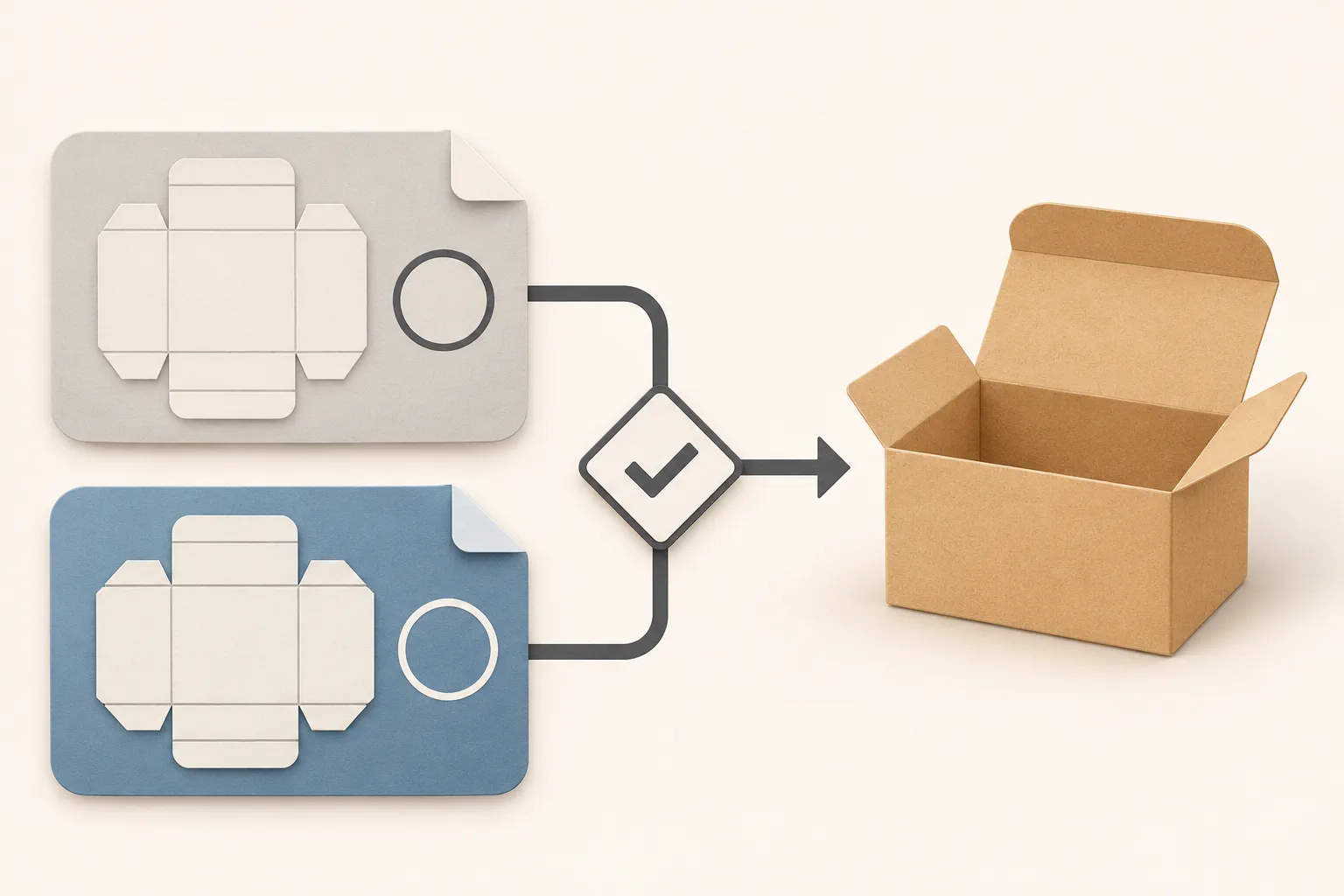
Copy-and-paste packaging quality agreement template
Use this template as a project discussion tool. Have responsible commercial, quality, technical and legal reviewers adapt it for the actual product and contract. It is intentionally not a universal legal agreement, regulatory checklist or evidence of supplier capability.
| Section |
|---|
| 1. Parties and project |
| 2. Covered components |
| 3. Controlling references |
| 4. Responsibilities |
| 5. Review evidence |
| 6. Acceptance and disposition |
| 7. Changes and deviations |
| 8. Records and communication |
Keep the agreement connected to the actual order
Treat the packaging quality agreement template as a controlled companion to the current project record. Before requesting a quote or approving production, check that the component list, referenced files and named decision owners still match the request. Before inspecting a finished lot, check that the inspector has the relevant order, approved references and documented exceptions rather than an unrelated sample or obsolete PDF.
For early supplier evaluation, use the supplier qualification checklist separately from this agreement. When you are ready to discuss a custom packaging project, contact Packaza with the packaging goal, product context, quantity context, current files and unresolved questions. Request project-specific requirements rather than assuming a template establishes Packaza’s commercial terms, testing, materials, timing or performance.
FAQs about packaging quality agreements
Is a packaging quality agreement the same as a packaging specification?
No. A specification describes the approved component requirements; a quality agreement identifies which specification controls, who owns decisions and how changes or findings are handled. Use both records when the project needs them.
Is a quality agreement a legal contract?
Not necessarily. It may support a contract or purchase arrangement, but legal effect and required wording depend on the parties, market and product. Have responsible legal and quality reviewers determine the appropriate document for the project.
Who should approve the agreement?
The named people who own the relevant decisions should approve their sections. That commonly includes procurement, product/technical, brand or artwork, quality and any accountable legal or regulatory reviewer; exact roles vary by project.
Should it contain AQL values or test limits?
Only when the project has actually selected and documented the applicable method, lot, defect definitions, sampling approach and acceptance rules. A generic template should prompt for those decisions, not invent them.
How is a quality agreement different from a sample approval?
A sample approval records what a particular sample review covered. The agreement connects that record to the project’s references, responsibilities, later changes and acceptance path.
What should happen when the artwork changes?
Open a change record that names the old and proposed revision, affected SKU/order, required reviewers and effective point. Do not treat an informal replacement file as a production release.
Can one agreement cover several packaging components?
Yes, if every component, SKU and reference is separately identifiable. A carton, sleeve, insert and master carton should not be blended into one ambiguous “packaging” line.
Make agreement useful before it becomes urgent
A packaging quality agreement template helps a buyer and supplier turn scattered expectations into a visible decision path: the controlled references, responsibility owners, review evidence and change route. It cannot validate unknown technical details or replace project-specific legal, quality and commercial decisions. Use it to expose open questions early, then carry approved records into the order and review process.
Sources
1. APIC Quality Agreement Guideline and template — an industry template illustrating allocation of customer and supplier responsibilities. It is regulated-industry context, not a universal packaging agreement. 2. Anchor Bay Supplier Quality Compliance Agreement — a public example of documented supplier/customer commitments, including no unapproved changes.